- Հայ
- Рус
- Eng
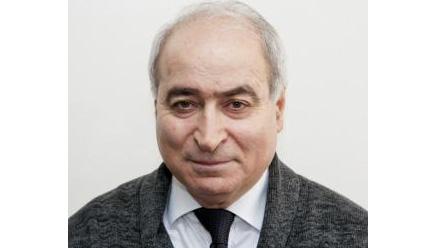
Mr. Nahapetyan, you are the author of Mathematics textbooks used in the 5th and 6th forms. Why did you decide to write these textbooks?
In the late 80s of the previous century when hopes awakened among people that Armenia might become and independent country, a consultation was held at the Faculty of Applied Mathematics of Yerevan State University at the initiative of Eduard Ghazaryan (Deputy Minister of Education). The meeting brought together a large number of mathematicians from the Academy of Sciences and several universities of the republic. The participants stressed the importance of publishing textbooks for the schools of independent Armenia. All participants were encouraged by the idea and made suggestions. We agreed to meet a week later. Only half of the mathematicians present in the first meeting showed up in the second meeting and even fewer in the third meeting, which was held two weeks later. They asked definite questions. They said they would write textbooks but they wondered whether they would be paid for their work and whether the books would be published or not. As a result, only one working group was formed which included two of my colleagues and me. Later, they lost interest in the process, too. It was then that I asked myself whether no one in the country would agree, despite everything, to assume the responsibility of writing textbooks. It is very painful and offensive for our homeland (which was going to proclaim independence), and I decided to do it myself. I viewed that difficult and responsible task as a mission. We had not had Mathematics textbooks containing explanatory texts since the time of Anania Shirakatsi (an Armenian philosopher, mathematician, astronomer, geographer and alchemist, VII century). I decided to write a textbook for 4th and 5th formers (after Armenia switched from the Soviet-era system of 10-year schooling to a 12-year education system the textbook was used in the 5th and 6th forms). In fact, it is an arithmetic textbook, which teaches numbers and operations with them.
The number is one of the basic concepts used by man. It is both a mathematical and a philosophical concept. Mathematics and science start with numbers. Despite the fact that numbers are used everywhere, the number itself, like any other basic concept, does not have a clear [mathematical] definition. It is presented axiomatically. All operations performed with numbers, such as addition, subtraction, multiplication and division have passed a long way before their current perception. Thousands of years had passed before one of the greatest achievements of humankind - the positional number system - was created. And it was necessary to explain all this to our young pupil. It was extremely difficult and interesting work.
Which principle is used in writing textbooks?
The principle is very simple: the more accurately you explain, the easier the material will be grasped. There is no need to create an illusion that everything is clear and understandable. From a pedagogical perspective, the quality of a textbook is primarily determined by the explanatory texts it contains. There are two main approaches. According to the first approach, explanatory texts need to be short and concise and contain only the most important theoretical material, including definitions of basic concepts and rules, which must be accompanied by examples. The main accent here is laid on the choice of a large number of math problems and exercises.
The second approach, unlike the first one, allows including a lot of explanatory texts in a textbook which present the theoretical material in an affordable way. Each approach has its positive and negative sides. The positive side of the first approach is the conciseness of the chosen texts. However, if the texts are too short and too concise, they become didactically incomplete as the gaps may contain important information for understanding the material. Besides, a textbook may not differ from a sum book. In the second case, extensive explanations can interfere with pupil's desire to read [the text] to the end. At the same time, extensive texts can help students think and solve problems after understanding the material. The golden mean is, of course, the best option: one should write easily obtainable texts, which should be as concise as possible. When writing the textbook, I and my colleague A. Abrahamyan (the co-author of the book, who believed in the idea and headed to the uncertainty with me) were guided by that principle. How can we evaluate a textbook? I think the most important is that it should be based on a specific concept and be written on definite principles. Only in this case shall we have a textbook. Its concept may not correspond to the educational system, the textbook may not be demanded and, consequently, not used in schools. However, conceptual approaches may change over time, and the textbook will become required.
Everyone, including teachers, parents and pupils have requirements in view of the textbooks quality. In the Soviet era, people complained of diffuse language patterns used in textbooks. It was an accepted norm at that time, today the requirements have increased considerably. Why don't we still have good textbooks?
I think the problem is the lack of traditions. There were not such requirements during the Soviet period. Russia had a great experience; excellent textbooks were published in the country in the pre-revolutionary period (let us recall Kiselev, Larichev and other authors). Each epoch dictates its requirements for the quality and type of textbooks. Today's reality has set a difficult and at the same time responsible task before the Armenian society. The time has come now to create our own textbooks for our schools and younger generation.
But nothing is done immediately and in haste. The creation of any textbook, even the best one, requires enormous efforts. A textbook cannot be unambiguously bad; not everything is bad in a textbook. But very often people speak about the shortcomings of a textbook, ignoring its positive sides. Journalists have their share of guilt in this respect. Although they are not specialists in this sphere, they cite the unsubstantiated opinion of unknown teachers and parents. You may wonder why it happens. The reason is that we lack equitable, attainable and healthy censorship that would point out both the negative and positive sides of the textbook. We lack this censorship for a number of reasons. To be able to write a competent review one needs to be erudite and aware of the subject matter. A well-written review will provide an invaluable service to the author. Taking note of the censorship and shortcomings, the author will try to improve the quality of his/her textbook. The second reason is that we perceive criticism as a personal insult.
Nowadays we can frequently hear such things – this is a bad textbook, it is difficult to understand and should be simplified and made more comprehensible. I can say definitely that it will not help. Once we reduce the level, we shall be forced to do it anew. When translating a Russian textbook all topics that seemed to be relatively difficult were removed. Although they claimed that it was a Russian textbook, actually it was only a simplified version of the given book. If our children go to Moscow, study with their 'complicated' textbooks and get excellent marks, why can't they study with textbooks of the same level here, in Armenia?
The problem is multifaceted and complex. I think one of the reasons is that the connection between textbook authors and teachers is lost. The debate between the author and teacher is extremely useful both for us – athors, and for teachers. When my textbook was published in 1998, the tradition was still observed; the Ministry of Education and Science organized meetings with teachers and authors. And it was wonderful. We took with us important things from the meetings, heard different opinions and drew conclusions. Such meetings are not organized nowadays. The author should go to schools himself to know the opinion of teachers on the given issue. But there have been some efforts recently which instill optimism.
Everything is well laid out in textbooks but you still need to explain it clearly to a child, don’t you?
Indeed, the relationship between teachers, textbooks and pupils is very important. Even if you have a talented and charismatic teacher, you will not be able to figure out anything without explanatory texts. Pupils perceive the material in different ways. Among the disturbing factors are scattered attention, improper appropriation of the previous topics, forgetfulness. The texts included in textbooks help eliminate these factors. Let us not forget about homework, which is also necessary to strengthen the previous topics. Thus, the theoretical part of the textbook should stimulate independent work among pupils with the help of teachers. With regard to the difficulties of textbooks, I must say that they are largely due to the programme and have nothing to do with the authors. Besides, let us not forget about 'learning by doing;' one should work hard to be able to learn. For some reason, people believe that if the material is intended for pupils, it should be embraced without much effort. A teacher is a key strategic character at school. The financial resources invested in the education system will be useless unless we have good teachers at school. The results of survey conducted in a number of developed countries have once again proved this belief. If we do not have competent and knowledgeable teachers, neither reforms nor financial investments can save the school. It is very important that we improve teachers' skills and quality and train teaching staff members. All relevant institutions, specifically Armenian State Pedagogical University, play a key role in this context. It is also important to pay attention to the professional knowledge and skills as well as moral values of pupils as future educators. In addition to this, it is necessary to raise the profession's image in society. This can be done not only through proper remuneration but also through media, as well as state and public assessment of teacher's work.
Is it true that the role of elementary school teachers is especially important in the teaching process?
I am sure of it. It is here that the educational function of the school comes first. Pupils are introduced to the rules of social life for the first time. Value categories, like patriotism, respect for the state, sense of duty and responsibility, tolerance towards other citizens and their rights, are instilled in pupils. The basis of pupils’ knowledge is laid at this stage. It is well known that the most difficult and the most important phase of any activity is its beginning. The teaching and learning process at school starts with Mother Tongue and Mathematics. This is the foundation on which education is built in the future. I want to end my speech with an appeal to a teacher used in one of our textbooks. “Teacher, parents entrust you with the most precious thing in their lives - their children. Teacher, the state entrusts you with the most expensive thing it has - young citizens. To be able to protect and educate a young generation that will be able to maintain the existing achievements and contribute to the process of creation - this is the main goal of any successful state. A teacher has a key role in realizing this goal. Yes, teachers’ work is not always properly valued and favourable conditions are not always created for teachers, but disinterestedness and devotion, awareness of the importance of one’s endeavours and efforts, conscientious attitude cannot be neglected. The highest appreciation is the gratitude of pupils, parents and the state.” One cannot say it better.