- Հայ
- Рус
- Eng
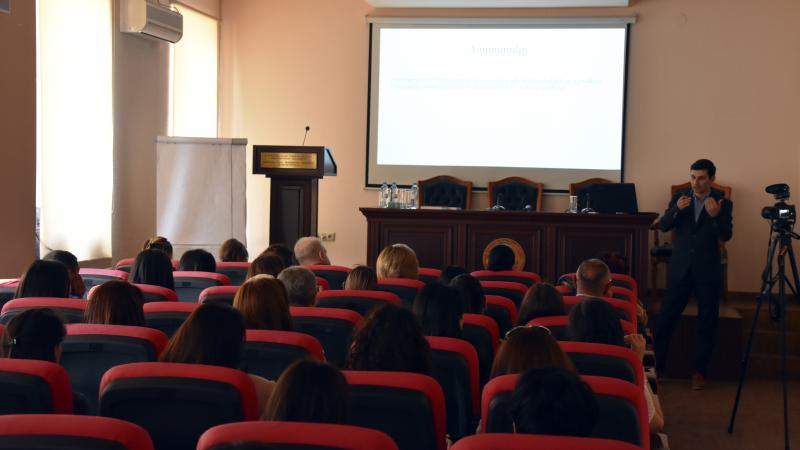
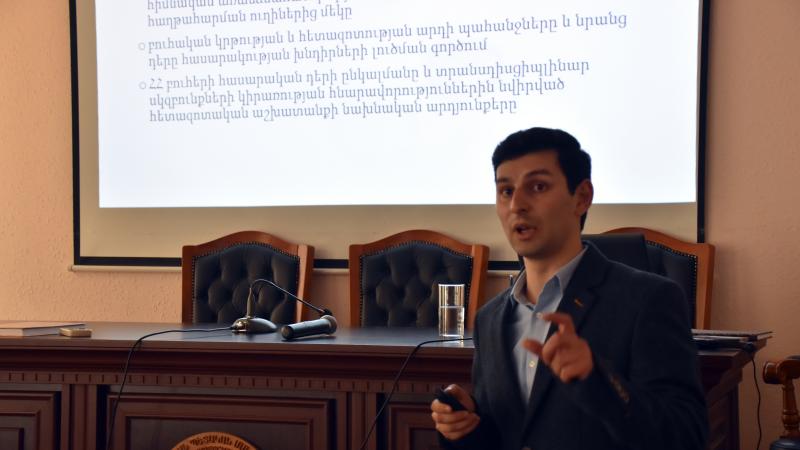
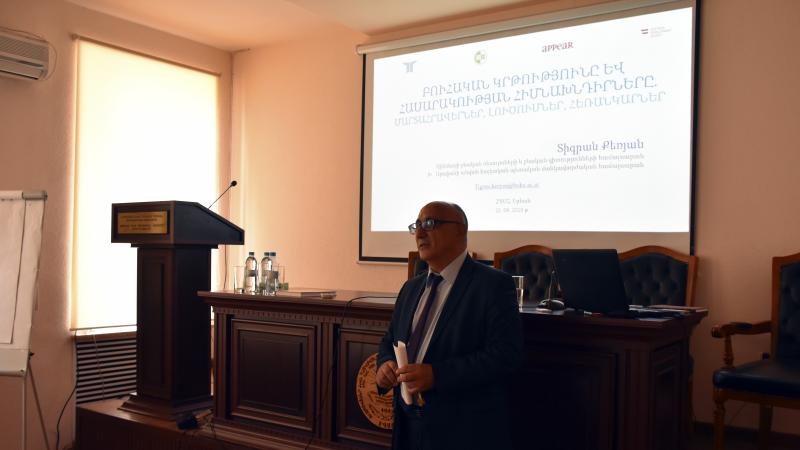
Transdisciplinary education and research in Armenia can make it possible for universities and society to collaborate as well as help universities get involved in the process of solving problems in today’s society, Tigran Keryan, a PhD student at Armenian State Pedagogical University and the University of Natural Resources and Life Sciences, Vienna (BOKU), said during a seminar-discussion at ASPU.
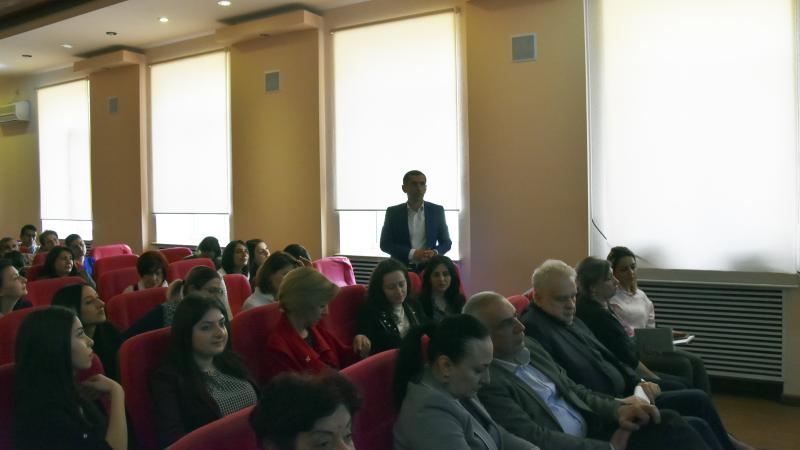
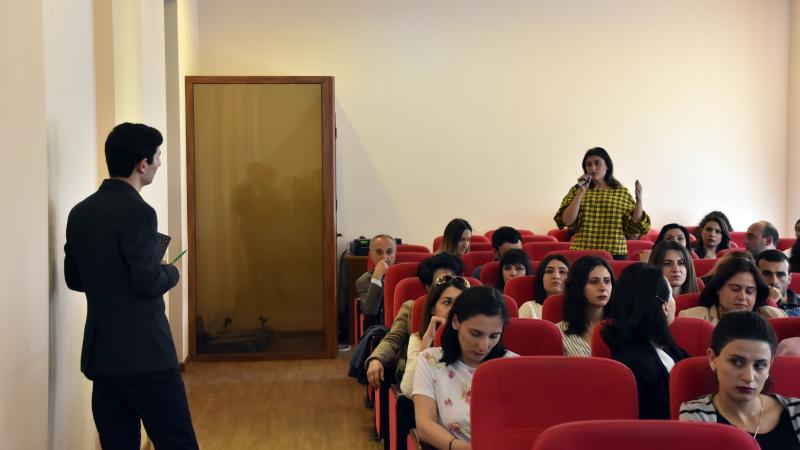
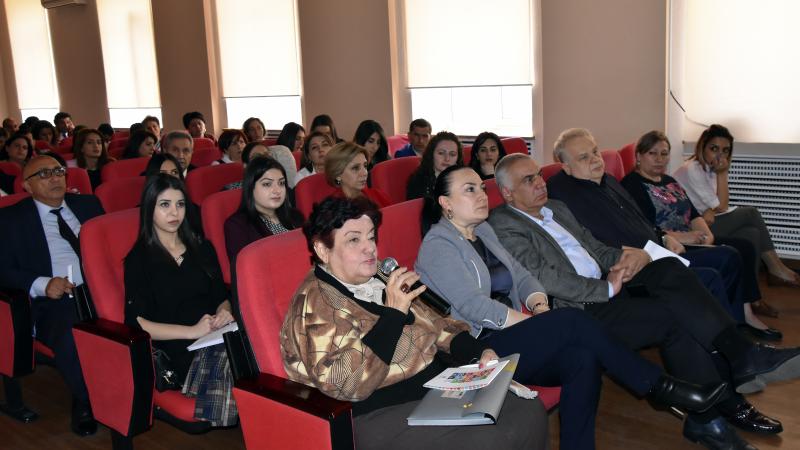
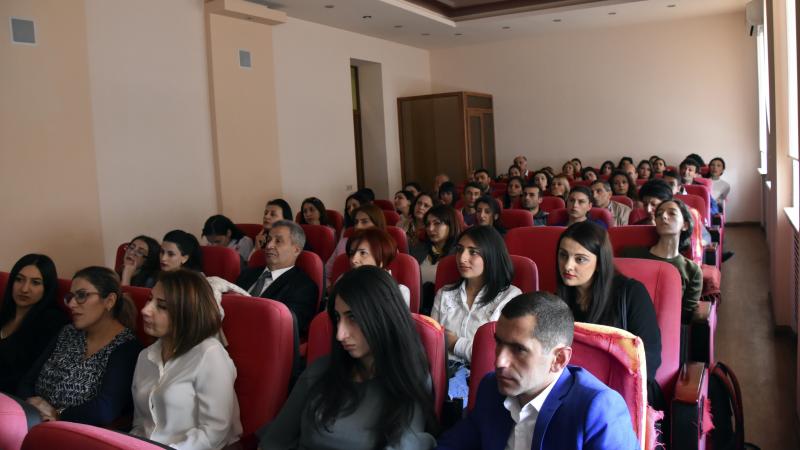
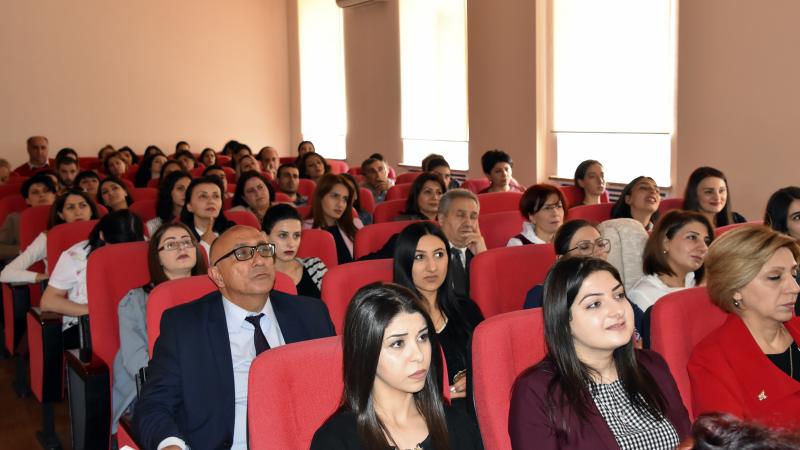
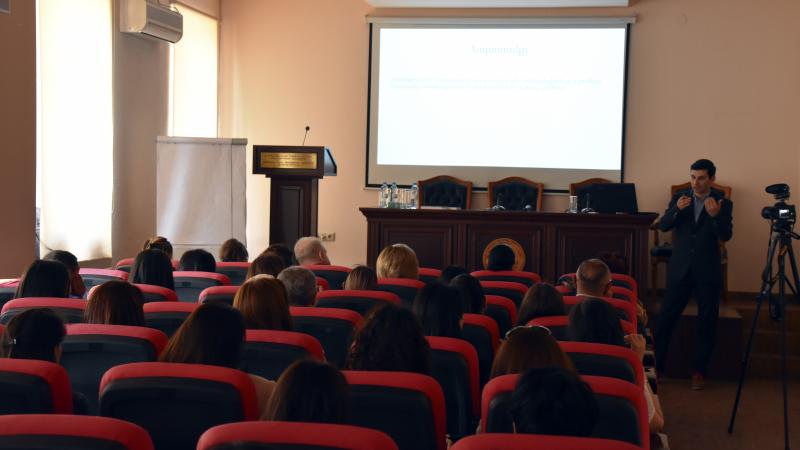
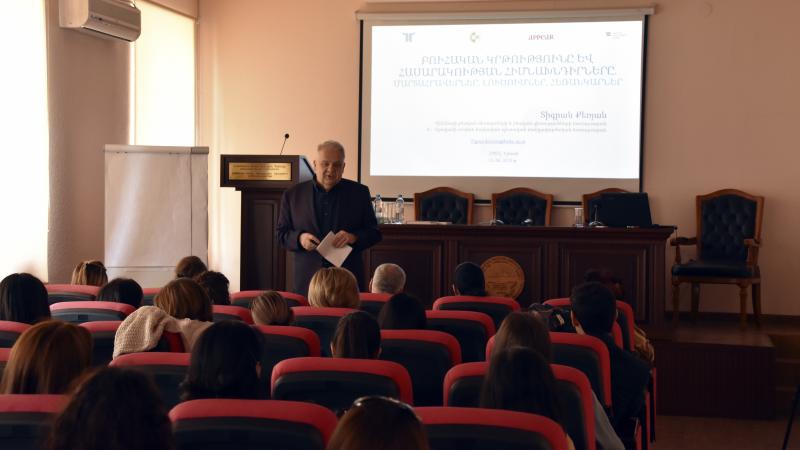
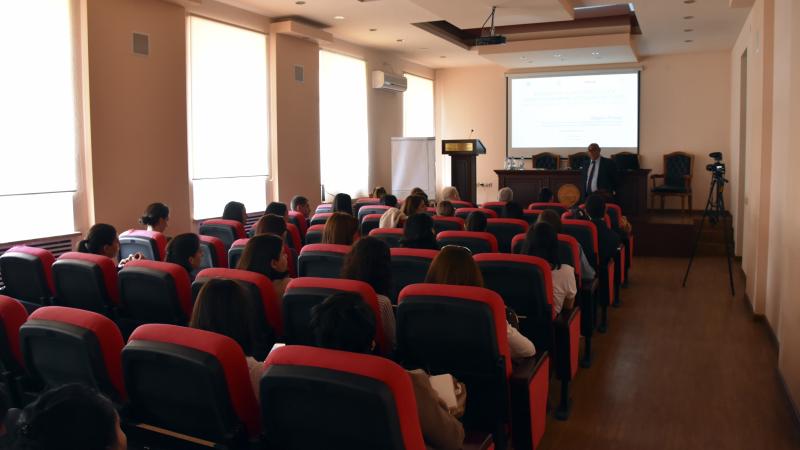
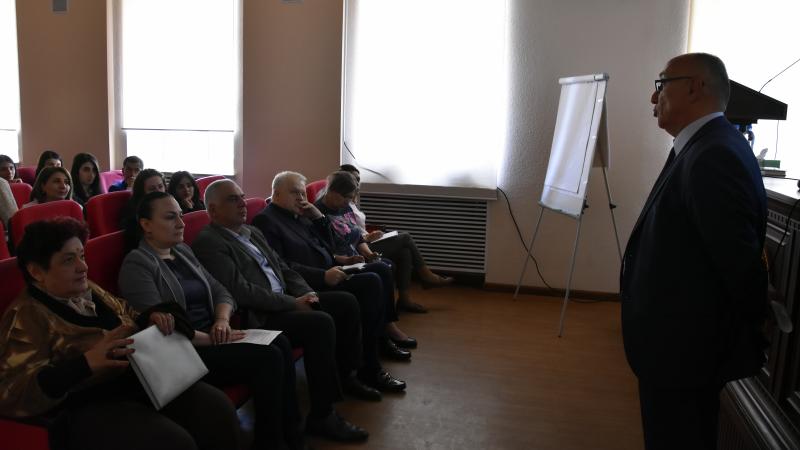
The seminar entitled “Higher Education and Social Issues: Challenges, Solutions and Perspectives” brought together lecturers from different universities, students, representatives of the Ministry of Education and Science and other state institutions, representatives of the business sector, initiative groups, etc., with the aim of discussing with all stakeholders various issues requiring systematic solutions and strengthening the relationship between societies and universities.
“If we want to change something in our society, we must make sure that pedagogy plays a crucial and important role in process. Every day society faces a variety of challenges the solution to which is outside of the academic disciplines. Universities have a great potential to solve problems in societies,” Tigran Keryan said stressing the importance of localizing the best practices.
He says the same problem can occur in different realities – communities, universities, etc., and there are not good or bad, old or new, European or other methods. Each of them has enough experience which can be used to achieve the desired result. “Besides, only academic disciplines are not enough to solve real-life problems. The result can hardly be satisfying because the scientific truth should be sought out with the locals.”
In reply to the question whether science articles will be able to solve the problems in society, he said, “many measures have been taken but not all of them have been effective due to lack of dialogue with the locals.”
The participants also referred to the essence and peculiarities of transdisciplinary education and research as an innovation in Armenia’s education system, the perception of the role of universities by society, as well as the preliminary results of the research on the application of transdisciplinary principles.
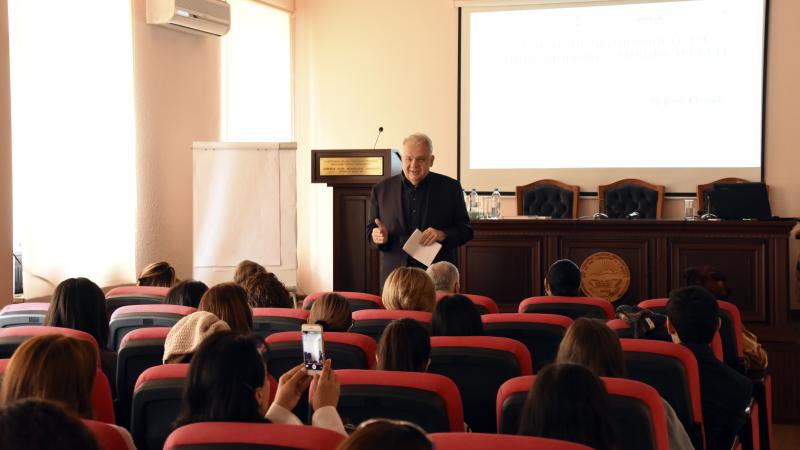
“We should focus on something important: the direct copying of experience, method and structure is not effective.Education reforms should be based on the reality, human resources, the quality of students and lecturers. The experience is applicable if it is based on our capabilities and realities. The rest are theoretical exercises,” said ASPU Rector Ruben Mirzakhanyan. He highlighted the effective cooperation of the Chair of Geography and its Teaching Methods, especially when students are involved in it.
Ashot Khoetsyan, Head of the Chair of Geography and its Teaching Methods, referred to the cooperation with the University of Bern (Universität Bern), the University of Natural Resources and Life Sciences, Vienna, Ivane Javakhishvili Tbilisi State University.
“Within the framework of international cooperation, the Chair of Geography and its Teaching Methods, using non-standard methods, presents not only to the students but also to the various layers of society the educational reforms which our university is capable to carry out,” he said. “Transdisciplinary research is a new and progressive method which we are using in our university,” Ashot Khoetsyan said. He stressed that education is an important link which can eliminate the barrier between society and the university.
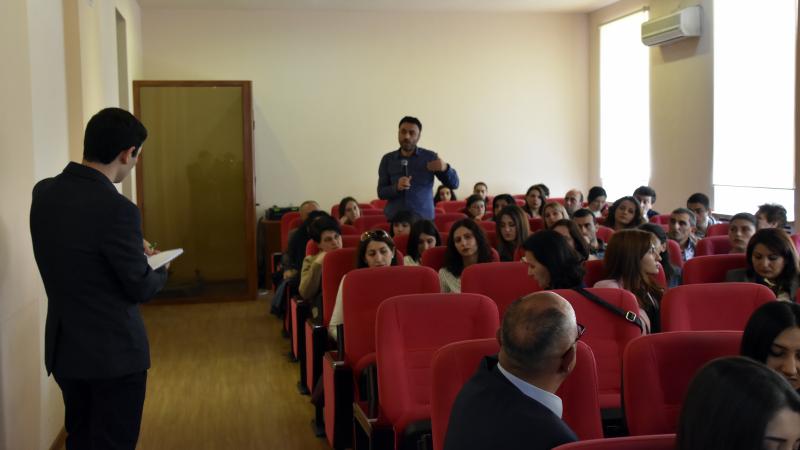
The discussion was followed by a Q&A session.