- Հայ
- Рус
- Eng
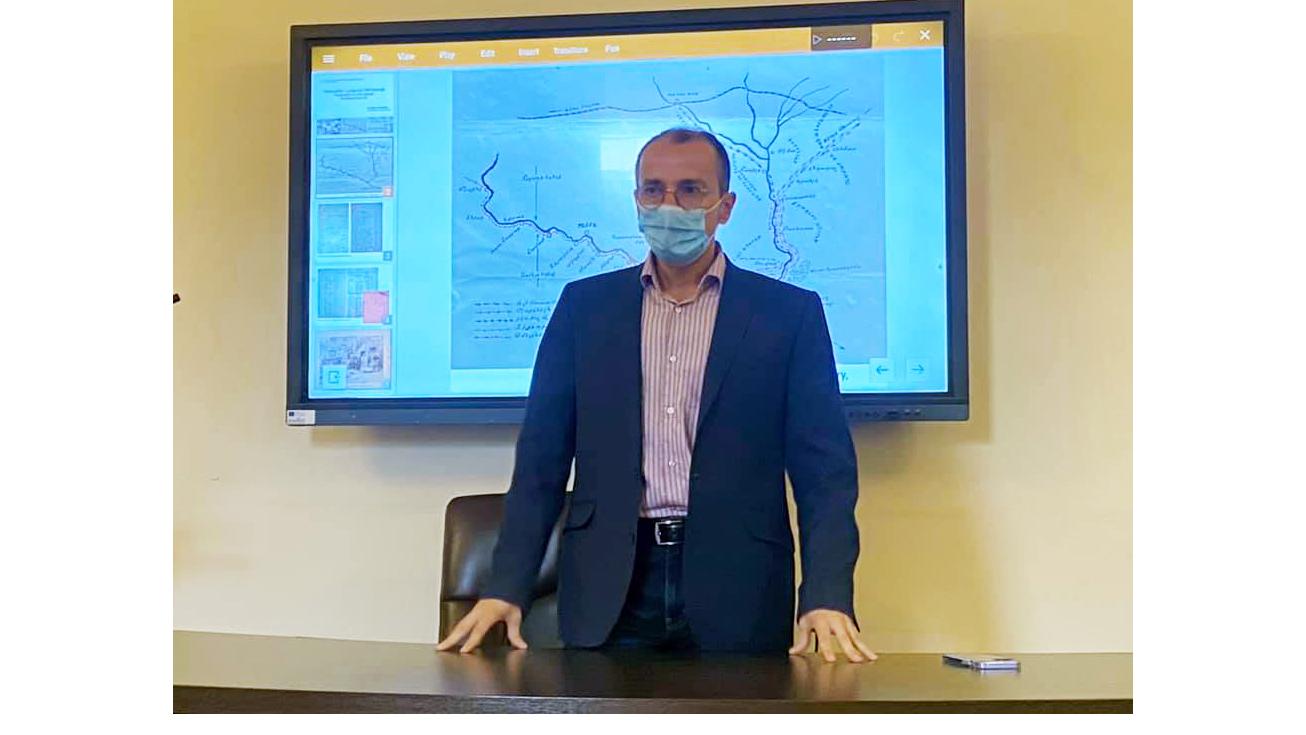
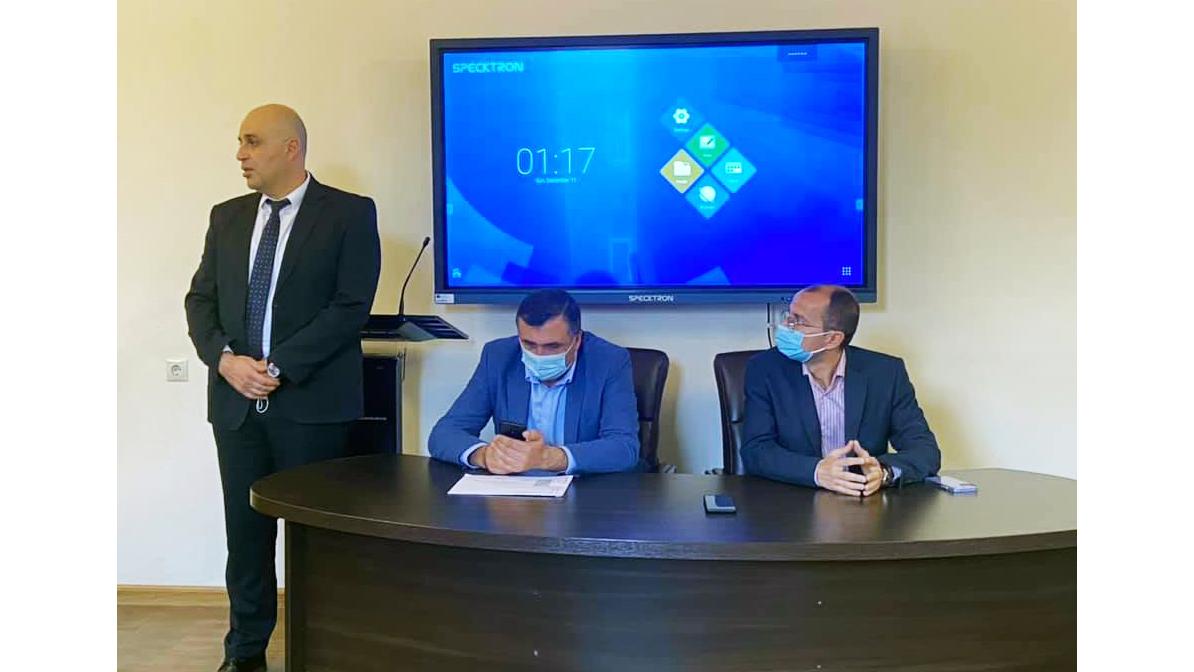
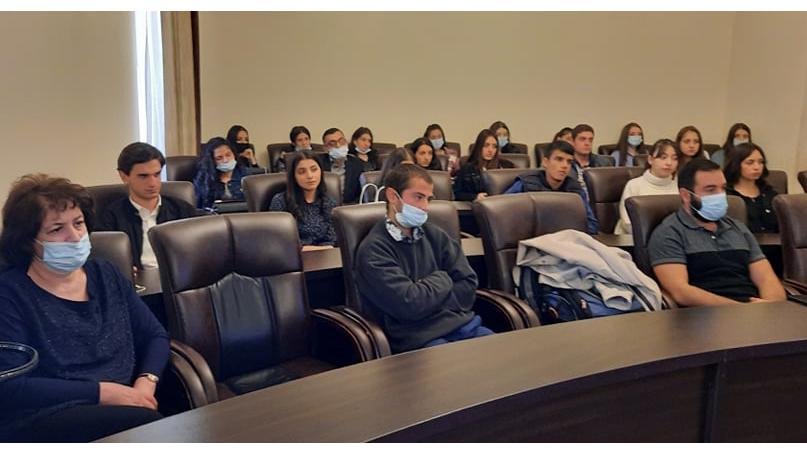
At the invitation of the ASPU Faculty of History and Social Science, ASPU hosted Professor Khatchig Mouradian, a lecturer in Middle Eastern, South Asian, and African Studies (MESAAS) at Columbia University who also heads the Armenian Department at the Library of Congress.
“When talking about the Armenian Genocide, Deir ez-Zor is often used as a synonym. Historical facts and various sources provide evidence for this. Unfortunately, for many years historians, while speaking or writing about the Genocide, have mainly presented Armenians as victims, ignoring the extensive work and efforts of well-off Armenians and missionaries [from different countries] aimed at saving Armenians who survived the genocide and took refuge in different camps,” Professor Mouradian said during the lecture entitled “Struggle for Survival in the Concentration Camps during the Armenian Genocide."
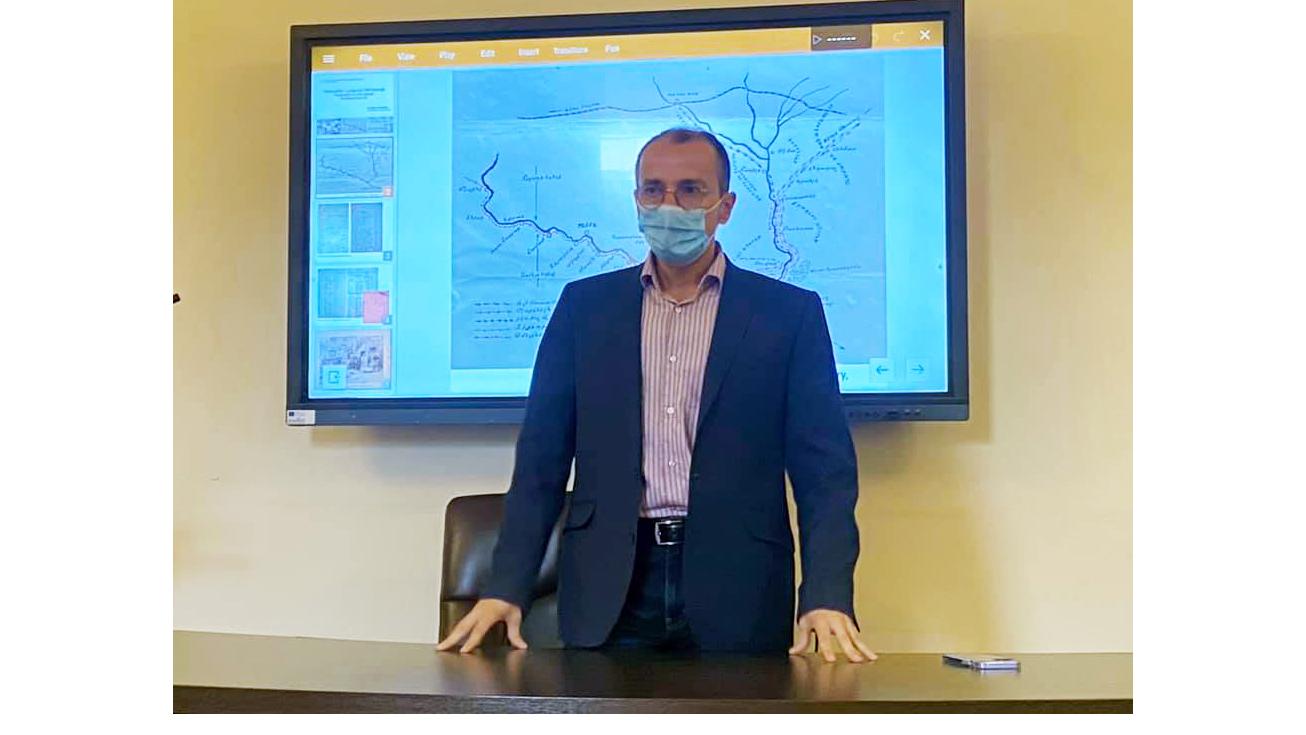
Further on, the speaker showed on the screen Aram Antonyan's map of Syria and Der ez-Zor, where concentration camps of Armenians were located, a number of documents preserved from that period, people's names, aid receipts, and other facts from that period of time.
Khatchig Mouradian has also published a book with the same title, which is about the first stop (concentration camps in the area between Der ez-Zor and Syria) for Armenian migrants who fled massacres as a result of Turkey's anti-Armenian policy. “Historians have written mostly about the fact that 1.5 million Armenians were deported and exterminated by Turkey. The fact that the Armenians were subjected to evil and torture on the one hand and to salvation on the other hand was ignored. Efforts and coordinated work to save Armenians were neglected as a result of Turkey's genocidal policy”.
The professor added that it is not enough to refer to only Turkey’s policy of extermination. He cited many examples and facts of saving Armenians in the concentration camps of Der ez-Zor and Syria, painstaking attempts to take them out of the camps, as well as examples of providing material assistance to them, which was done under the cruel and vigilant control of the Turkish police. “Aid receipts dating back to 1915 are still kept in the churches of Aleppo,” he added.
Khatchig Mouradian says it is not correct to only emphasize the atrocities of the genocide, without presenting the struggle of the Armenians. "Every day, over 500 Armenians died [in those camps] of hunger, cold and violence, but many people were saved thanks to the efforts of the volunteers who struggled for freedom and resistance to the Armenian genocide,” he stressed.
Summing up his lecture, Mr. Mouradian added that he often tells his students at Columbia University that the future depends on the generations of genocide survivors. "The future of the next generations of genocide survivors depends on each of us. We must put an end to these phenomena at any cost and by all means,” he said in conclusion.