- Հայ
- Рус
- Eng
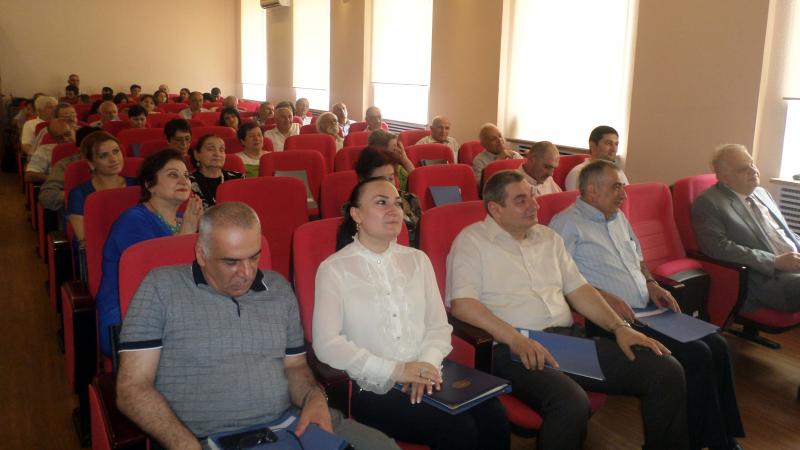
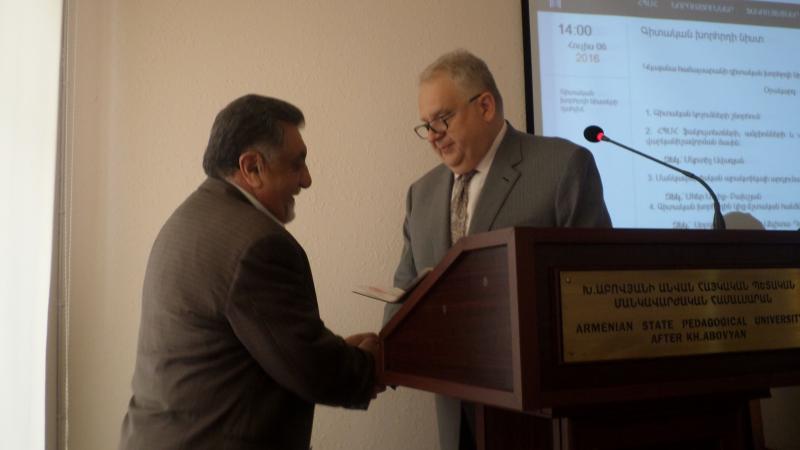
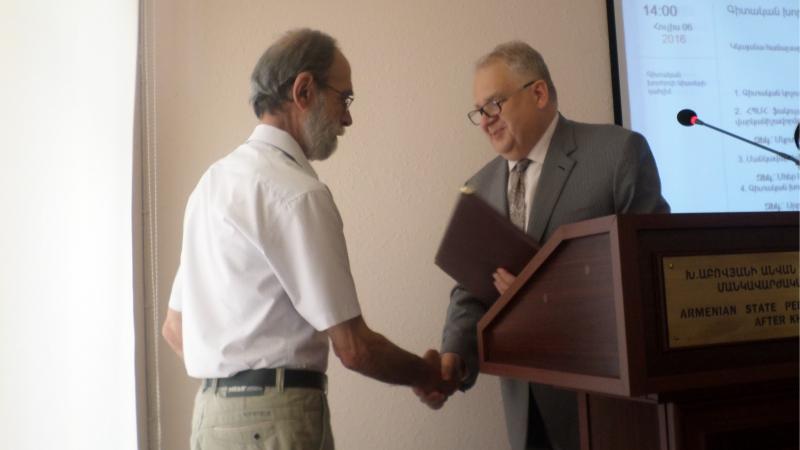
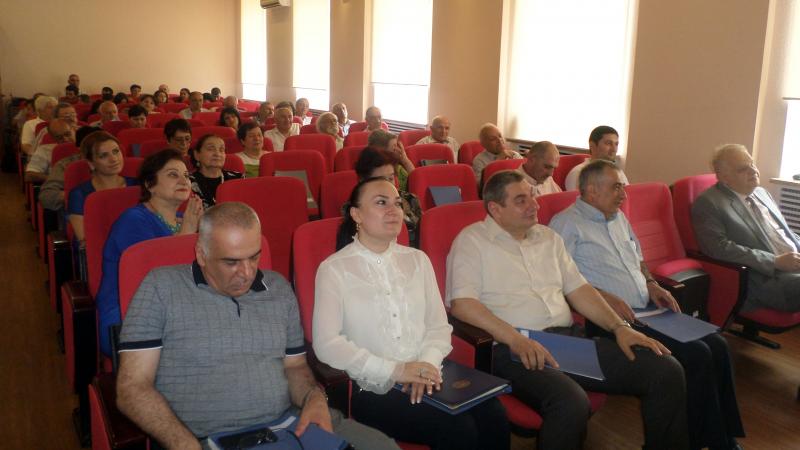
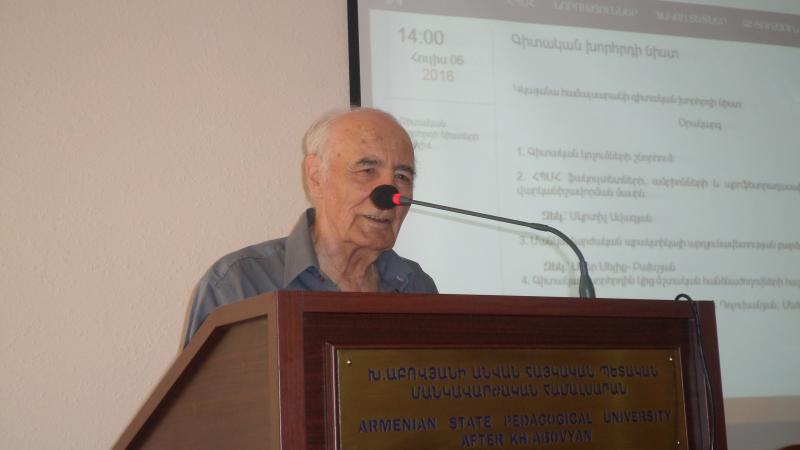
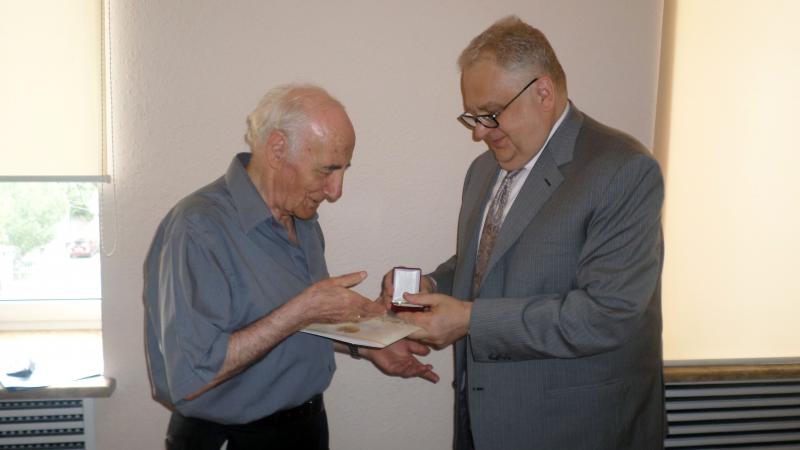
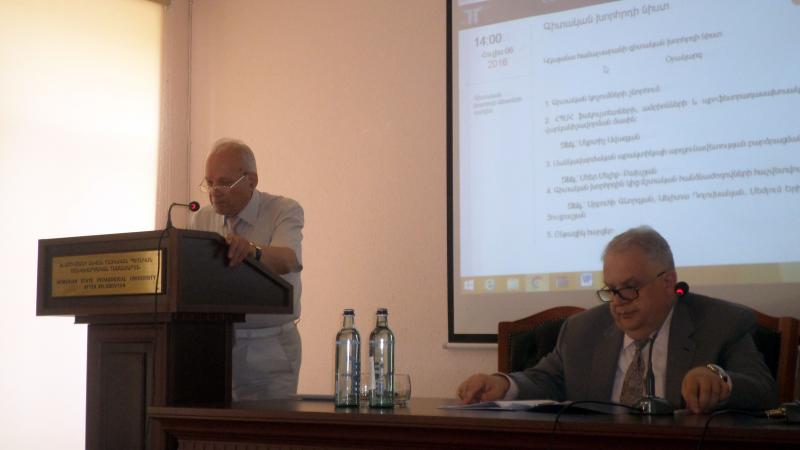
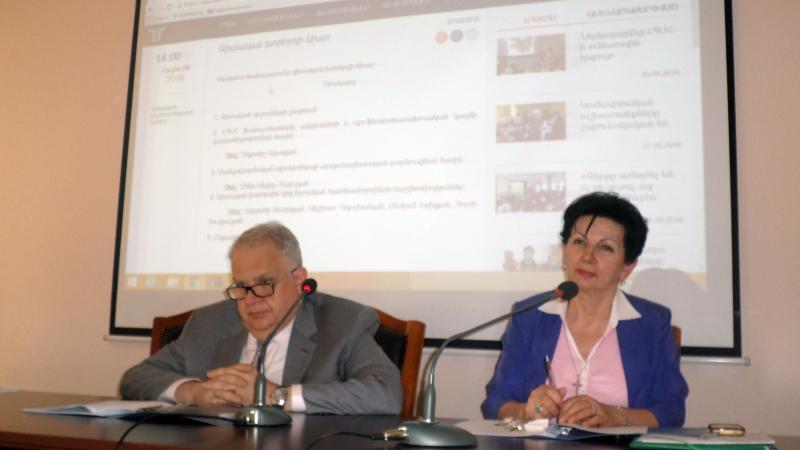
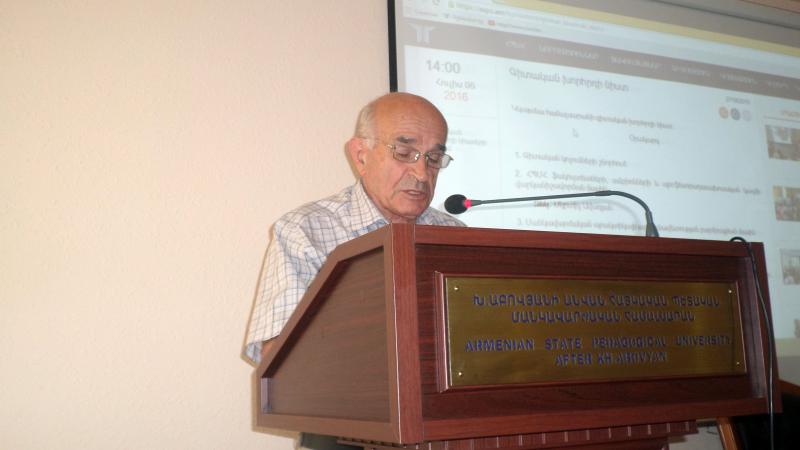
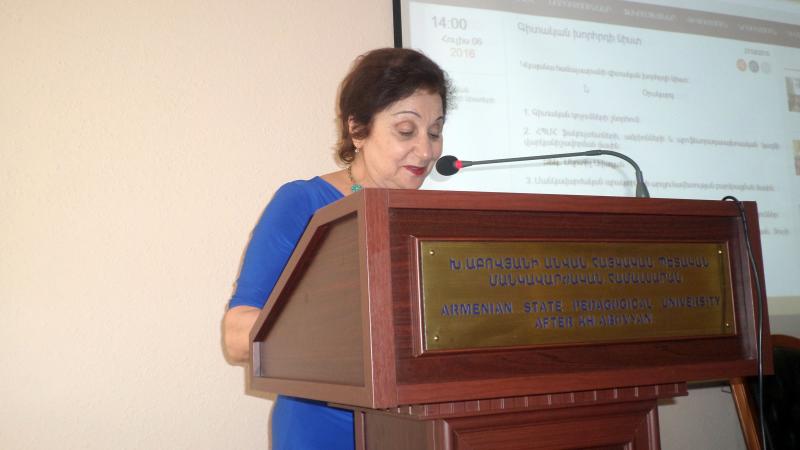
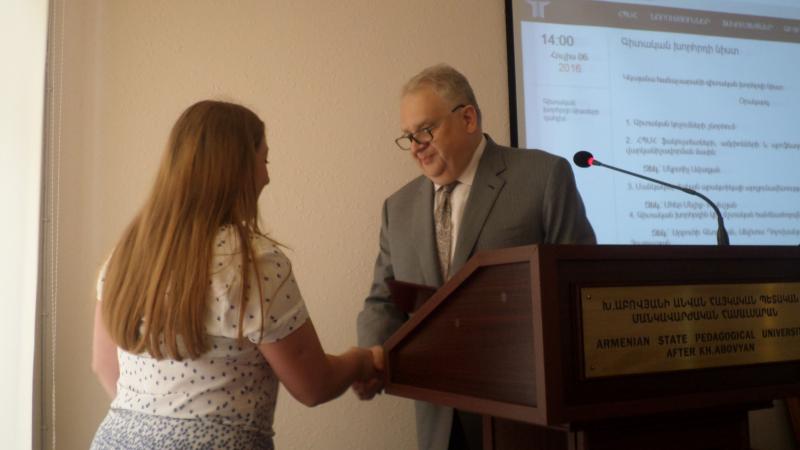
The Scientific Council of Armenian State Pedagogical University held the last sitting of the current academic year. By the order of the Minister of Education and Science, ASPU Rector Ruben Mirzakhanyan awarded the Gold Medal of the Ministry of Education and Science to Academician Gevorg Baghdasayan who headed the University many years ago.
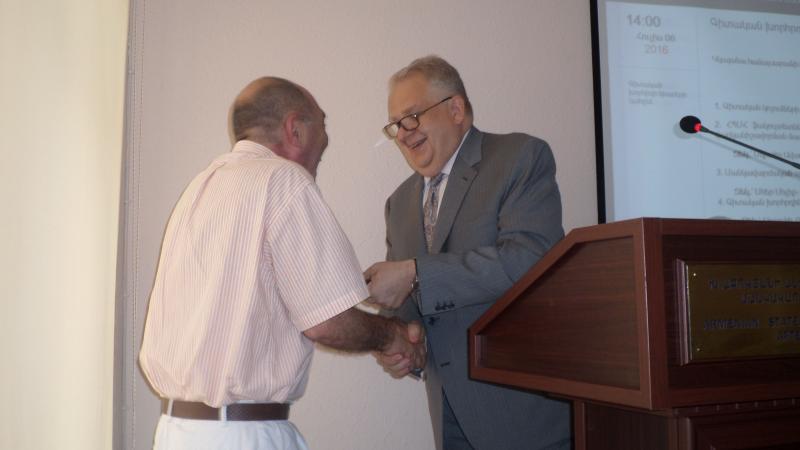
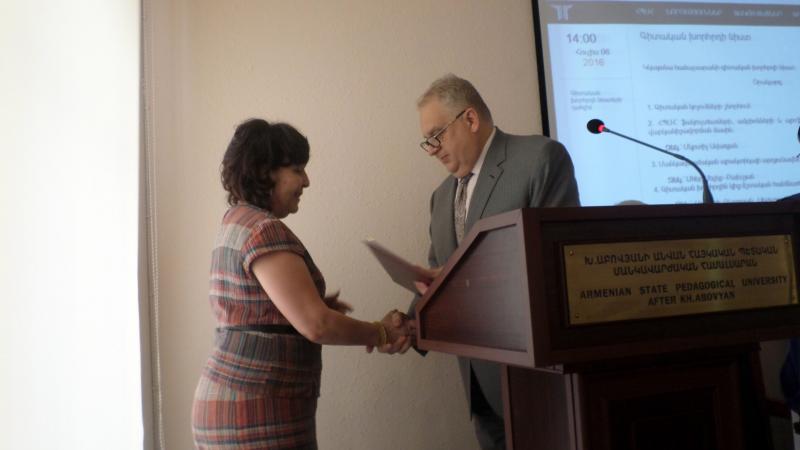
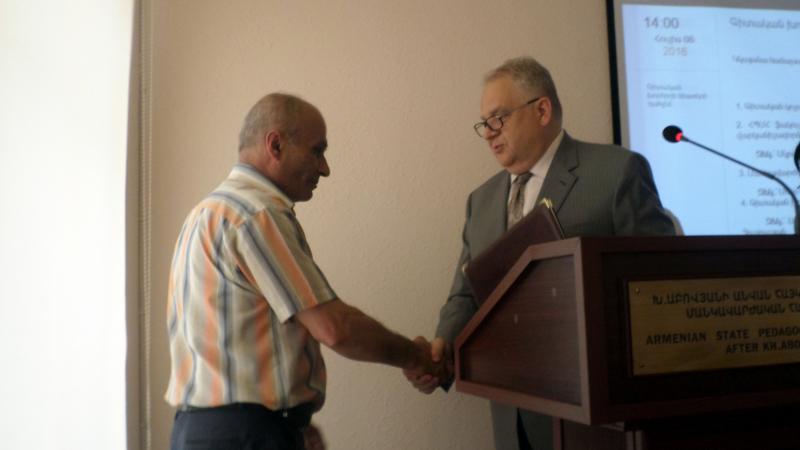
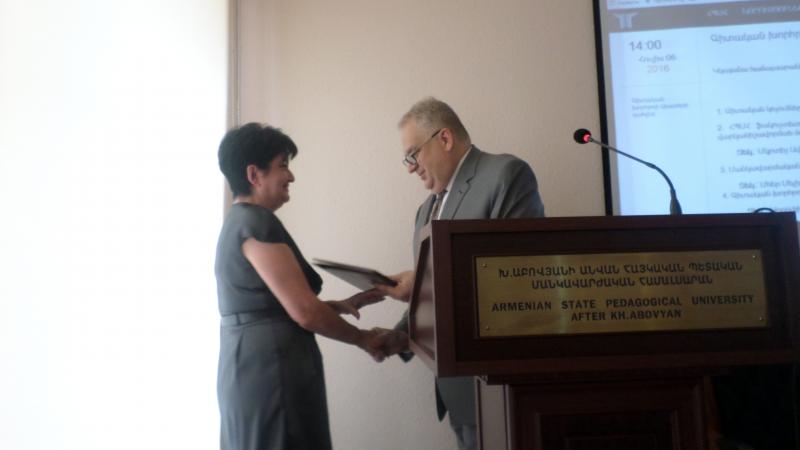
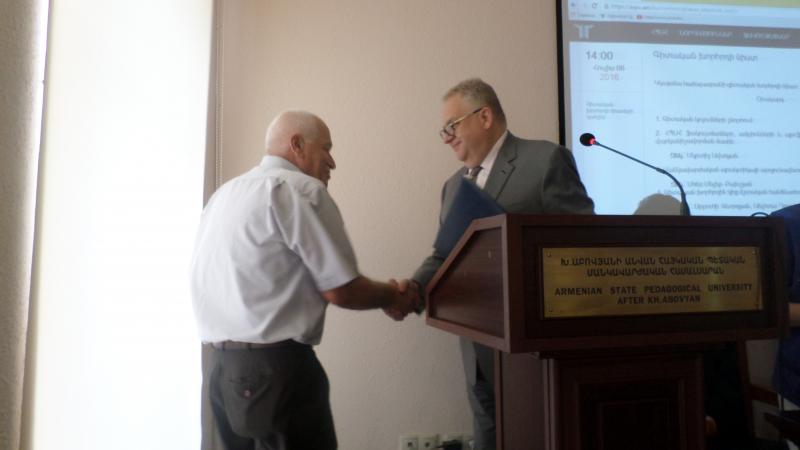
The academician thanked for the award saying it was a great honour for him to receive it at his beloved University which, as he said, ‘is performing its primary mission now more than ever.’ The University Rector then congratulated all those who are celebrating their birthdays in July and bestowed the academic ranks of two Associate Professors and one Professor on three candidates.
Purpose of Rating Scale
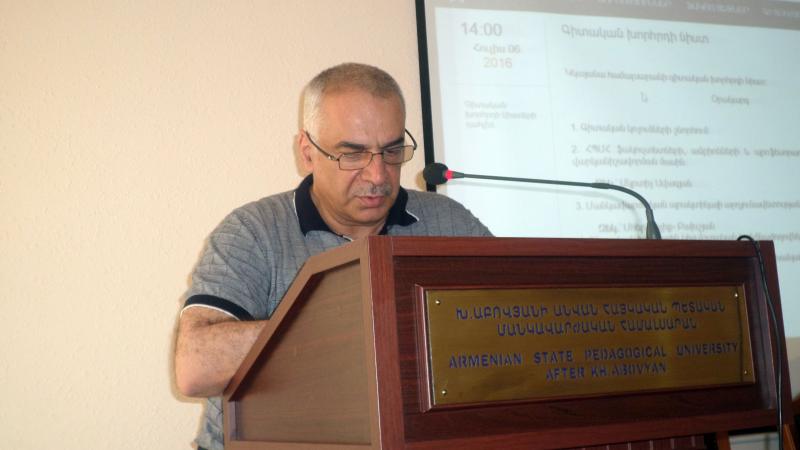
In his report, Mkrtich Avagyan, Head of the Education Reforms and Quality Assurance Department, focused on the ranking of the Faculties, Chairs and academic staff. Speaking about the reforms in higher and postgraduate education and their goals, he stressed that for some time now one of the distinguishing factors that helps orient amongst the numerous universities, assess the investment of an individual and educational unit inside the given educational institution has been their ranking.
Mkrtich Avagyan presented the objectives of the ranking system, noting that it boosts competition and accountability within the university, expands possibilities of all stakeholders – students, applicants, employers and other social groups to obtain open and transparent information about the University within permissible limits, raises public awareness of the quality of education in the University, effectiveness of policy development and decision-making in higher education, at the same time contributing to the improvement of the quality.
The Head of the Education Reforms and Quality Assurance Department also presented the principles of ranking, its formation, the most important preconditions for determining the level of system reliability and credibility, as well as its objectives, tasks, forms and principles at the ASPU.
The Scientific Council approved the draft.
The average final mark for internship will be included in the final certification document
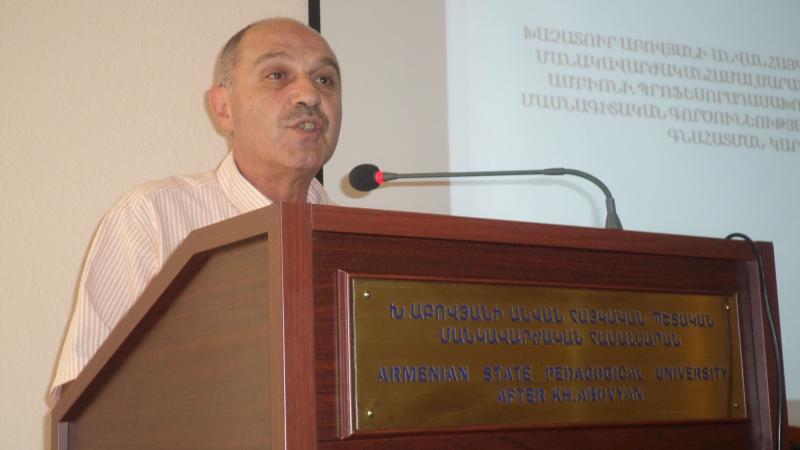
Mher Melik-Bakhshyan, Vice-Rector for Education Process Planning and Organization, presented the actions and steps envisaged by the 2016-2020 strategic plan for increasing the efficiency of pedagogical practices.
“Improvement of practices, management mechanisms for career and professional orientation, choice of schools for professional development, development and implementation of long-term cooperation projects, establishment and operation of the institute of learning and career consultants,” he stressed adding that they also plan to introduce information technology that would control students’ web-portfolios and practices, develop [with professional development schools] and employ quality assessment mechanisms.
The Vice-Rector said in his speech that they had encountered a number of problems while developing new strategic guidelines and stressed that if they surmounted them they would contribute to the successful implementation of strategic actions.
Mher Melik-Baakhshyan assured everyone that considering the existing problems they had taken a number of steps and measures in order to improve pedagogical practices: internship venues and areas were limited, folder of pedagogical practice was reviewed and a guideline was established for the Methodist. Also, a methodical package of pedagogical practice was compiled by the Chair of Theory and History of Pedagogy, the groups allocated to pedagogues and psychologist consultants during educational practices were limited, practice assessment components were revised, etc. “Given the current requirements of pedagogical activities, it is necessary to assess the practical pedagogical skills of graduates and make them more consistent with the aforesaid requirements. To this end, we propose to include the results of pedagogical practices in the final certification process as a separate assessment component,” the Vice-Rector said. He stressed that each stage of pedagogical practices will end with defense of practice results and the average final mark for internship will be included in the final certification document.
ASPU Rector Ruben Mirzakhanyan considered the proper organization and conduct of practices as one of the most important directions of the University activities. He did not hide that it had a formal nature still during the Soviet era. “Internship in leading universities of the world is led by highly qualified and experienced specialists. The content of internship needs serious changes: we should determine and assess student’s teaching ability through internship,” he said.
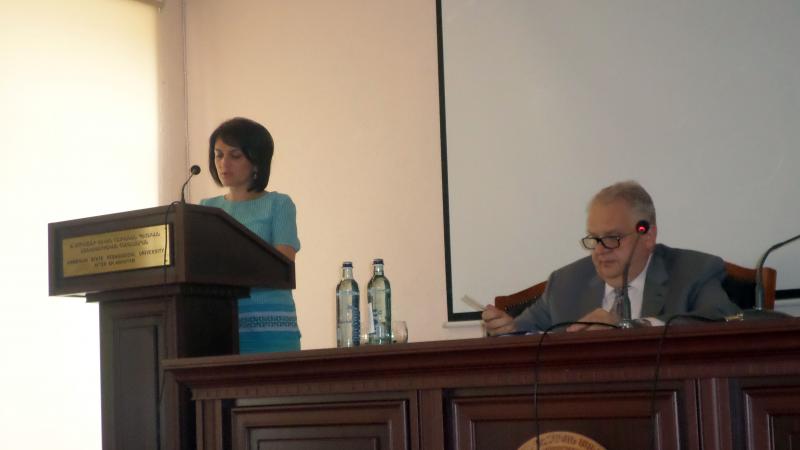
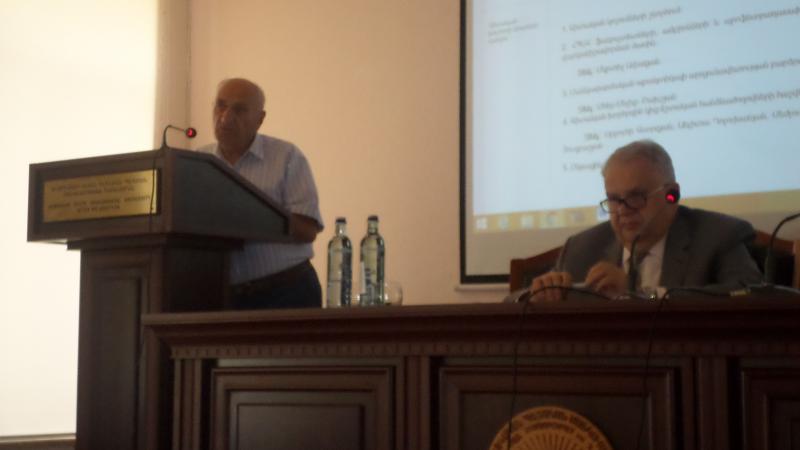
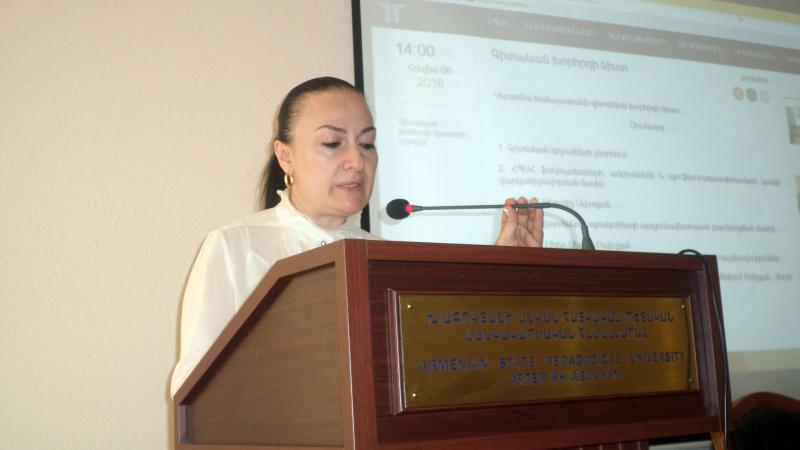
The Chairmen of the Standing Committees under the Scientific Council also made reports during the meeting, summing up the activities of the academic year.
Current Issues
Six candidates were awarded the title of Associate Professor and one candidate - the title of Professor through a secret ballot.
Srbuhi Gevorgyan, ASPU Vice-Rector for Educational and Scientific Affairs, presented four Ph.D. theses and one doctoral thesis which were approved by the Scientific Council and recommended for printing.
Vice-Rector Mher Melik-Bakhshyan presented the process and results of the final certification examinations in the full-time learning system for the 2015/2016 academic year.
The Scientific Council decided to introduce the e-examination system for all specialties in the next academic year. It was also decided to replace the subject scores of the final certification exam in the academic disciplines “Pedagogy” and “Teaching Methods” under Bachelor's degree programme by the rating points of pedagogical practices. Also, the committee chairmen were instructed to submit their reports in a specified format.
The Deans of the Faculties were instructed to ensure student participation in consultations, discuss the recommendations and observations made by committees in the meetings of Faculty boards and Chairs and take corresponding steps to address the shortcomings observed in the process.
Ruben Mirzakhanyan wished pleasant summer holidays to everyone, expressing the hope that the summer rest would help them find more efficient solutions to the aforesaid issues.