- Հայ
- Рус
- Eng
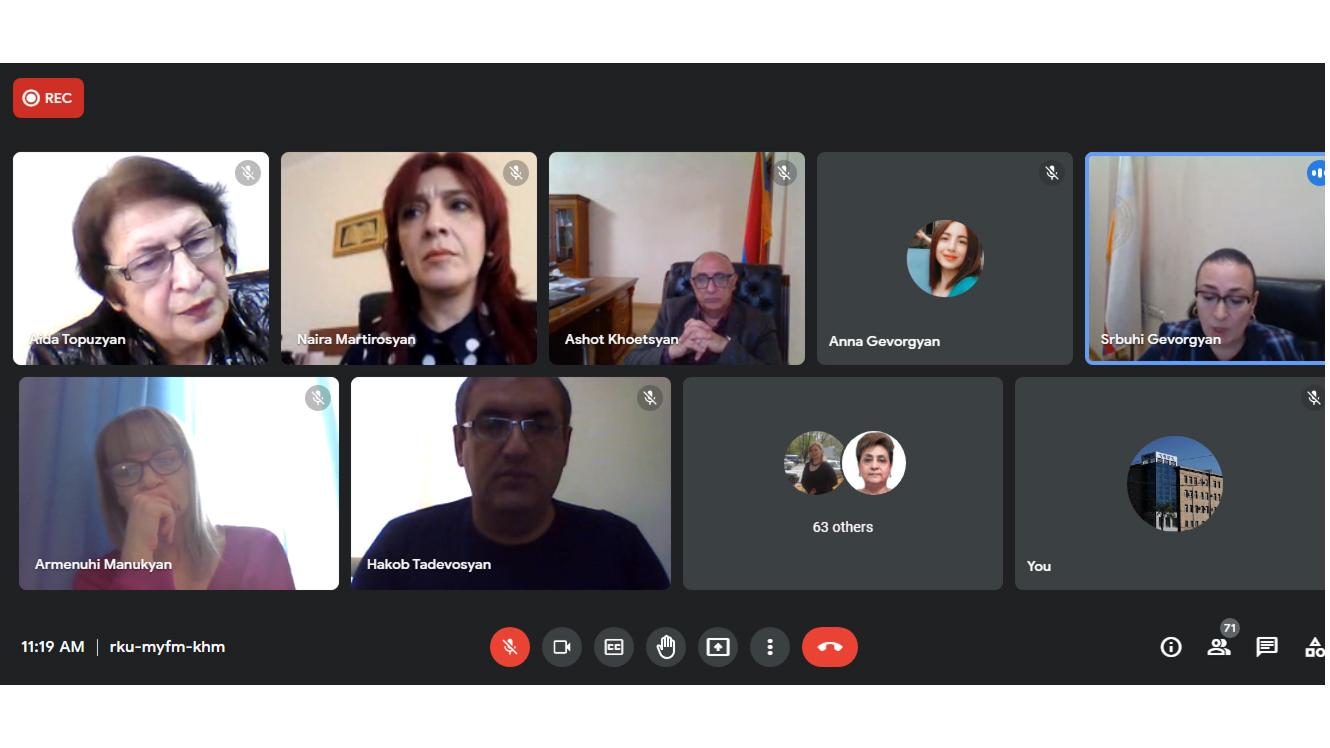
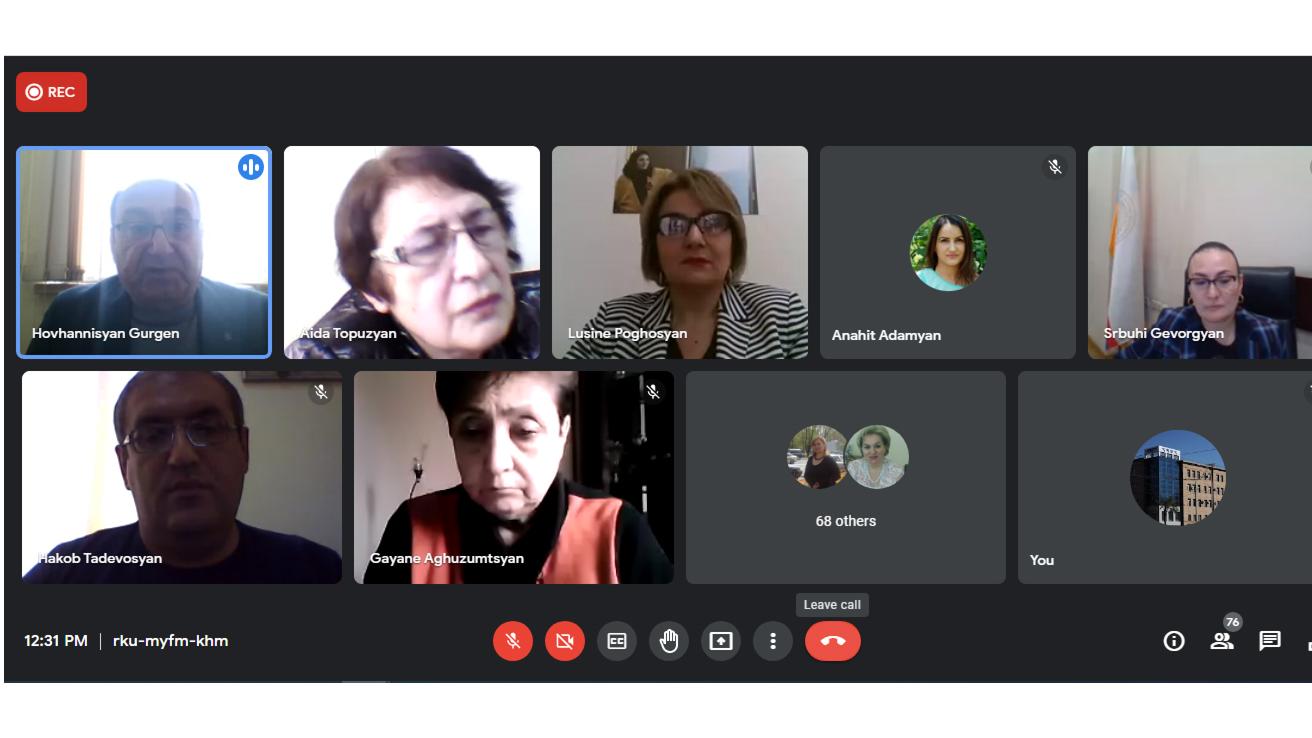
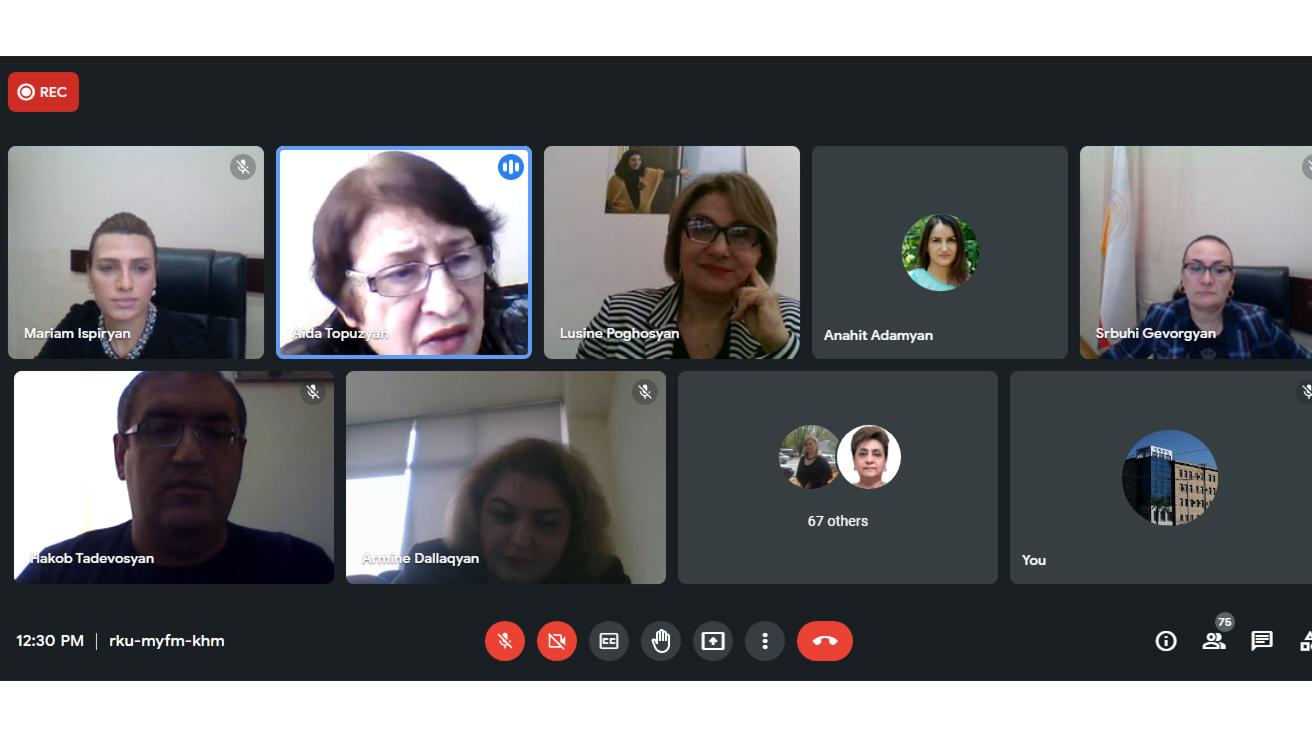
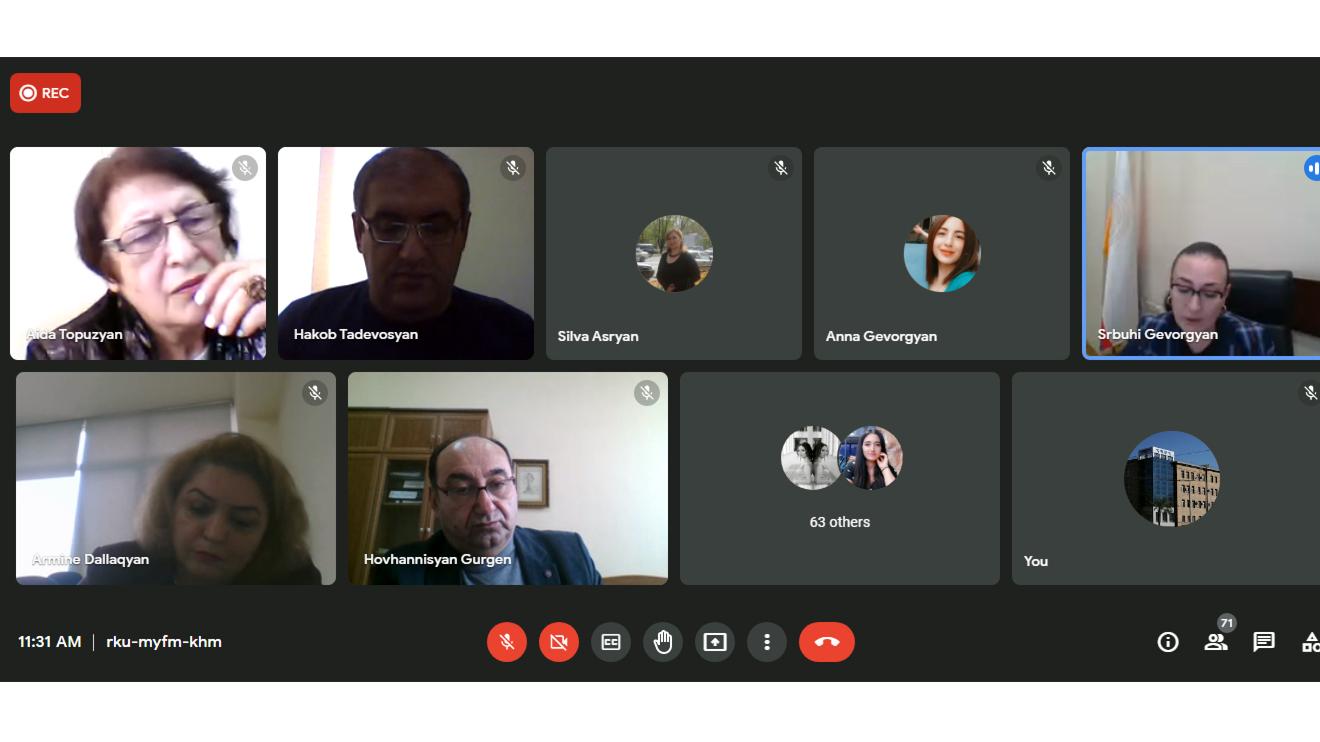
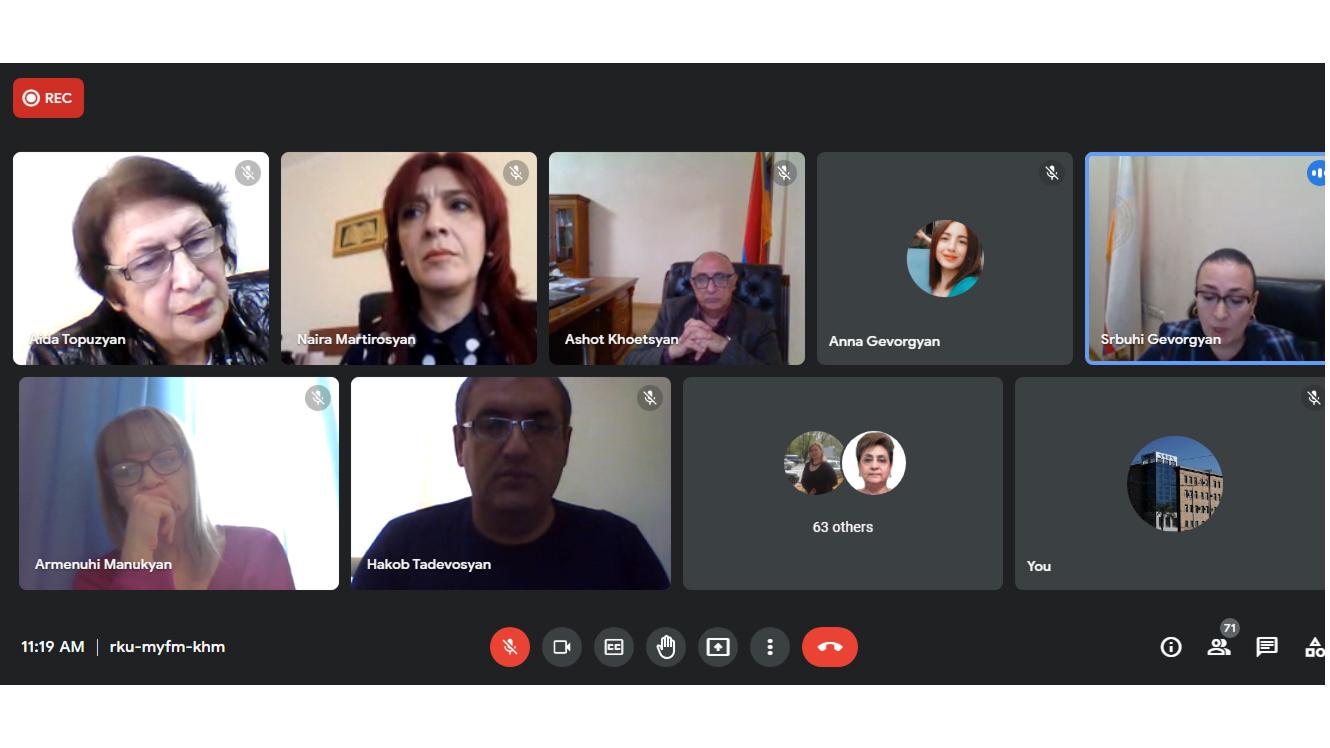
On November 30, an online conference entitled “The Influence of Socio-cultural Background on Childhood: Challenges and Solutions” took place on the initiative of the Chair of Pedagogy of Armenian State Pedagogical University.
Professor Aida Topuzyan, Head of the Chair of Pedagogy, Doctor of Pedagogical Sciences, says it is no accident that the conference coincided with the celebrations of World Children's Day and is dedicated to the 100th anniversary of the University.
Stressing the importance of the conference, Acting Rector of ASPU, Professor Ashot Khoyetsyan said it symbolizes the start of jubilee celebrations of the University. “Contemporary issues in childhood and various approaches to study them are very important. In this context, the Chair of Pedagogy plays a key role at the University and also in discussing the issue.”
The Acting Rector emphasized the role and activity of the Chair in terms of studying and analyzing the influence of natural, political, economic and other external factors on the development of children. Among the above-mentioned factors, he also stressed the influence of professional factors. Mr. Khoyetsyan is convinced that the conference will address childhood problems in our country, offer solutions to them, and will redouble the efforts to build a comfortable and child-friendly world. “The history of the Pedagogical University is closely connected with the history of our country and people. For a century now, the University has been serving the Armenian school, training teachers and educating generations who will shape and build the future of our country, future patriots and citizens,” he stressed.
Aida Topuzyan added in turn that the title of the conference was also symbolic; it was the joint scientific topic of the Chair of the last three years. This year, they mostly studied the learning environment. In the coming years, they plan to study the influence of culture, nature and family on childhood. “The study of the impact of socio-cultural factors, particularly the learning climate, on children and their improvement is one of the key issues of modern pedagogy. Schools and teachers are no longer perceived as only the main source of transferring knowledge. Not only schools and families, but also social networks have an equal impact on a child's development. They provide a new atmosphere for socialization and a new field for promoting values, at the same time creating new opportunities, risks and challenge,” said Aida Topuzyan.
The head of the Chair of Pedagogy notes that nowadays schools perform three functions at a time: create a favorable physical and psychological environment for children, create opportunities for children to participate in the organization of their lives, collaborate with families on parental education issues to identify the various effects and risks of a child's social isolation and environmental influences, and anticipate, prevent, and neutralize their negative impacts.
The conference also addressed the risks and challenges of a multifunctional environment that affect childhood, children’s upbringing and socialization, as well as ways and methods of their solution.
"Mental development of a child, sources and patterns of that development has also been in the focus of attention in psychology. Determination of the right approach to children, the ways of upbringing and understanding the unique features of a child depend on it,” Srbuhi Gevorgyan, ASPU Vice-Rector for Educational and Scientific Affairs, stressed in her report entitled “The Issue of Environmental Influence in the Context of Social and Psychological Paradigms.”
The Doctor of Psychology says to be able to study a person it is necessary to analyze the structure of his/her environment, behavioral mechanisms and ways of development: socialization is done through the internalization of external environmental factors. “It should be noted that a child’s cognitive development is also carried out through assimilating and mastering social experience. In this context, the issue of teaching and upbringing is of great importance. "From the point of view of substantiating the subject of social psychology, all existing paradigms have stressed the significance of subject-subject interactions and external interactions in the environment,” she said.
In her report “Pedagogical Conditions for Humanization of Learning Environment,” Head of the ASPU Chair of Pedagogy, Professor Aida Topuzyan noted that modern pedagogy attaches importance to the educational role of the learning climate and humanization as they secure a child's physical and psychological safety which in turn determine a child's attitudes and motivations towards learning, his/her socialization and the feeling of being a full-fledged member.
The professor noted that a child is a value; every child is different, unique and inimitable and pedagogy should preserve and respect that uniqueness. She defined the terms humanization of a learning environment and child singling out several pedagogical conditions. "Depending on the type of school, the list of regional and other features can be enriched. The important thing is that each and every educational goal and condition serve children and be implemented for the sake of children's development."
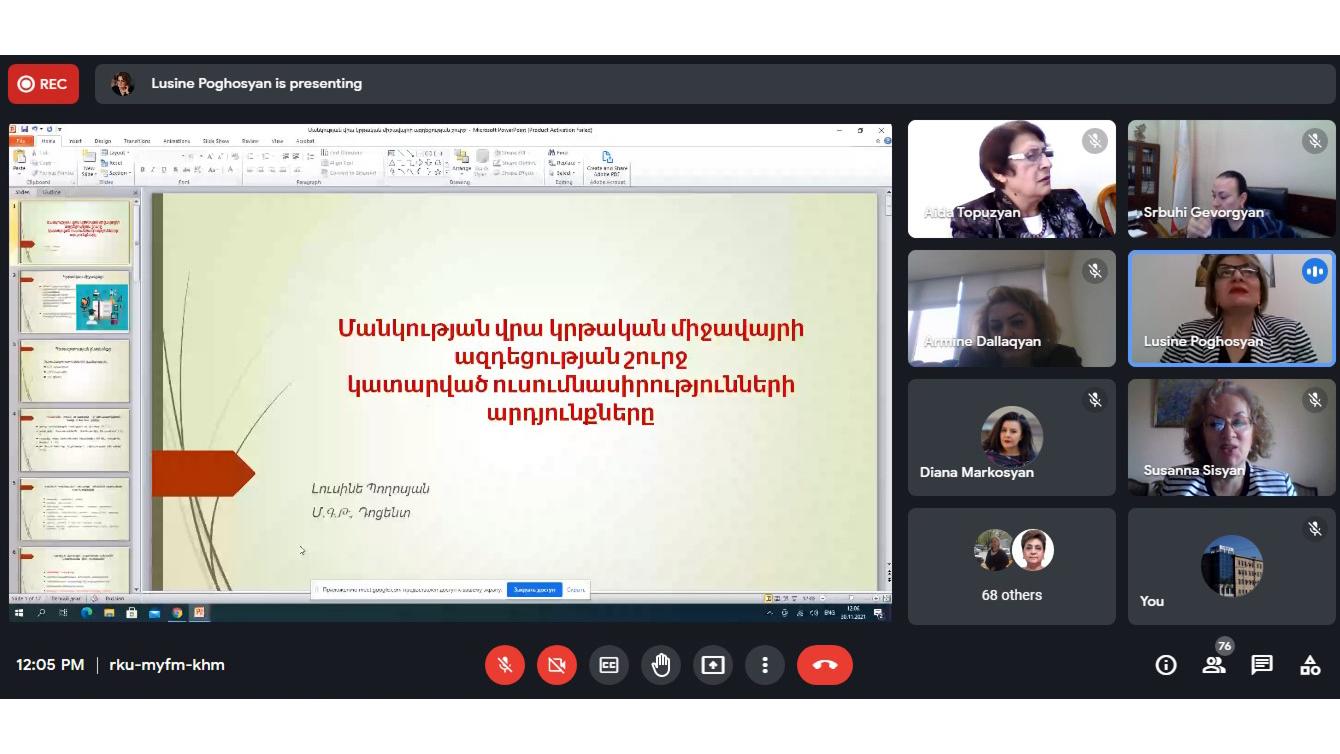
During the plenary session, Associate Professor Lusine Poghosyan, Candidate of Pedagogical Sciences, presented the findings of a study on the influence of the learning environment on childhood, which was conducted among 607 students of different ages, 379 teachers and 350 parents.
Summarizing the results of the research, the speaker noted that in order to create a calm and favorable climate in the classroom, the teacher must believe in the abilities and strengths of each child. "There are no good or bad children; there are children who need more attention from the society and school. Everything depends on the competencies of the teacher: to what extent he/she can ensure a safe and comfortable learning environment for every child, to what extent he/she realizes his/her role to make learning accessible, exciting and interesting for children and keep their desire to learn always alive.”
In his report entitled "The Role and Influence of Environment in Professional Orientation of Schoolchildren," Associate Professor Hakob Tadevosyan, Candidate of Pedagogical Sciences, considered professional orientation in schools as an important direction of social-pedagogical activity ‘which provides a number of learning outcomes defined by the general education standard."
He presented the results of study and polls conducted among schoolchildren which aimed at revealing the influence of professional orientation on children's conscious choice of career, personal growth and development of competencies.
Summing up his speech, the speaker stressed the need for a systemic solution in career guidance and professional orientation in terms of having a competitive workforce in the labor market.
Summarizing the plenary session Head of the Chair of Pedagogy Aida Topuzyan, expressed hope that observations and suggestions to find solutions to the presented problems will be voiced at the end of the conference.
Further on, the conference participants divided into groups. Victor Naumchik, Professor at the Department of General and Professional Pedagogy, the Republican Institute of Professional Education (Belarus, Minsk), ScD in Education, researcher Gulnara Kashfrazieva of the Kazan Federal University of Federal State Autonomous Educational Institution, a postgraduate student at Elabuga Institute, Irina Popova, Associate Professor at the Russian Presidential Academy of National Economy and Public Administration (The Presidential Academy, RANEPA), PhD in Pedagogy, and many others made reports during the meeting.