- Հայ
- Рус
- Eng
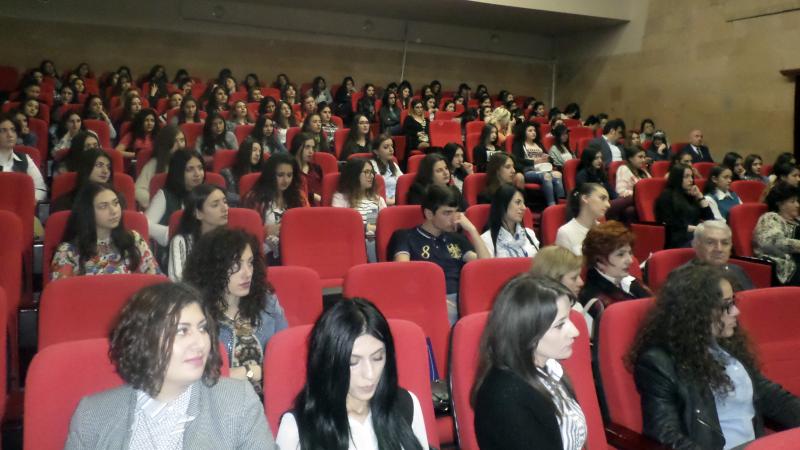
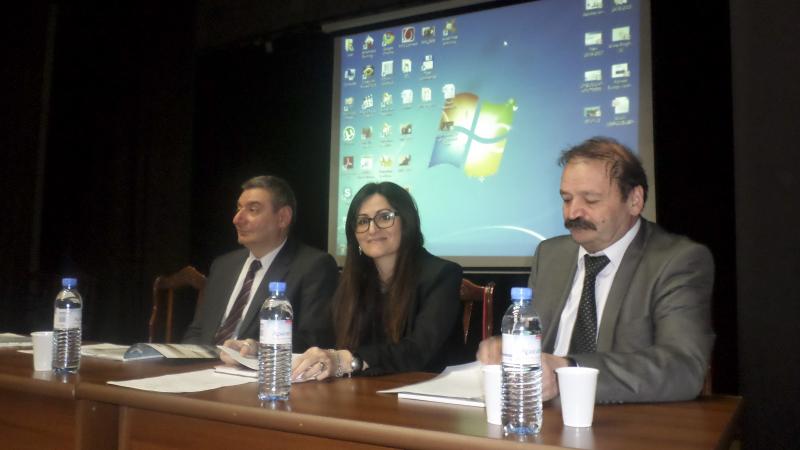
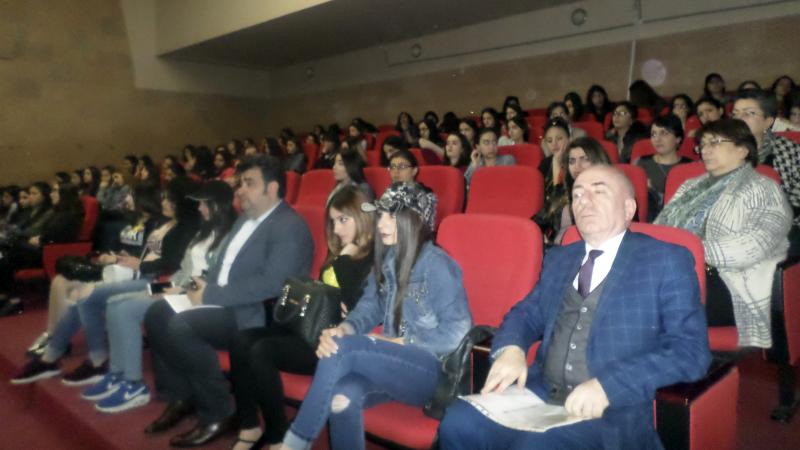
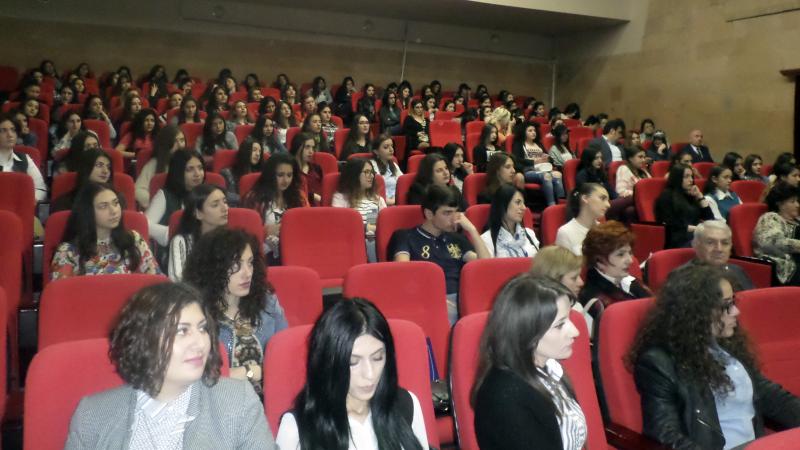
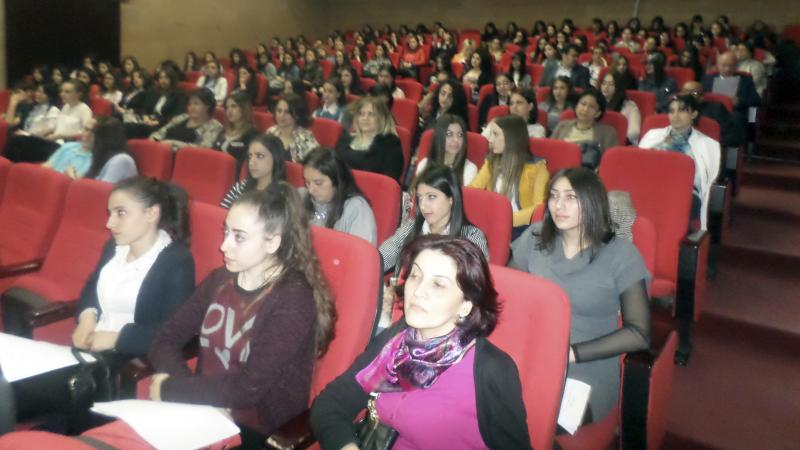
An international student conference entitled “Foreign Language Teaching in Multilingual Contexts” started at Armenian State Pedagogical University on April 18.
The conference organized upon the initiative of the Faculty of Foreign Languages, Chair of Foreign Language Teaching Methods and Chair of Germanic Languages was attended by students from Germany, Russia and Serbia.
In the plenary session and four branches, Armenian and foreign participants of the conference discussed foreign language education in the context of institutional multilingualism, peculiarities of typological and pragmatic analysis.
This problem partly coincides with the linguistic situation in some countries in the sense that it is necessary to reveal the intersection points of related languages.
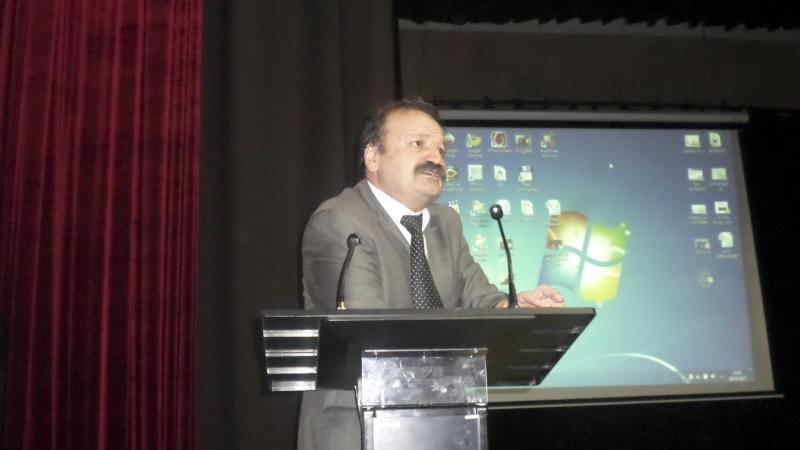
In his speech, Deputy Minister of Education and Science Manuk Mkrtchyan stressed that a student should be a good specialist as well as a good researcher. He added that on his/her career path, a student is obliged to deal with some issues which remain unsolved to this day. Speaking about difficulties encountered in the process, the deputy minister also dwelt on multilingualism. “You needn’t know all languages fluently. Today, we have asymmetry of language teaching goals; you can know one language better than others and speak and write in another language. A network of languages was created in the result where each language has its special place,” he said.
ASPU Vice-Rector Ara Yeremyan spoke about development of a multilingual educational policy, saying it can be implemented in different ways in different countries depending on the country's priorities, history, specific needs and circumstances. “Multilingual speech recognition generates respect for linguistic tolerance and linguistic differences. It also implies respect for freedom of expression, linguistic minorities, less commonly used and taught languages and diversity of languages for inter-regional and international communication,” Mr Yeremyan said adding that the language policy is closely related to the appropriation of values of democratic civilization.
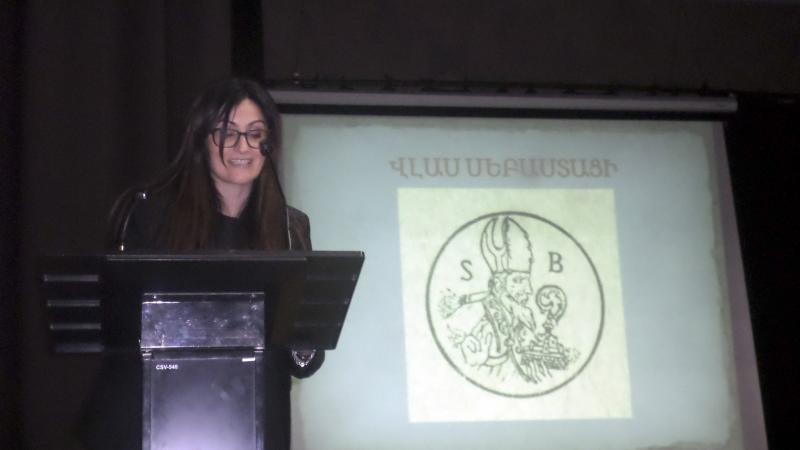
Later on, the participants of the international conference discussed the methodology for language teaching and learning in multilingual contexts, typological classification of languages, common difficulties and challenges encountered in language teaching, methodological principles of of Russian language teaching in the context of institutional multilingualism, as well as development of pragmatic competence in foreign language teaching.
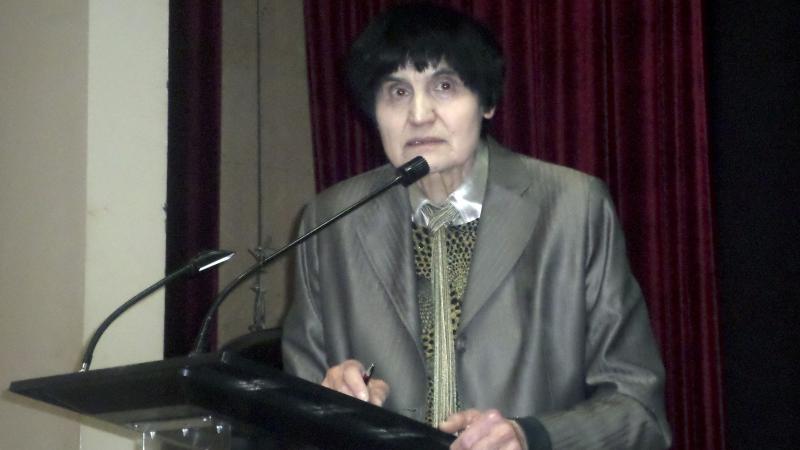
“Goals of foreign language teaching have changed. We should not be tempted to learn several languages in a short period of time because we create a list of languages where each language, especially our native language, has its own place,” said Prof. Melanya Astvatsatryan, Head of the Chair of Foreign Language Teaching Methods. She assured everyone that the purpose of language teaching is to develop not only communicative competence, but also cognitive communication. She thinks that multilingualism is gaining momentum nowadays and we are all unwittingly involved in the process and we need to be aware of institutional changes.
The professor was glad to see that the students included in their reports the results of their Master's theses and practices concerning the principles of multilingualism and tools to facilitate multilingual communication.
Summing up the results of the conference, Melanya Astvatsatryan pointed out to advantages met along with numerous problems in the process of language teaching. “We need to review and change the methodology in order to meet the requirements of the time,” she said.
Results of the two-day conference will be summed up on Wednesday, April 19.