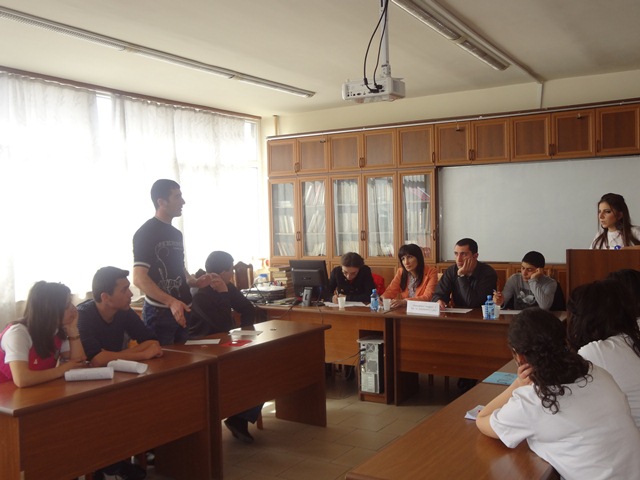
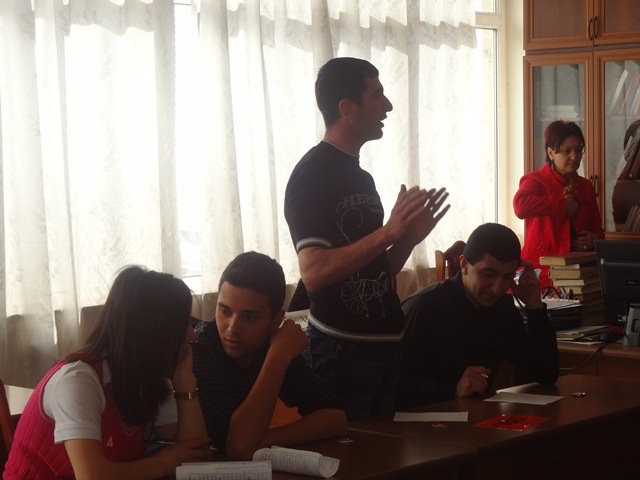
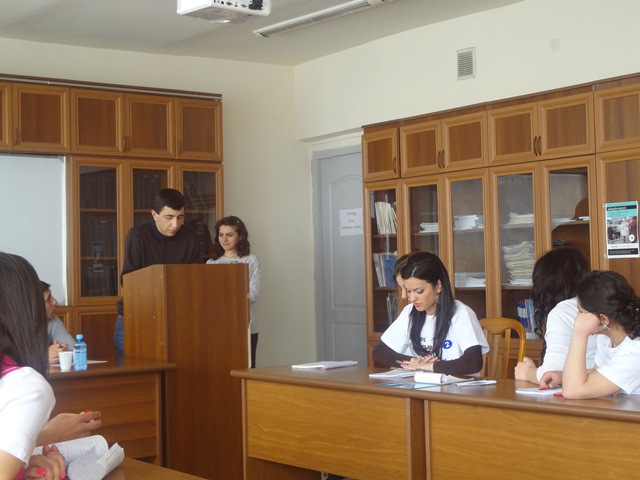
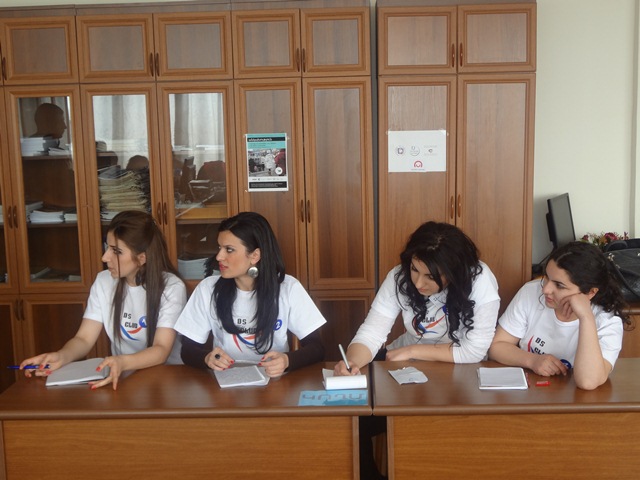
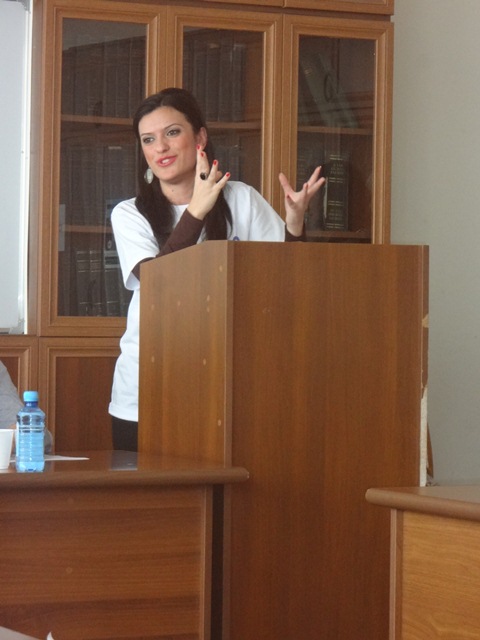
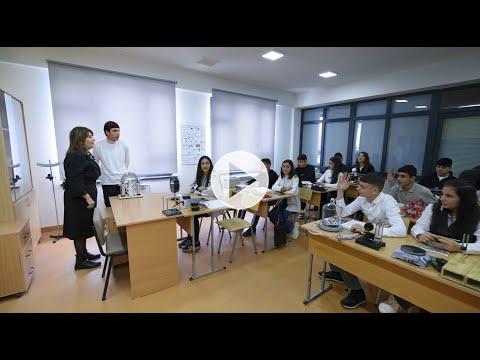
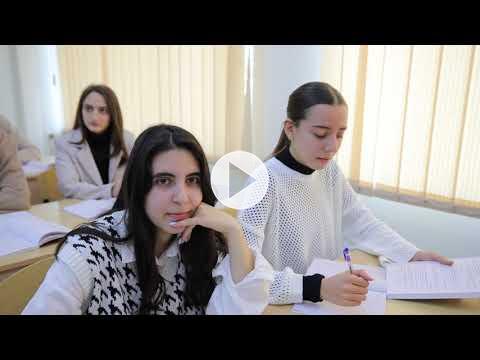
The second phase of the Student Scientific Society /SSS/ interfaculty debates started at the Debates Club.
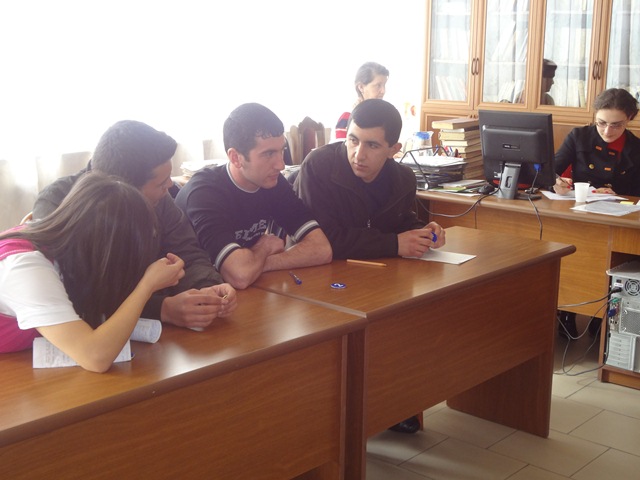
“Internet stimulates pedagogue- learner relationship”; today, the debates club members of the Faculty of Foreign Languages and the Faculty of History had debates on this topic.
According to the format of the debate, the students of the Faculty of Foreign Languages defended their adopted position and reject the point of view of the opposing team. First of all they presented the internet, its essential role in our days, and then they mentioned all the characteristics that contribute to pedagogue-learner relations.
On the contrary, historians and lawyers refused the opposing team mentioning that equal conditions should be created to increase the quality of work and the Internet is not yet available for everybody, and besides, electronic library will never replace the ready literature.
On this occasion, Carl Popper’s debate format was chosen adapting it to this tournament.
During the debate, with the help of cross-questions each team defined why they are for or against the subject, expressed their viewpoints, and insisted on their opinions and disposition by submitting arguments.
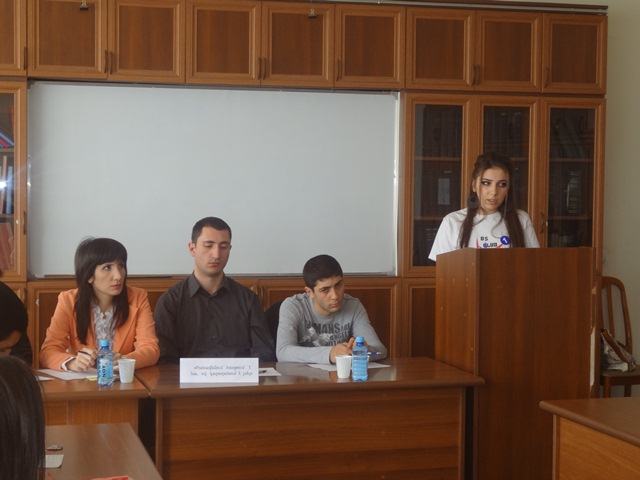
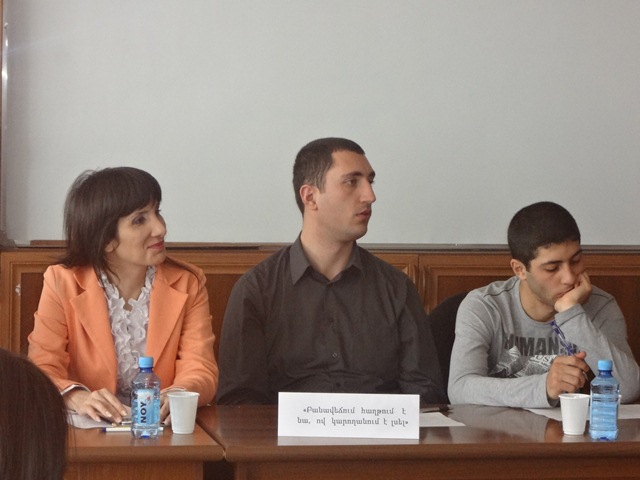
The debare was conducted by the SSS Debates Committee responsible Shoghik Sahakyan.More to the point, a committee of judges was formed, which consisted of the PhD student of the Department of Theoretical Physics and Methods of Teaching Physics, specialist of the center for the University-employer cooperation Hrayr Ohanyan, Lecturer of the Department of Sociology and Social Work Gohar Mkoyan founder and director of the youth portal “New Idea” Gor Geghamyan and the founder and head of the Debates Club of the Faculty of Primary Education Lianna Chobanyan.
Comparing different meetings of the debate club, the latter mentioned in her interview to the armspu.am, “We may surely state that gradually we are getting closer to the defined format of debates, and the participants know the regulations, the culture of participation in debates, and these meetings become not mere discussions or exchange of ideas and thoughts, but real debates.
By taking into account the convincing arguments, the proofs presented by the teams, the intelligent speech of the participants, the team work, analyzing both sides’ dispositions on core issues, the judges highly appreciated the Debate Club of the Faculty of Foreign Languages.
Let us also mention that the previous day the Debate Clubs of the Faculties of Foreign Languages and History conducted a debate about the education system in Armenia, insisting that the educational system educates not citizens but “walking encyclopedias”.