“Love the sphere of you future scientific activity,” Academician Georg Brutyan, Chairman of the International Scientific Institute of Metaphilosophy, Transformational Logic and
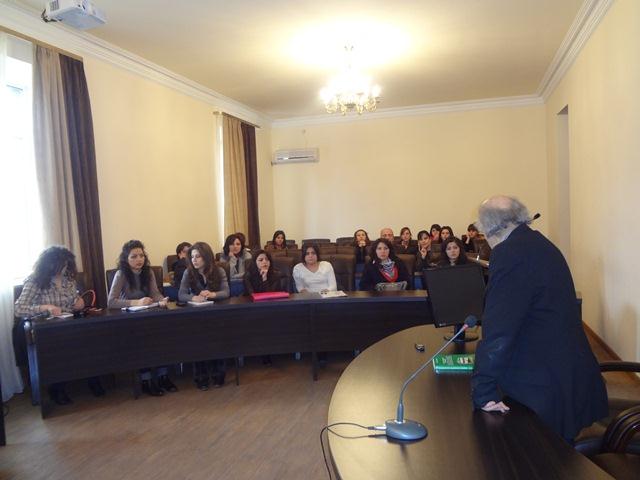
Argumentation Theory, full-fledged member of the National Academy of Sciences started his lecture with the advice.
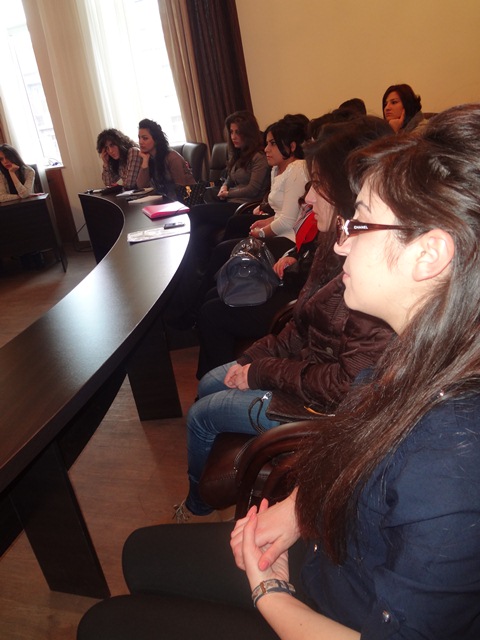
Addressing the attendees of the scientific-practical seminar “How to write a scientific paper?” organized by the SSS Faculty of Primary Education, the academician focused on the key issues of writing scientific papers, laying the primary accent on the correct choice of the topic. “Writing a paper on the ready-made theme is like tying the knot without seeing the bridegroom.”
“I do whatever I like, but I do not always like the things I do,” the philosopher cited his motto, adding that the scientific work should not be published immediately after its completion: it should be estranged, alienated from the writer and be criticized by the author some time later.
While Georg Brutyan agrees that any novelty in science causes problems, he states that writing a scientific paper is a complicated process, and one should be armed with love and devotion in the process.
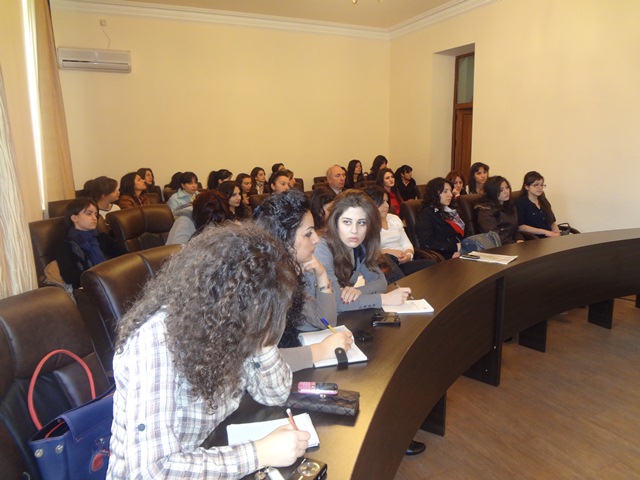
Anush Arakelyan, a Master’s degree student of the Faculty of Biology, Chemistry and Geography, has already written three scientific articles. She says the knowledge she received during the lecture will help her in the future. “It is a great honour for me to attend the lecture of the great academician. I have memorized each idea and advice of the philosopher, they can be a guarantee of a successful scientific paper,” she said.
At the end of the meeting, Mr Brutyan cited his example to encourage the young people in their scientific activities. “If you have picked up a pen to write a research paper, then you must write,” he said.
Scientific-practical seminars will be traditionally held at the Pedagogical University. Associate Professor S. Piloyan, L. Poghosyan and many others are expected to deliver lectures in the near future.
The series of lectures will be summed up by a roundtable discussion, with students presenting their findings and offering recommendations for organizing new seminars.