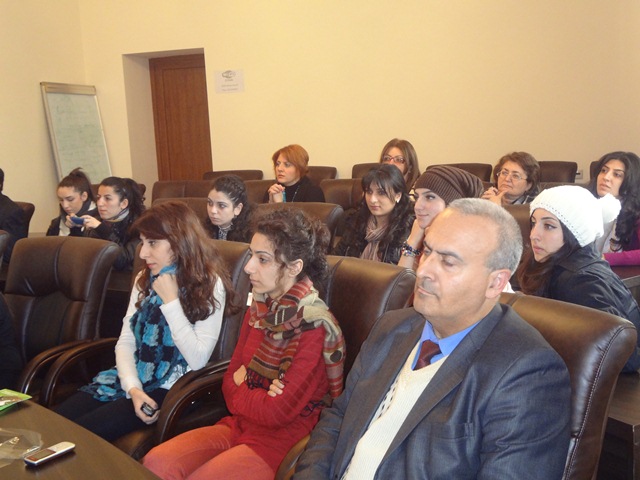
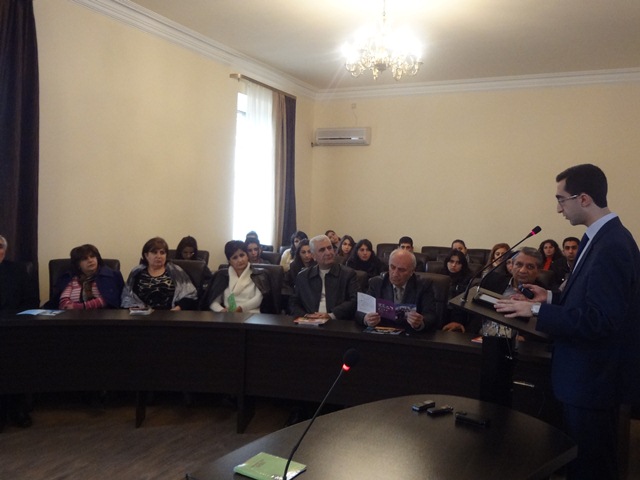
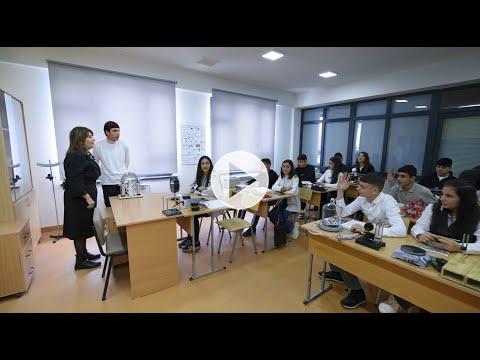
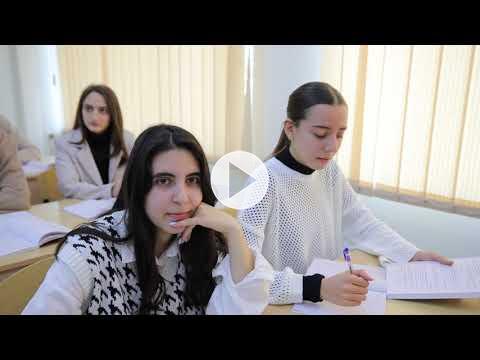
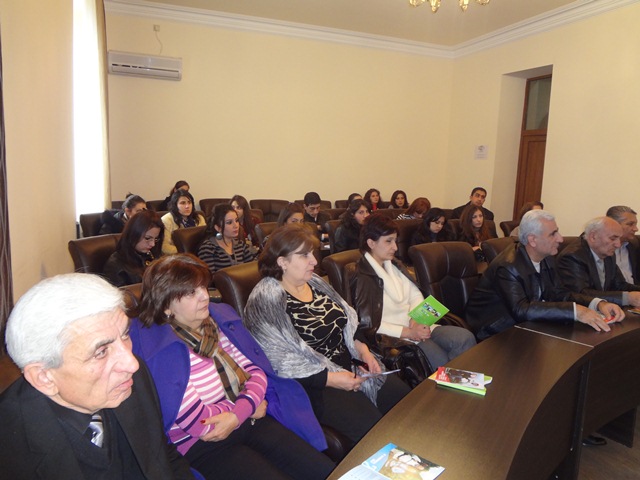
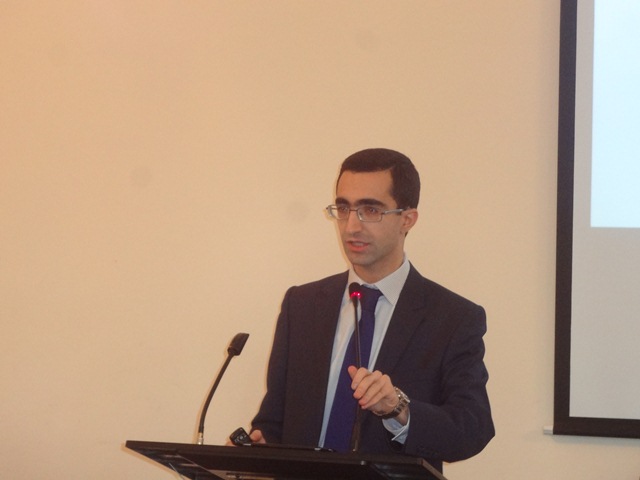
Today, the Candidate of Economy at the ASPU Department of Economy and its Teaching Methods, the Acting Associate Professor Karlen Khachatryan introduced the University
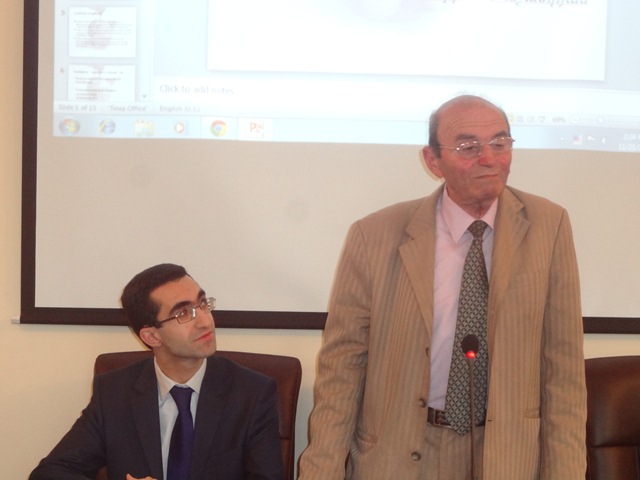
teaching-professorial team and the students with the current pension system of the Republic of Armenia, the RA Law on the Pension Accumulation System, the nature of the mandatory accumulation system and other problems in this matter.
During the lecture on the subject “the Pension Accumulation System and its Peculiarities” the economist thoroughly described the necessity of the new law, pointed out the options for solutions and the expected outcomes of the refroms.
Gradually, the demographic problems sharpen up in the country, the working people are no longer motivated to make pension payments, the employers too, try to avoid making the mandatory social payments; according to Karlen Kachatryan, the necessity of reforms is first of all conditioned by these factors.
In addition, the Candidate of Economy highlighted in his lecture the baselines for the solution of the problem; the transition from the financed distributive pension system by the principle of generations’ solidarity to the “self-financed” accumulative system, the alteration from the model of pensions determined by the political decisions into the model of fixed payments based on the real income, and, passing from the pension system directly managed by the state to the private pension system coordinated and controlled by the state.
Furthermore, Mr. Karlen Khachatryan spoke about the advantages of the accumulation system, pointed out the possible risks that may occur as a result of the reforms. Besides, referring to the human factor risks, the economist observed that the information about the accounts and accumulated funds may be obtained only via internet or through the ATMs, while these mechanisms are unavailable for many.
More to the point, the economist also noticed that taking into consideration the our-days’ socio-economic state of the
population and the decrease of real income for a vast number of people starting from 1 January 2014, it will not be possible to avoid the economic risks.
Likewise, speaking about the market risks, Mr. Karlen Khachatryan drew the attention to the country’s shadow economy, the underdevelopment of the asset markets and the absence of the corresponding infrastructures. In fact, the law has political risks too; the public distrust is mainly conditioned by the political developments; probably several years later the ruling system might change, new people might come and consider the activities of their predecessors incorrect.
To conclude, active Q&A discussions developed during the meeting; the majority of those present expressed their discontent about the mandatory accumulative component, thereof, highlighting the risk of the law and the decrease of their income.
And last but not least, the Acting Head of the Department of Economy and its Teaching Methods Mr. Maxim Sargsyan promised to arrange such meetings more frequently and to make it some kind of a tradition, thereunder stating the “Insurance” as the subject for the next meeting.