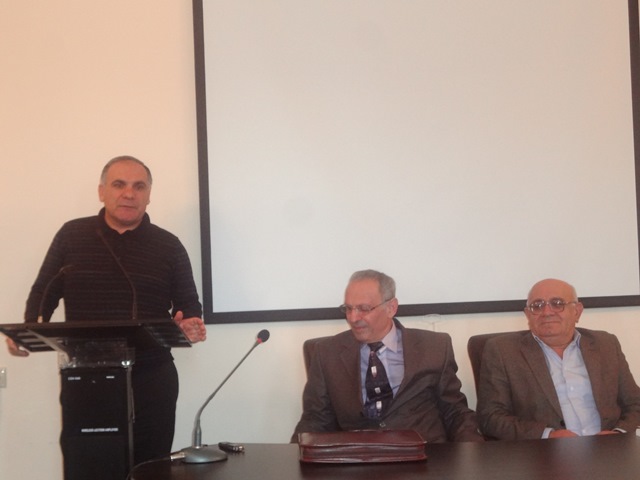
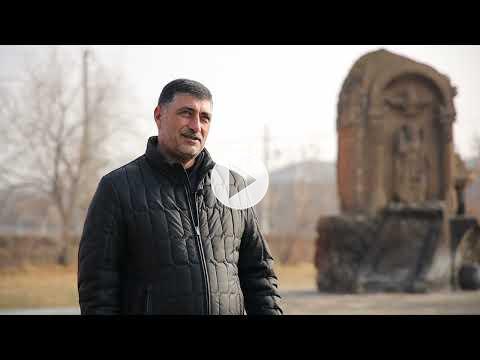
Political hearings continue at Armenian State Pedagogical University. Today the University hosted Ph.D. in Political Science, Professor Henzel Manucharyan, who was invited to the
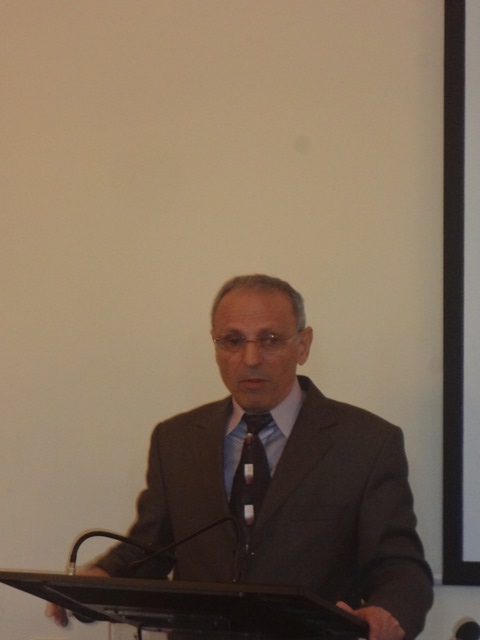
University at the initiative of the Department of Political Science and History of Law, Faculty of History and Jurisprudence, and the Student Scientific Society of the Faculty.
During his meeting with University students, the political analyst referred to the history of Armenian political thought and the stages of its development.
In his speech, Henzel Manucharyan underlined that the Armenian political thought has had up and downs, phased developments but maintained its unique quality. The invention of the Armenian alphabet became the basis of the development of Armenian political thought, and Mesrop Mashtots was the first political analyst in Armenia. “For many centuries, there was a struggle in Armenia between Monophysitism, Western Christianity and Islamic civilization. Being at the crossroads of Europe and Asia, Armenia frequently faced the confrontation of their civilizations. Historical facts indicate that the masterpieces of the Armenian culture, Western Christian and Monophysite Christian civilizations were established during the periods of victory.
Speaking about the development of Armenian political thought in the Middle Ages, the Professor said it progressed during the period of migration. Thanks to the Armenian Diaspora, progressive ideas were nationalized and localized and global cultural values were created. “The next phase of the development occurred in the second half of the 19th century, which was marked with active social and political events. The next stage was in the 1920s-1930s and coincided with restoration of the Armenian statehood that was undermined for five and a half centuries.
.jpg)
At the end of his speech, Mr. Manucharyan underlined that one of the peculiarities of the Armenian political thinking is that it had parallels with the achievements and great victories of Western Europe.
Could Armenians spread civilization in the Near East? What are the sources of the origin and development of Armenian political thought? During the meeting the guest speaker also answered the aforesaid questions.
Edik Gevorgyan, Dean of the Faculty of History and Jurisprudence, thanked the Professor for the interesting presentation and the ensuing discussion. The Dean stressed that Armenians have always led an active public life regardless of all difficulties. “Historical experience is essential, but the vision of the future depends on you and your knowledge,” Mr. Gevorgyan said.
Levon Shirinyan, Head of the Department of Political Science and History of Law, said the political hearings are attended by creative people, and similar meetings promote the transfer of knowledge and formation of political thought.

.jpg)