- Հայ
- Рус
- Eng

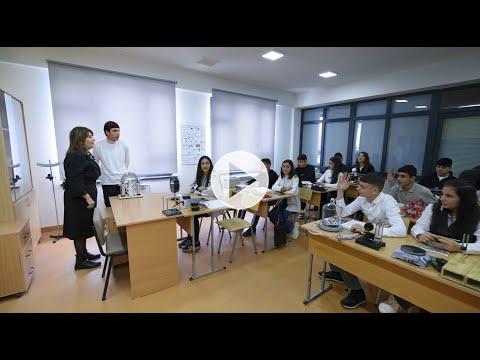
The first Republican conference of high school teachers entitled “Development of Chemical Education: Problems and Prospects” kicked off at Armenian State Pedagogical University on October 16. The event brought together academicians of the National Academy of Sciences, lecturers of different universities, as well as teachers of around 32 high schools from Yerevan and regions.
Greeting the participants of the conference, ASPU Vice-Rector Srbuhi Gevorgyan highlighted the role of Chemistry in the country’s economic development, and the importance of holding the conference, expressing the hope that it would promote the exchange of experience, knowledge and ideas, expand the scope of professional activities and help participants make general proposals on specific methodological issues.

“One of the main preconditions for shifting to the high school system is to open a special school in Yerevan and Chemistry streams in regional schools, which does not mean that the subject should be neglected in other schools,” Deputy Minister of Education and Science Manuk Mkrtchyan said, urging the participants to submit their proposals on the subject matter.
The Deputy Minister noted that in the 21st century social sciences are in the focus of secondary schools of all countries, at the same time he urged to be prudent and avoid developingsocial sciences to the detriment of natural sciences. “The modern-day school has turned into a school of memories: the method of teaching natural sciences at the same pace can threaten the teaching of Chemistry at school,” Mr Mkrtchyan said, citing the volume of educational material as another reason. “We would try to shorten the learning material instead of curtailing lessons.”
Adolf Mantashyan, Chairman of the Armenian Chemical Society and an academician of the National Academy of Sciences, also spoke about the current state of Chemistry and called on teachers to arouse pupils’ interest in and love for the subject in order to boost its development at school.

Gagik Melikyan, Director of Armenia's Assessment and Testing Centre, presented the conference participants the results of the unified state examination in Chemistry, comparing them with the results of other natural sciences.
The number of applicants taking a unified exam in Biology and Physics is much greater but Chemistry is leading according to average scores.
Why did people lose interest in Chemistry? Mr Melikyan proposed to consider the question on several levels, including educational system, science and higher levels.

Then the participants continued their work in a plenary session, with Svetlana Hovakimyan, Dean of the Faculty of Biology, Chemistry and Geography, ASPU, and Lida Sahakyan, Dean of the Department of Chemistry, Faculty of Pharmacy, Yerevan State Medical University after M. Heratsi, presenting reports.
Speaking about the peculiarities of teaching Chemistry at the ASPU, Svetlana Hovakimyan focused on the changes underway at the University to comply the teaching with European standards. Those included review of curricula, introduction of required and elective courses in the curriculum under the credit system, increase in the volume of individual work carried out by students, etc.
“Quality of integration, multilevel structure, coordinated essence and competence orientation – those are the features of Chemical education at the University,” the Dean said adding that the Faculty cooperates with one of the leading scientific centers of the National Academy of Sciences and prepares Master's theses.

In her report, Lida Sahakyan referred to education reforms dwelling on their urgency. “Education paradigm has changed into new pedagogical and educational technologies, which highlight creative forms and methods of training specialists, rather than the superiority of knowledge,” the Professor said stressing that the ongoing reforms [which are misunderstood by society] should not be ascribed only to the national education system: the ultimate goals of the reforms are not formulated yet.
In this regard, Lida Sahakyan underscored the approach to collective creativity and the necessity of finding effective joint solutions for all participants in the learning process who have a balanced and well-disposed attitude, especially for those who are forced to change their profession.

At the end of the plenary session, the conference participants heard more reports delivered by high school teachers who presented different methods of teaching Chemistry at school, sharing their experience and observations.