- Հայ
- Рус
- Eng
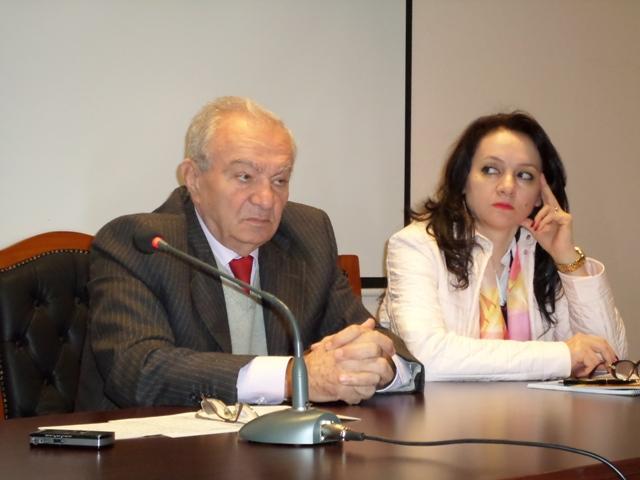
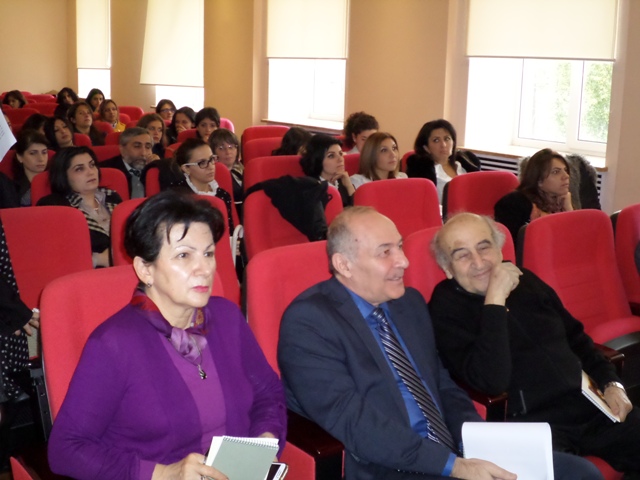
Today, a symposium headed “Crisis for the Institute of Families and its Surmounting Methods in a Transforming Society” was launched at the Pedagogical University on the initiative of the Faculty of Education Psychology and Sociology Department of Sociology and Social Work.
On this occasion the Vice-Rector for Academic Affairs Ms. Srbouhi Gevrogyan discussed one of the most important issues of the symposium-the family crisis noticing that the transforming society brings forth a certain changes conditioned with objective and subjective factors, which transfer on to the traditional families introducing or strengthening overloading effect of conflict situations existing in families. However, the latter also expressed hope that the participants of the symposium will upbring the problems in their reports suggesting proper solutions for them.
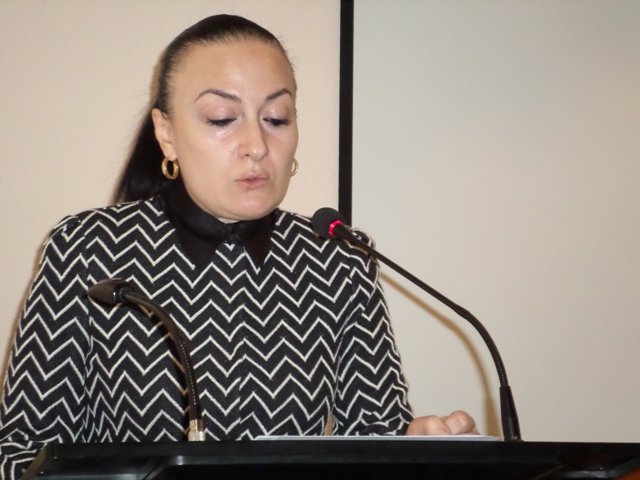
What is more, Ms. Srbouhi Gevrogyan noted in her report on the topic “Psychological Mechanisms of Surmounting Conflicts in Families” that the study of psychological principles of effective interactions in complicated occurrences happening in social groups shows that in younger families interactive negotiation strategies are not mastered with proper effectiveness. Conflict situations that are difficult to this or that extent, are solved quite effectively in cases when one member of the family is conducting a negotiation strategy and the other- a manipulative.
More to the point Ms. Srbouhi Gevorgyan introduced the results of the studies, its aims and coordination of interests, the mutual aspiration for trust, reflexivity, ensuring the balance of statuses, mutual control of both parties, reviewed at the main psychological mechanisms of effective interaction in families with conflict situations.

Next in turn, the head of the Department of Sociology and Social Work, Professor Yuri Gasparyan made a comparative analysis of the our-days’ and traditional Armenian family models within the scope of his report on “the Reasons of Family Collapses and its Circumstances in a Transforming Society”
The latter noticed that at all times traditional Armenian families had difficulties but they had been overcome by the policy promoted by the Armenian Apostolic Church and the State.
In this regards, Mr. Yuri Gasparyan conditioned the collapse of traditional Armenian families with the lack of love, mutual respect, and common ideas, as well as of the widely –spread self-selling and venal marriages.
“The decrease of the number of marriages, the number of child-births, the increase in the number of divorces, prostitutions, extramarital relations, reduction of financial incomes – these are the main factors of family crisis the surmounting of which will become possible only through a state plan and as a result of social policy executed by Governmental and corresponding departmental bodies,” he added.
Further on, the RA NAS Associate professor Gevorg Pogghosyan introduced his topic about “Contemporary Social Issues of Young Families” urging not to observe family crisis as a merely Armenian syndrome; in fact, it has a global shade that is happening despite our will.
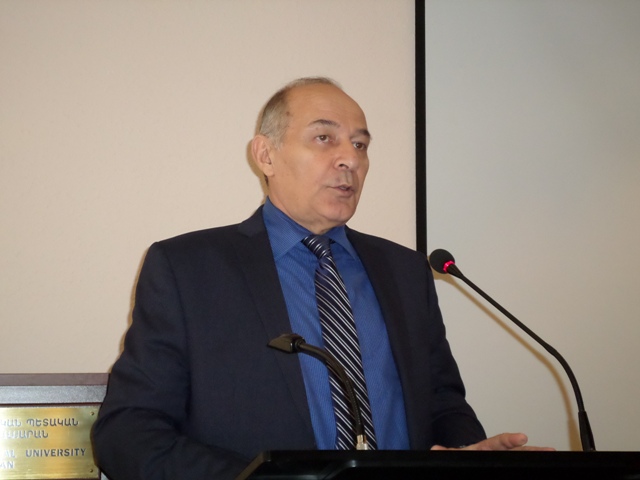
“For ages, the family and religion have been the pillars of survivals for Armenians thanks to which the Armenian nation, ethnicity and culture preserved existence and stayed alive. As a matter of fact, the family concept is changing all over the world, including in Armenia: the number of family members is reducing, the structure of birth, marital age changes, serious role is granted to economic, technical factors, while the ancestral, multi-membered family model is long ago in the past surrendering its position to the new family model”.
Afterwards, the professor of Sociology and Social Work, PhD Robert Jijyan delivered his report on the subject of “Homosexuals and the tendencies of forming families by them in our days”.
The professor noticed that at the time being homosexuals became a prevailing power in a number of developed countries, they had not only managed to achieve tolerant attitude towards themselves, but also had obtained equal rights as a social minority by the civil legislation. This subject is also rather up-to-date in Armenia; and the upcoming danger is already obvious.

“Homosexuals have a psychological weapon; they are dictating their will as a result of which homosexual families turn into production means of homosexual and bisexual individuals,” noted the professor and put in that a society formed by bisexuals people would become the object of satisfaction of sexual needs of homosexuals. Homosexuality is prostitution, which should be rigorously struggled against, so that it does not mentally putrefy humane society and its basis in appropriate families”, the professor concluded.
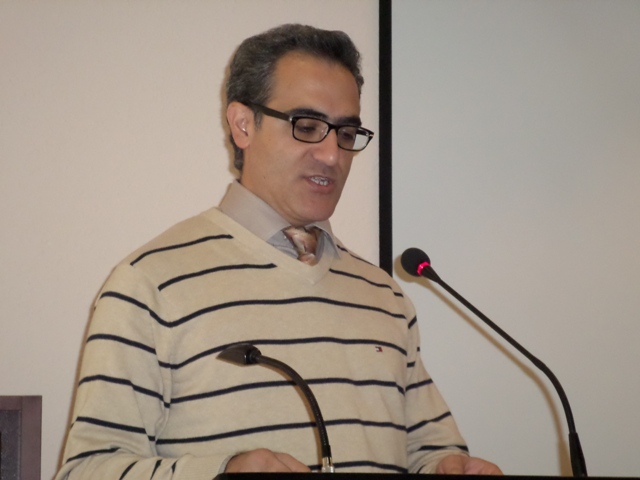
Later on, Mr. Vigen Shamiryan and Mr. Griqor Hovhannisyan presented their reports about the “Social support challenges of families and its models in the RA”.

They highlighted that since 2010, the level of poverty in RA had been demonstrating a dynamic increase which was particularly vivid and emphasized in families with children; the poverty in the whole population is 35.8 per cent, and 42.5 per cent in families with children.
Introducing the studies they had conducted, the speakers observed that the representatives from both the Government and the Local Self-Governing Bodies, as well as NGO members give major importance to implementing social projects in Armenia and were willing and ready for collaboration with one another.
“The level of social vulnerability still remains among us, as there is a huge number of fathers who are away working abroad, a lot of single mothers, insecure and vulnerable families, vast unemployment, refusal of children and taking them to boarding schools and to alternative care centers.”
The symposium activities proceeded with various other reports referring to the topic.
The wrap-up of the symposium will be held tomorrow.