- Հայ
- Рус
- Eng
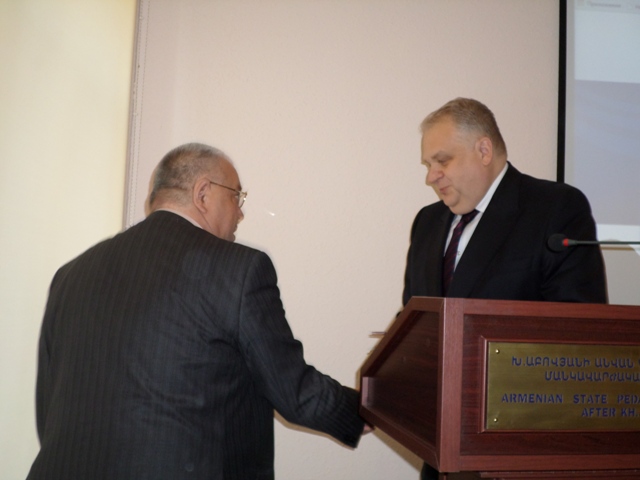
At the recurrent sitting of the Academic Council of Armenian State Pedagogical University, ASPU Rector Ruben Mirzakhanyan handed over a diploma [of Professor] to the Dean of the Faculty of Philology, Yuri Davtyan. The Rector also congratulated all those who are celebrating their birthdays in October.
In her report dedicated to the training of the teaching staff, ASPU Vice-Rector Srbuhi Gevorgyan said the process of education reforms is underway at the University, but there is a need to focus on the training of ASPU teaching staff. “The staff training starts in 2015. At the initial stage it will be held in five subjects - Pedagogy, Psychology, English, Philosophy and Special Education. At present, we are working on vocational programs. The lecturers who have gone through the competition will participate in the first phase of training,” she said.
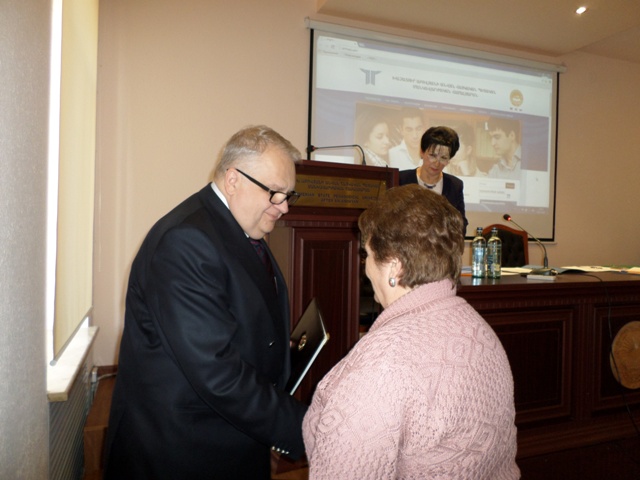
To improve the training process the Vice-Rector proposed to open a department for bettering professional qualifications and providing education and training services, to organize postgraduate education in three directions – skill development, professional training and educational services, to develop programs for developing skills and organizing professional training and educational services, to develop tools for monitoring and assessing the training process.
ASPU Rector Ruben Mirzakhanyan stressed the importance of the initiative and its application in practice, adding that the lecturers who would pass the competition would participate in the training to be held in 2017. Members of the Academic Council made proposals and supported the initiative.
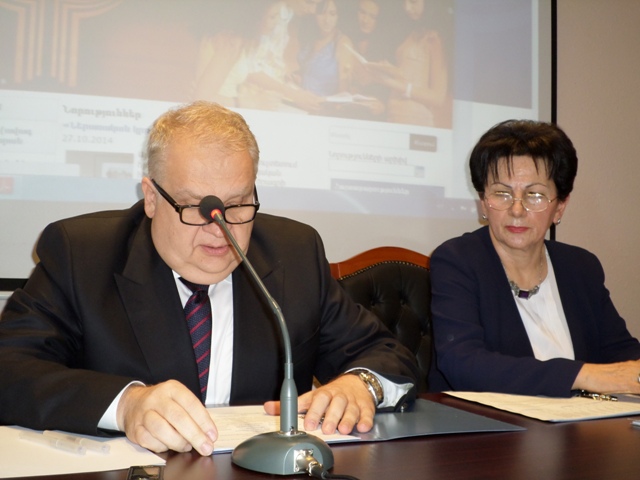
Head of the Internship Department Vahan Sargsyan presented the Council members the strategic plan of the Internship Department and regulations of professional internship.
Mr Sargsyan said the regulations define the procedure of organizing internship, its types, phases, functions of people involved in the process and organization of internship evaluation.
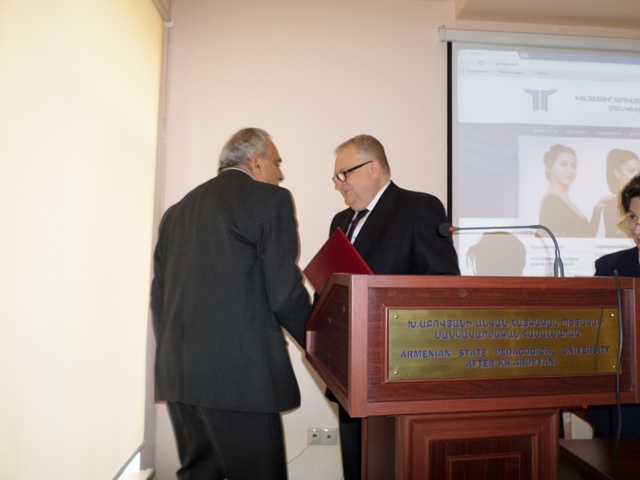
“Internship aims to help students develop their competencies, acquire professional and organizational skills in definite activities, as well as collect and generalize educational resources for educational programs and independent research,” he said.
In his report, the head of the Internship Department also referred to the organization of internship, its types, assessment, as well as the established procedure according to which students who have missed the internship can take an individualized internship.
Speaking about internship supervisors Mr Sargsyan said they are determined in accordance with teaching loads; they have a high level of methodological training and preparedness, extensive research experience and fully master the latest teaching methods.
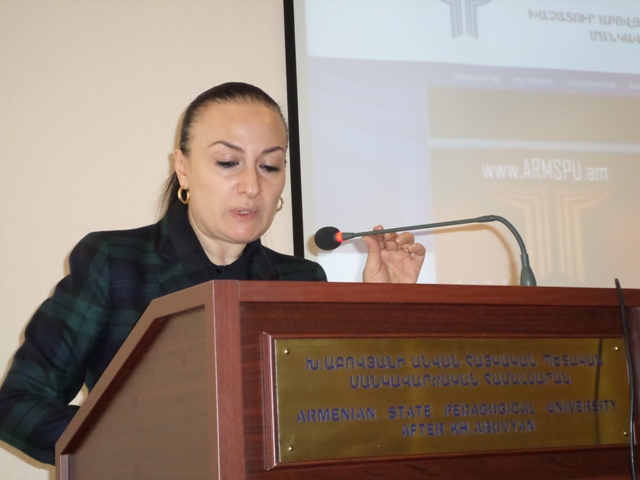
Speaking about the strategic plan of the Department he heads, Vahan Sargsyan said the Department aims to plan, implement and evaluate the process of internship based on best practices and quality management mechanisms.
Mr Sargsyan also enumerated the objectives of the Department, those including improvement of internship management mechanisms, normative legal acts, internship organization and operation, methodical process, mechanisms of cooperation between the University and host companies, development of joint mechanisms for research and teaching research internship in graduate courses, development of technological resources of internship organization, internship evaluation and monitoring, development and introduction of joint and complementary mechanisms of internship and methodology departments.
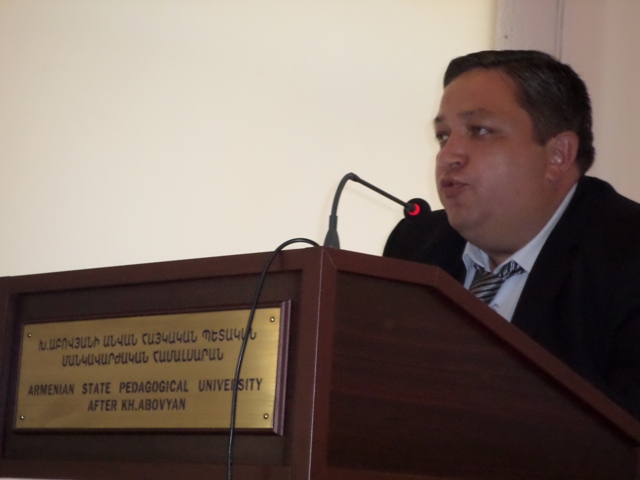
In his report, Mkrtich Avagyan, Head of the Education Policy and Quality Management Department, spoke about the necessity of amending the system of knowledge assessment. He presented the Council members general assessment provisions, schedule of the introduction of new procedure as well as the work carried out in that direction.
Speaking about the changes in the assessment system, Mr Avagyan said that taking into account the nature of the curriculum of professional education courses, workload, type of courses, teaching methods, as well as considering the importance of the course in the formation of students’ professional abilities and skills, courses at the University were divided into two groups depending on the assessment system: those ending in interim assessment (quizzes) and in final assessment (examinations).
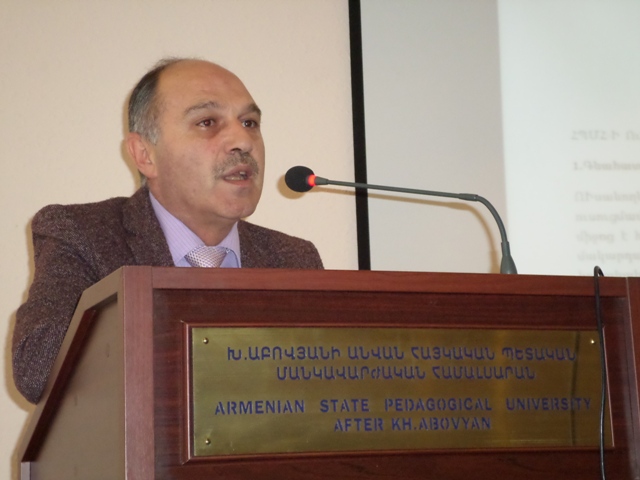
“The criteria for checking and assessing the abilities of ASPU students include knowledge and level of understanding, practical skills, transferable and applicable skills. We have also defined the components of the grading scale: academic subjects ending in interim assessment /quizzes/ are marked on a scale of 3-4 and those ending in final assessment /examinations/ - on a scale of 3-5.” Mr Avagyan then presented the grading scale, re-examination in the multifactor assessment system, recovery of academic debts, etc.
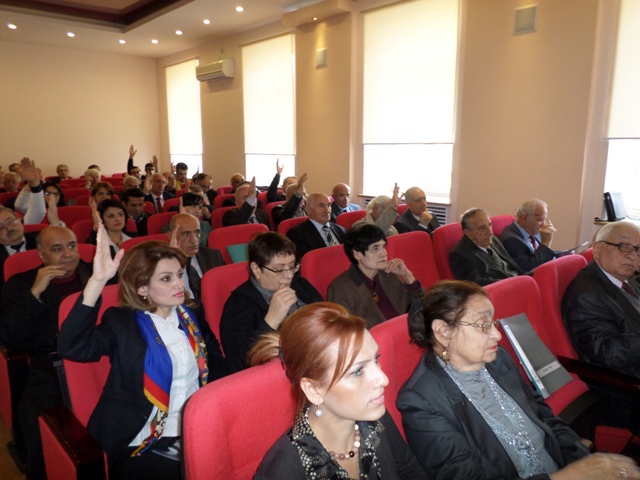
During the sitting, the attendees also elected candidates nominated for the rank of Professor by secret ballot.
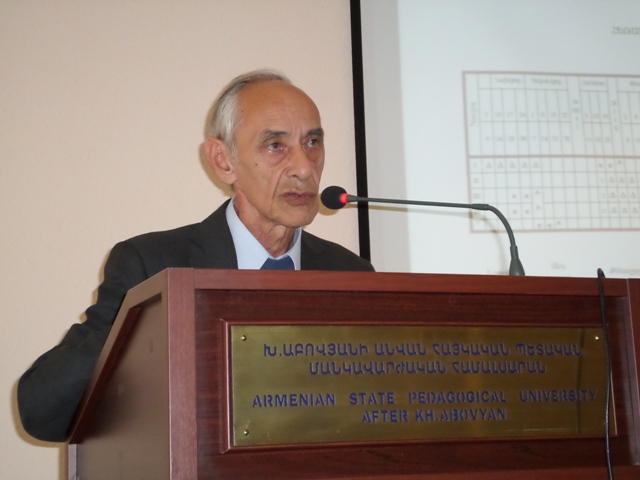
Vice-Rector Tigran Ayvazyan presented the new schedule of distance learning curricula and regulations of the Preparatory Department.
Srbuhi Gevorgyan, ASPU Vice-Rector for Educational and Scientific Affairs, dwelt on changes in the Methodology Committee adjunct to the Academic Council, and Mkrtich Avagyan, Head of the Education Policy and Quality Management Department, presented the order of getting a second master’s degree, as well as the procedure for evaluating and improving quality management system, effectiveness and availability of University’s educational resources and their monitoring and knowledge assessment system. The Academic Council approved all proposals.
It also approved the topics of five master's theses and one doctoral dissertation, sent several books for publication, and granted nominal scholarships to students of the Faculties of Philology, Biology, Chemistry and Geography.