- Հայ
- Рус
- Eng
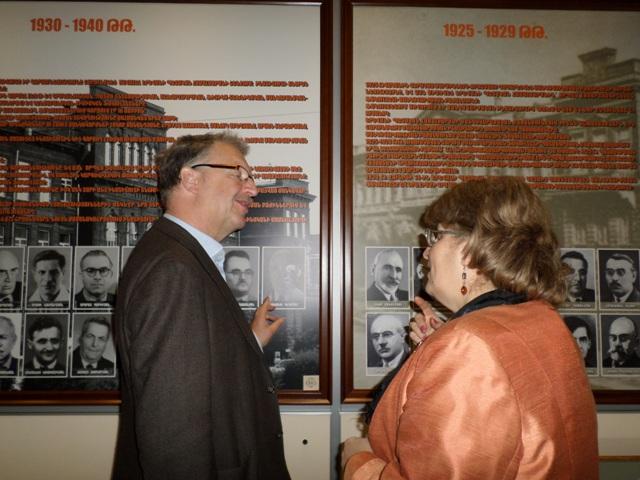
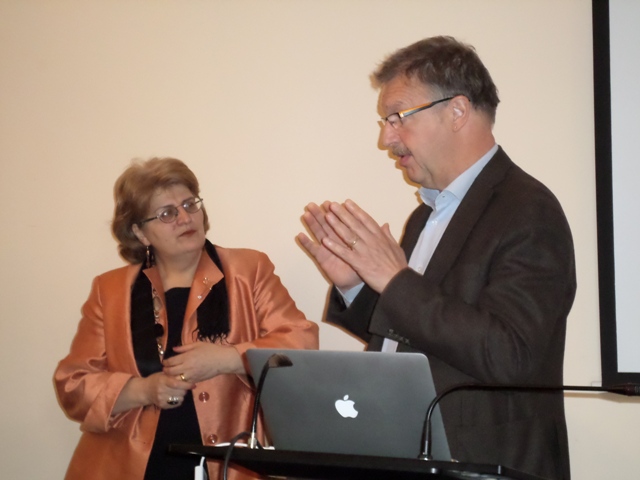
Armenian State Pedagogical University hosted on October 31 Hugues Dreyssé, Chairman of the ICOM International Committee for University Museums and Collections (UMAC), Director of the “Jardin des Sciences” and Vice-President of the University of Strasbourg.
The main purpose of the visit was to see the ASPU Museum and meet junior and senior colleagues from the University. The acquaintance with the University started from the posters of medieval monasteries posted in the lobby: impressed by their significance and the story of construction the foreign guest expressed desire to visit and appreciate their beauty in situ.
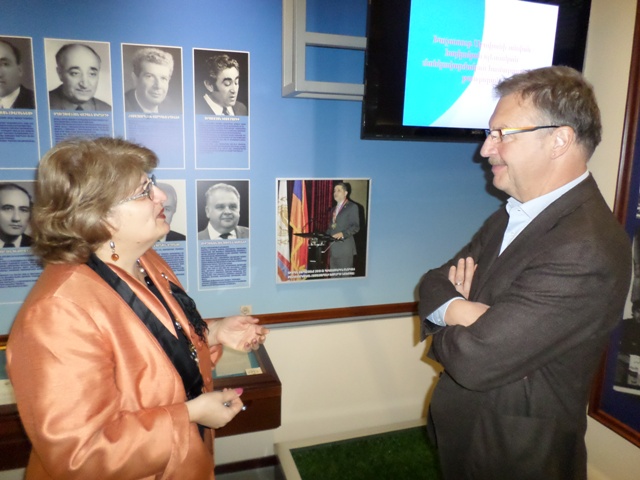
Accompanied by the Director of the ASPU Museum Alvard Grigoryan, Hugues Dreyssé visited the museum and got familiarized with the history of the University - from its foundation to the present day, its faculties, learnt about University students and staff members who participated in the Great Patriotic and Artsakh Liberation Wars, as well as professors who lectured at the University and had their contribution to the development of pedagogy.
After his visit to the museum, the ICOM-UMAC chairman met with specialists of the Department of Museology and Conservation of Monuments of the Faculty of Culture.
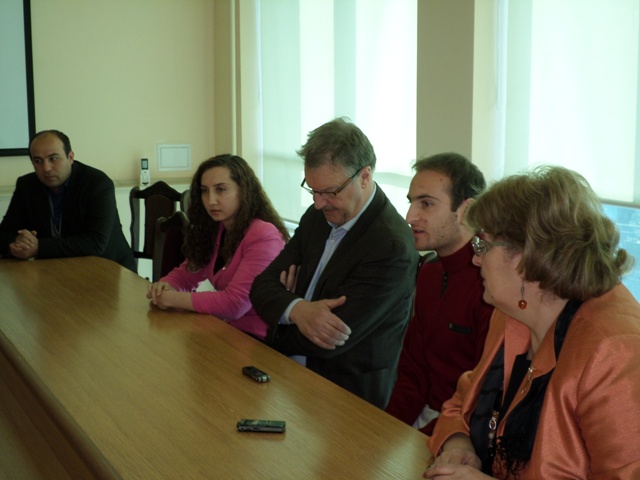
Stressing the presence of the guest at the University, ASPU Vice-Rector Srbuhi Gevorgyan noted that the University keeps pace with modern developments and, apart from theoretical knowledge, highlights practical skills and abilities.
Lavrenti Barseghyan, Head of the Department of Museology and Conservation of Monuments, said in his speech that he visited Strasbourg back in 1992; Strasbourg is a beautiful city with many things to see and admire – starting from oldest churches and canals to modern buildings.
The professor introduced his colleagues to the guest and said although they were all museologists and experts in their professional field with extensive work experience in museums, they would be happy to add the guest’s experiences to their knowledge.
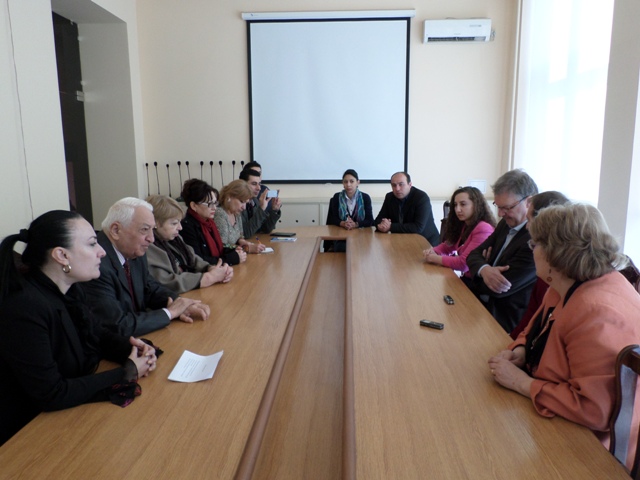
“Armenia is one of the oldest countries in the world. It had museums still in the 7th century BC: they also operated in universities attached to monastery complexes. Since we did not have statehood for a long time, it was only in the last 70 years that we were able to create a strong network of museums. Their number today reaches 104,” he said.
Hugues Dreyssé said that during his stay in Armenia he would visit more museums. Before that he was happy to be hosted ‘by a dynamic and rapidly expanding university which has an equally interesting museum.’
Further on, Armenian specialists asked a number of questions to the French guest concerning the structure of the museum of the University of Strasbourg, its opening and area, the exhibits displayed at the museum. They wondered whether the museum also serves as a training centre.
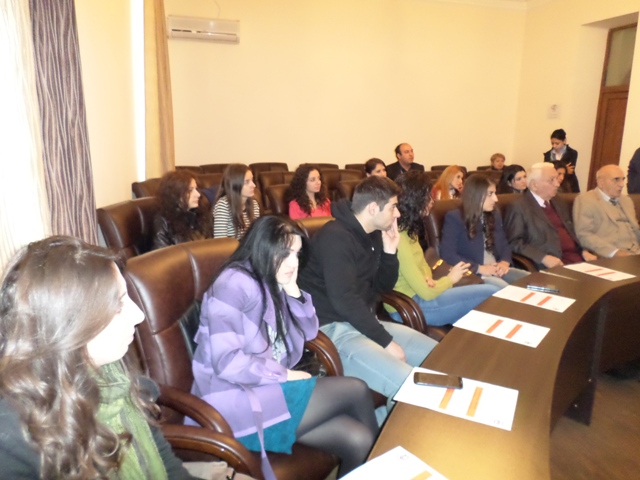
Hugues Dreyssé later met graduate students of the Department of Museology and Conservation of Monuments and conducted master-class.
He asked the participants to divide into two groups and come up with practical proposals after observing the museum collection. “Strategy is the key to success in any situation, otherwise you will get entangled and cannot register any progress,” he said.