- Հայ
- Рус
- Eng
Collection of talks - “Conversation with a windmill” - presented at ASPU

“Conversation with a windmill” - a book by Professor Armen Elbakyan, Honoured Art Worker of the Republic of Armenia, Head of the Department of Directing at Armenian State Pedagogical University - was presented at the ASPU on March 13. The event was attended by Minister of Culture of Armenia Hasmik Poghosyan, prominent cultural figures and art lovers.

The collection of talks intended for future directors, theater critics and everyone interested in theatrical art was an attempt to reveal the visible and invisible aspects of the director, the entire process of the creation of performance – ranging from the reading of a play to its staging.
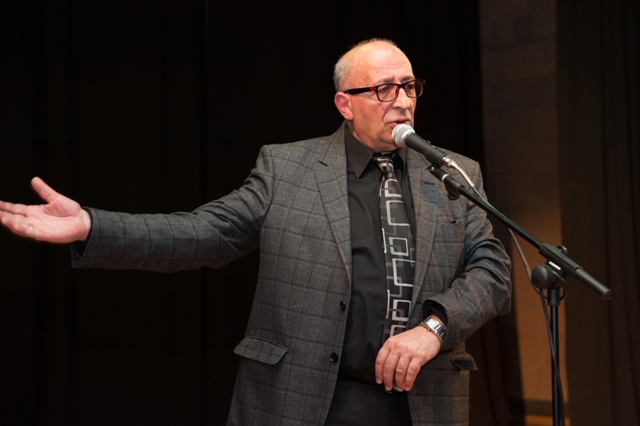
“You will hardly find any personal memoirs or relationships in the book. This is simply a conversation between a director and a windmill,” Armen Elbakyan said comparing the publication with the birth of a child. “Looking back on my life and my work experience with great masters, I decided to write down the problems and concerns that I have experienced in these years,” he added.
The author says the collection of talks [edited by Artashes Martirosyan] will serve as a supplementary manual for Armenian artists, familiarizing them with the international experience. “The theatre plays an important role in society. There are times when theatres are not remembered; perhaps we are living through such times. But, we shall still see the development of our culture and theatres. The theatre is a small model of the world which helps us get rid of the chaos around us.”

“Both a lesson and a solution…” Suren Hasmikyan says it is not accidental that these two concepts ‘appeared side by side’ in the book. “The ‘lesson’ is right before our eyes, perhaps even on the surface: it is occurring at this moment, right now. Tomorrow we may not need it. The ‘solution’ is our vision for the future: It is a ray of hope for salvation, a way out of the complicated situation,” he said.

The professor is convinced that all those who deal with art are happy people: art is the best option, the best way out. The same is true about the book [written by Armen Elbakyan] which is the first-ever manual of this kind published in Armenian.
Christine Poghosyan, a theater critic, Assistant Professor at the Department of Directing, praised the book from an aesthetic point of view, saying the manual is very important and useful. “This is a modest attempt, with the director trying to share [through talks] the professional truths and skills which he obtained during his long years of creative work,” she said.

She compares the message of the book with quixotism, which is typical of Armen Elbakyan. It also has a value of a theatrical piece of work and resembles the seeds which are given to the windmill and distributed to students and professionals. The book will find fertile soil and sprout there.
“The book also has psychological aspects,” said psychologist Elda Grin, who also participated in the event. She added that Armen Elbakyan used in the book the well-known Socratic Method, perhaps unintentionally but tellingly. The director is a human being who has his mental characteristics which are unique to humans, and the conversation between the author and the reader begins and ends with positive emotions through which he coveys his thoughts and life experiences.
“Dance in the pages of Armenian press” is the Bible of Armenian art of dancing

The Pedagogical University also hosted the presentation of “Dance in the pages of Armenian press” – a two-volume book by Professor Karen Gevorgyan, Honored Worker of Culture of the Republic of Armenia, Head of the Department of Choreography at the ASPU.
The book, which was published several months ago, contains over 300 articles published in the Armenian press in the last 100 years, which are of particular interest not only for choreographers but also for many people. Some of the articles refer to the origins, development, problems and challenges of Armenian national and classical dance.

The collection includes the opinions of highly merited figures of Armenian dance - Vahram Aristakesyan, Srbuhi Lisitsyan and many others - who were concerned about the fate of Armenian dance and raised the problems it faced in their days. “After reading the collection many will realize the process of development of Armenian dance and the future of our folk dance,” Karen Gevorgyan said, stressing that the articles published in the two-volume book instill hope that Armenian dance has a bright future.
As a man aware of the process of the publication of the two books, culturologist Garegin Gevorgyan emphasized the importance of the book for each dancer and specialist, saying one will hardly find a book by Armenian historians reflecting the chronology and heritage of Armenian dance. “Armenians have huge national heritage in terms of ‘movement language.’ The work will serve as a solid foundation for the art of dancing from scientific and educational points of view,” said Mr Gevorgyan.
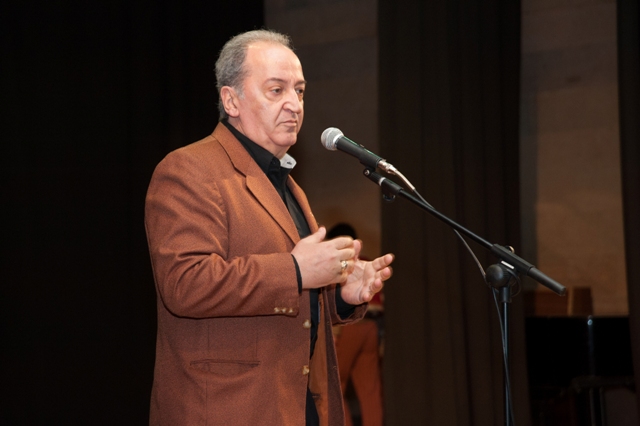
Gagik Karapetyan, Honored Worker of Culture of the Republic of Armenia, confessed that the book took him back to his teenage years; it presents dance directions of all times in a compact way. “The mild criticism of prominent artists and cultural figures is attractive and challenging in the book. I came to realize that there have always been problems with dance and they need to be resolved,” Mr Karapetyan said. Then addressing the students he said, “You cannot solve the new problems unless you understand the old ones.”
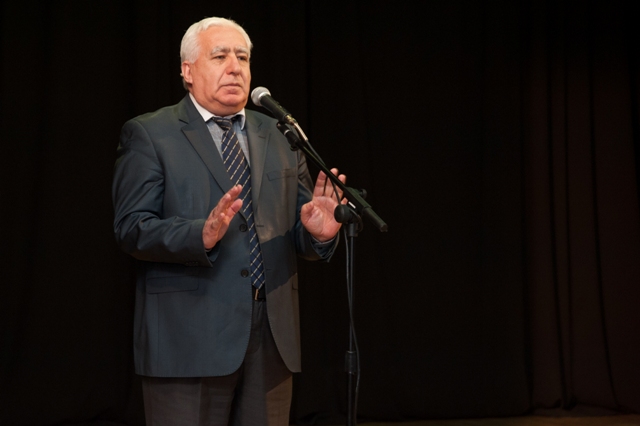
Gagik Manasaryan, Associate Professor at the Department of Choreography, added that the two-volume book is the Bible of Armenian art of dancing; a dance specialist cannot live and create without this book.
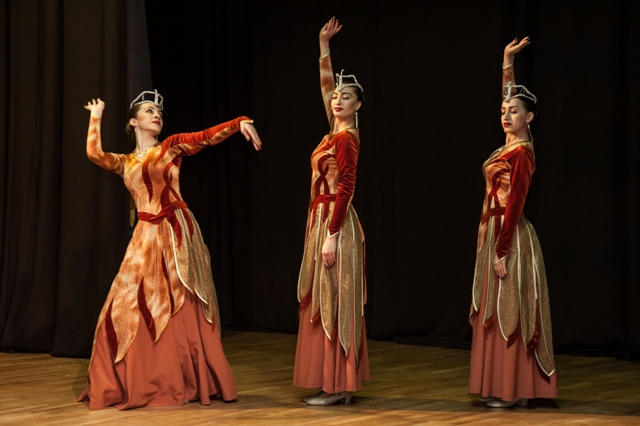
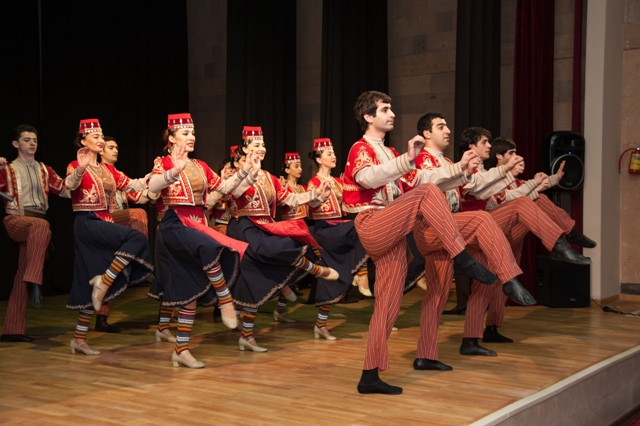

The presentation was also attended by Minister of Culture Hasmik Poghosyan who hailed the publication of the books and said the authors had put [in the books] their skills, depth of knowledge and desire to transfer to future generations and specialists the knowledge and practical experience they gained over years. “This is an excellent example for other artists who need to realize that apart from writing and creating it is also important to transfer all this to future generations,” she said.
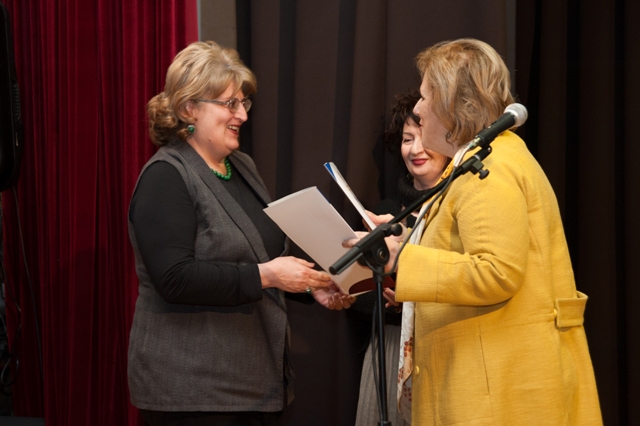
In her speech, Hasmik Poghosyan also hailed the initiatives of the Faculty of Culture, saying the name of the Faculty is more comprehensive. “These days you can seldom hear our artists speaking about their obligations and duties, they are mainly speaking about their desires and ideas. Armen Elbakyan and Karen Gevorgya are artists who are concerned about the problems of our culture and it is not accidental that this very fact caused them to formulate their claims and desire in their books,” she said.
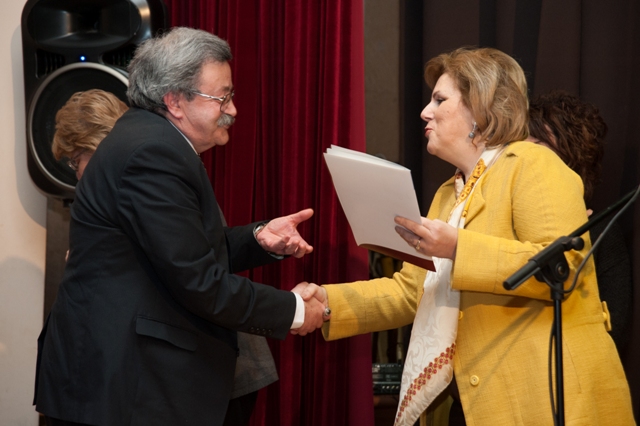
She also conferred a Gold Medal of the Ministry of Culture of Armenia upon Gevorg Tadevosyan, Dean of the Faculty of Culture at the ASPU, and gave diplomats to Directors of the ASPU Museum and Academic Library Alvard Grigoryan and Tigran Petrosyants, respectively. They were awarded for their fruitful and efficient cultural activities.