- Հայ
- Рус
- Eng
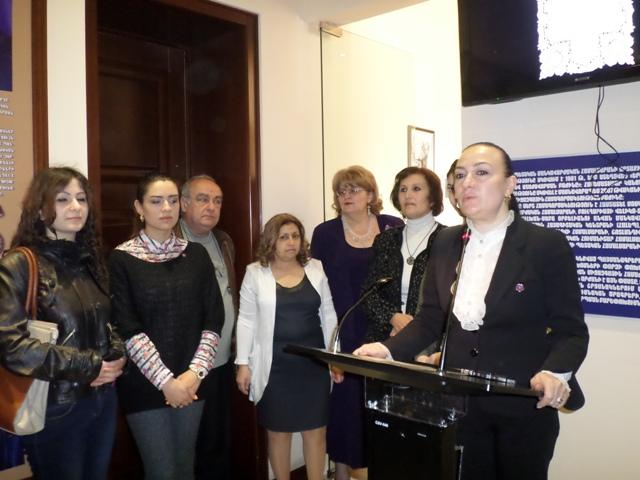
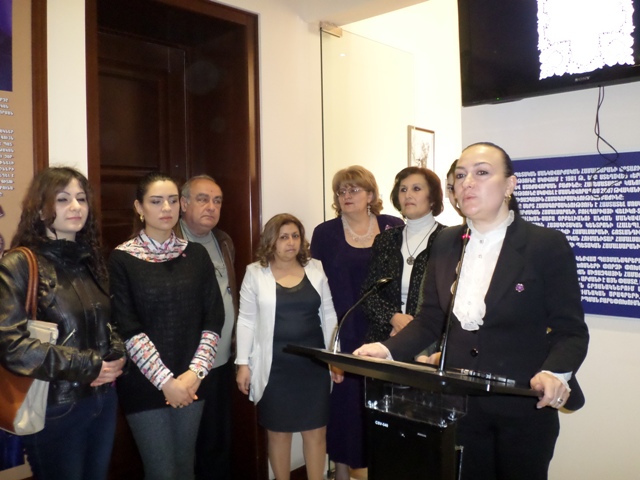
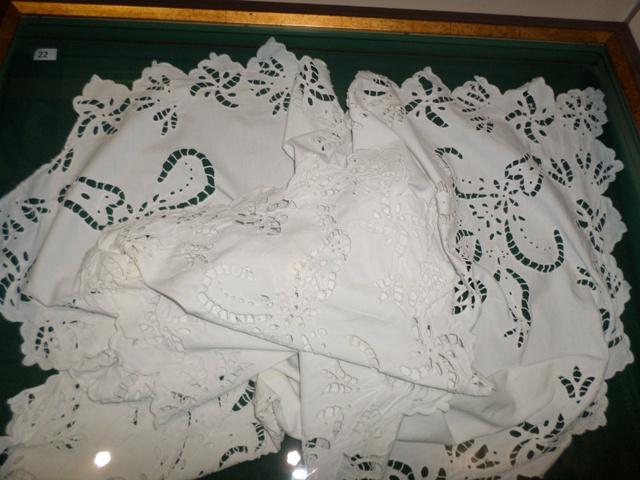
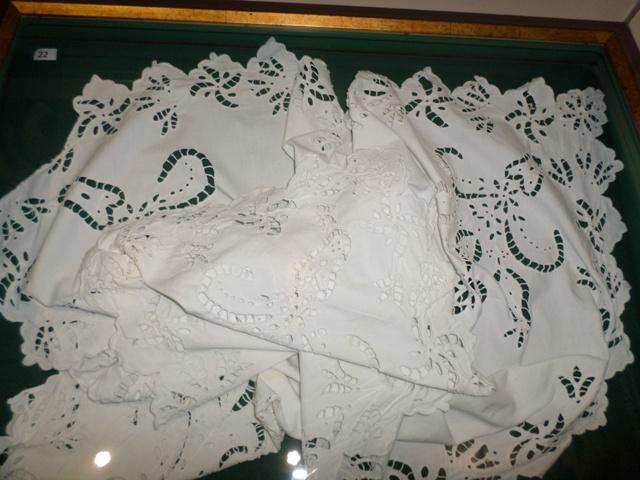
Within the framework of events commemorating the Armenian Genocide centennial, an exhibition of items embroidered by Armenian women, who migrated from Western Armenia and settled in Syria, was held at the ASPU Museum.
The works showcased at the exhibition which is called “100-year-old Embroidered Memories” were given to the Museum by the co-author of the exhibition, artist Hrazdan Tokmajyan.
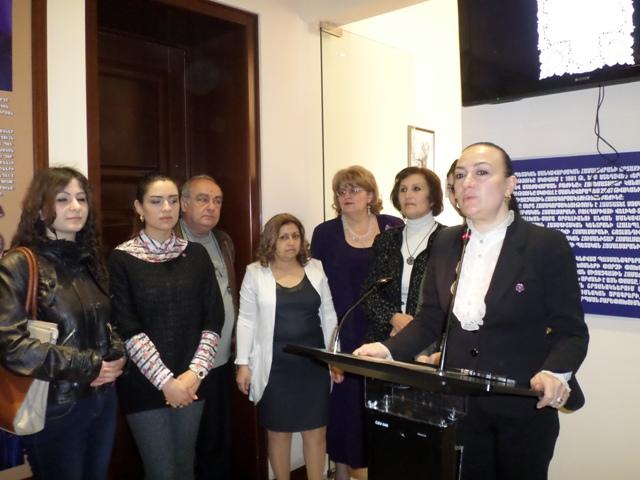
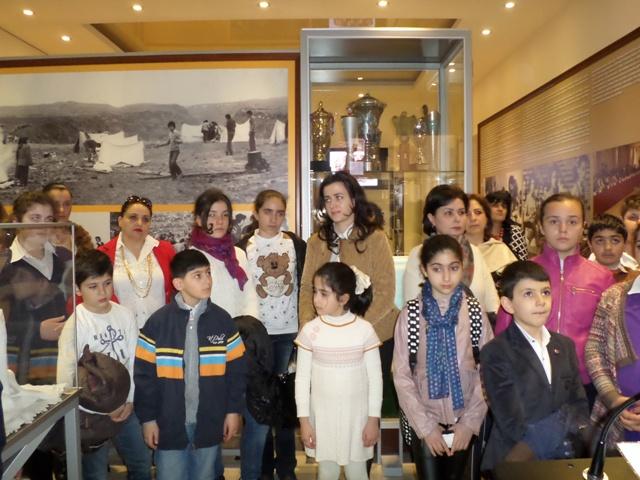
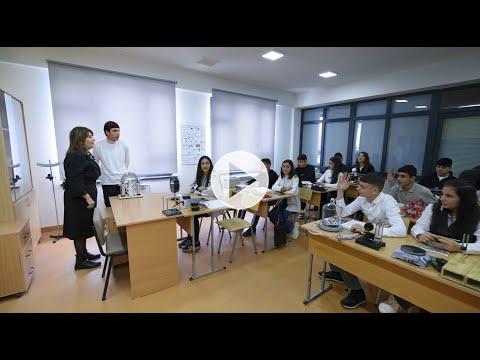
The event was attended by pupils, teachers, lecturers, students and guests.
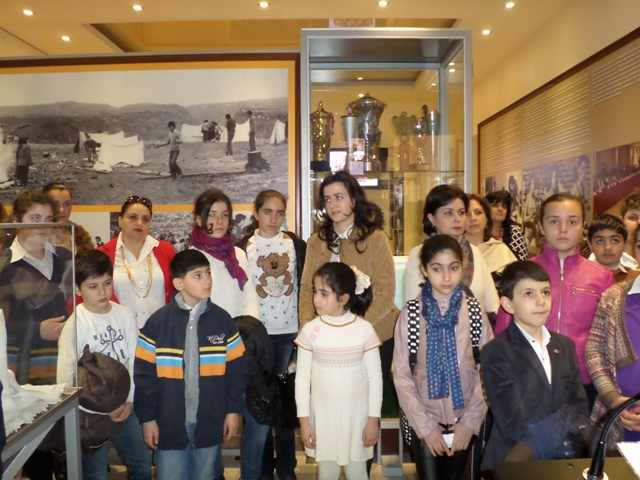
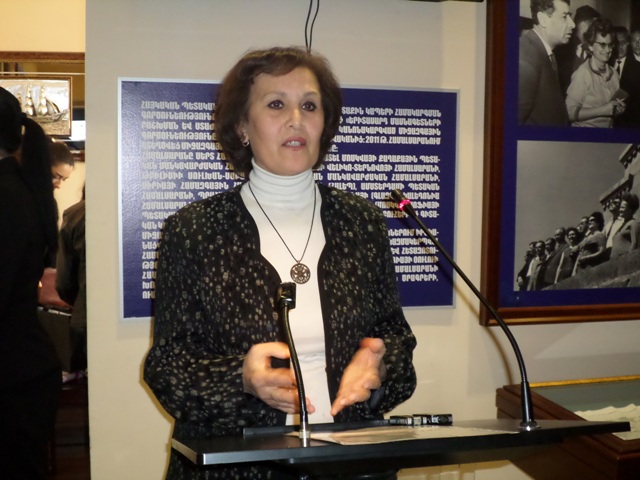
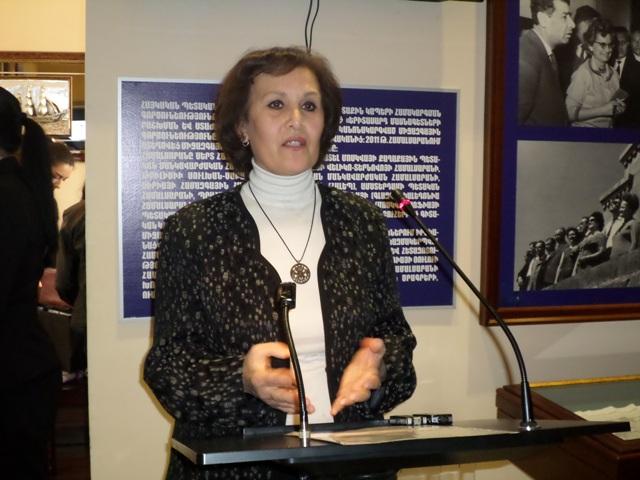
ASPU Vice-Rector for Educational and Scientific Affairs Srbuhi Gevorgyan once again reminded the attendees that 2015 is not only important for commemorating the 100th anniversary of the Armenian Genocide and learning historical truths and facts, but it is also important for drawing political, historical, cultural and psychological evaluations and conclusions.
“Besides demanding recognition, we should also demand compensation. The failure to give an adequate assessment to the historical fact resulted in global indifference,” she said. The vice-rector stressed that as a teacher-training institution, the ASPU has a great mission: with their words educators are to shape the historical reality which will enable them to be claimant and call for a fair assessment.

Painter Hrazdan Tokmajyan, a graduate of the Pedagogical University, currently works as a teacher at Martiros Saryan Academy of AGBU Aleppo. In his book “Embroidery of Aintab” which was presented at Mesrop Mashtots Institute of Ancient Manuscripts (Matenadaran) on April 1 and through the exhibition opened at the ASPU Museum, the artist tries to reveal the seemingly miraculous connection between embroidery and the Armenian Genocide.
“The younger generation should know that by the end of the 19th century girls sewed and embroidered items for their trousseau but after the Hamidian massacres embroidery became a major source of income. Widowed women sold their embroidered works to merchants who arrived in Armenia from different countries and earned money in that way,” Mr Tokmajyan said adding that American missionaries remember how Armenian girls in orphanages removed threads from bandages to do needlework.
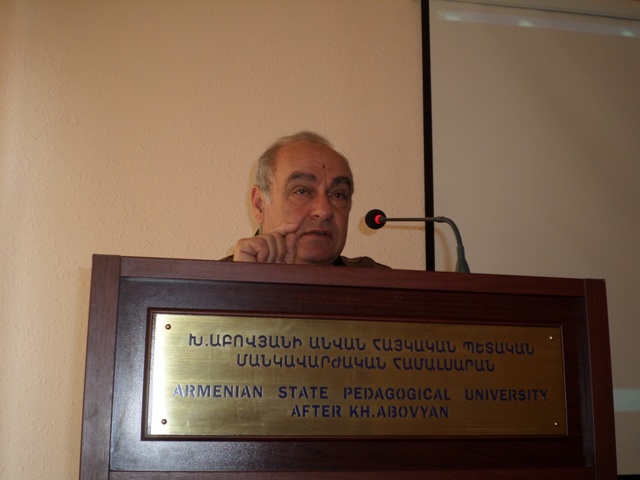
Then addressing the schoolchildren, the painter said embroidery shows the quality of nation’s culture, and those who master the handicraft have not right to refuse it: we should maintain and develop the craft and prove others that we are its carriers and heirs.
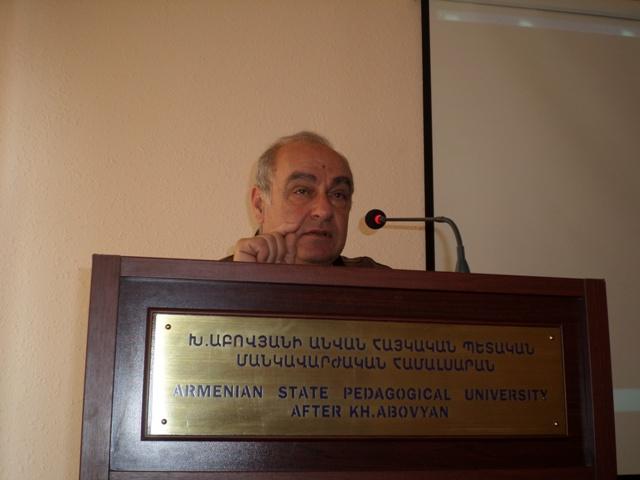
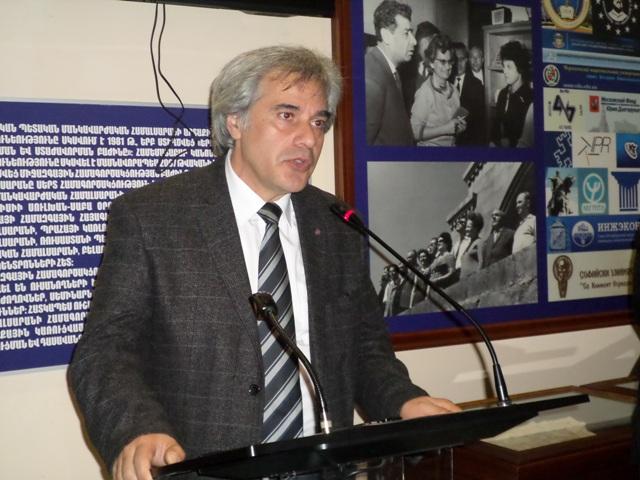
“He, who cries, shall receive nothing. We need to change our posture, attitude and demand,” said Professor Ashot Philiposyan, Head of the Department of History of Armenia. He urged the pupils to ‘realize today’s demand in the future.’
The event ended with screening of the film “Meeting at the Exhibition Hall" – the first film about the Armenian Genocide. The director of the film, Professor Nerses Hovhannisyan worked for many years at the Department of Directing [Faculty of Culture, ASPU], having his great contribution to the field of education of future directors.
The exhibition at the ASPU Museum will last one month.