- Հայ
- Рус
- Eng
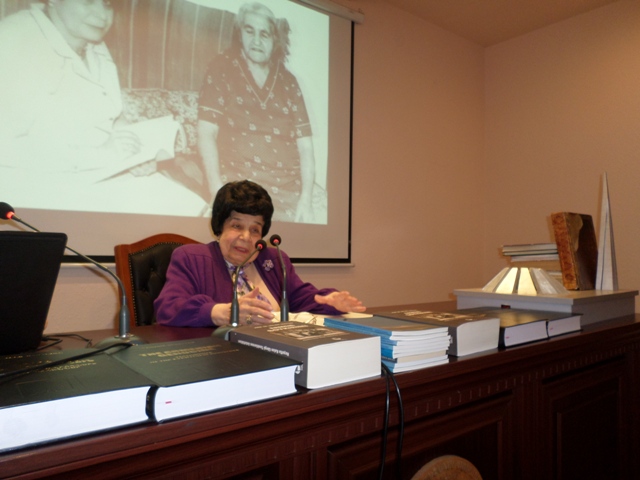
Within the frameworks of events commemorating the centennial of the Armenian Genocide, Armenian State Pedagogical University hosted Doctor of Philology, Professor Verjine Svazlian.
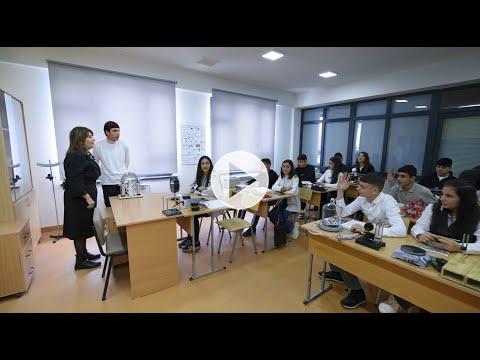
She delivered a lecture on the Armenian Genocide and got acquainted with students’ approaches and demands in connection with the heinous crime. The visit was arranged by Candidate of Historical Science, Lecturer Mariam Yeghyan, in collaboration with the Department of History of Armenia and Student Scientific Society (SSS).
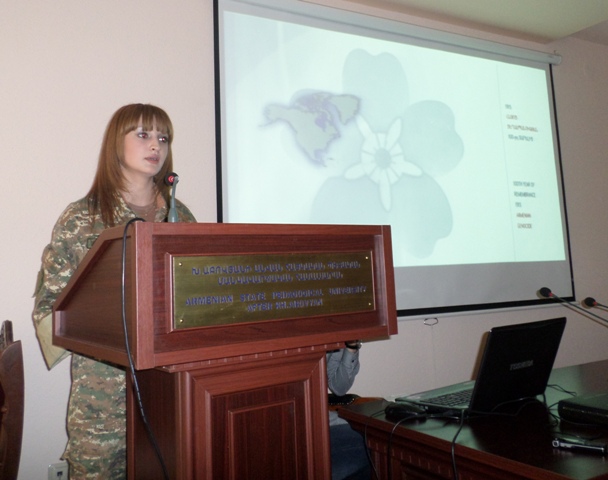
“We have one and a half million reasons to seek revenge. We are not fighting against the Turkish nation; we are fighting against the Government that denies the Armenian Genocide. The deeper the wound becomes, the more painful it gets over time,” future journalists said stressing that a person is usually punished for a sin he committed while Armenians are punished only for being Armenians.
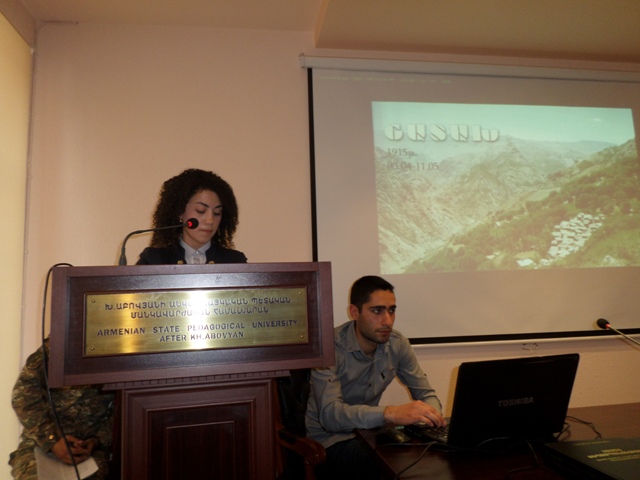
Then, students from different Departments presented historical facts on the Armenian Genocide and interpreted the crime from a professional point of view. Future military educators spoke about the battles of Van, Sasun, Mush, Musa Dagh (Musa Ler). They stressed that although the battles were suppressed many Armenians were saved, proving that the only way to win Turks is to launch an armed and united struggle against them.
The was followed by the screening of a short film, reportage and a documentary explaining the symbol of the Forget-Me-Not flower as the official emblem of the worldwide observance of the centennial year of the Armenian Genocide and as the theme of eternal remembrance. It also showed how the flower is made and how it was interpreted by students. In the video, students say the current generation is taking definite practical steps to achieve worldwide recognition and condemnation of the Armenian Genocide.
“The coverage of the Genocide does not know national differentiation. We can consider this event to be a memorial rite of our unburied ancestors,’ said future director Artur Hovhannisyan. He added that they did not include ‘crying scenes’ in the film deliberately, for they wanted to show that ‘we –Armenians - are strong like our mountains.’
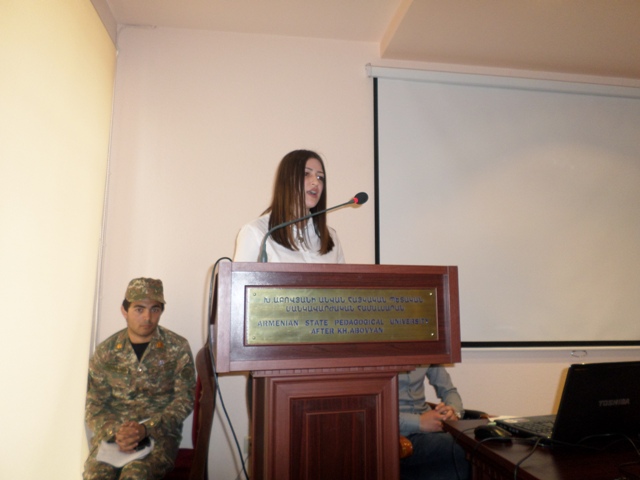
The students are convinced that their presence at the event [organized by Lecturer of History Mariam Yeghyan] gave them new impetus to sober up and create using their profession in favour of national ideas and interests.
Professor Verjine Svazlian, a graduate of Armenian State Pedagogical University, recalled the years when she studied at the University about 60 years ago. “I am excited and at the same time proud to know that young people, like these students, will champion recognition of the Armenian Genocide, posing our fair claims. We must learn lessons from the past and remember once and for all that we should not pin hopes on foreign countries, we should only rely on ourselves,” she said.
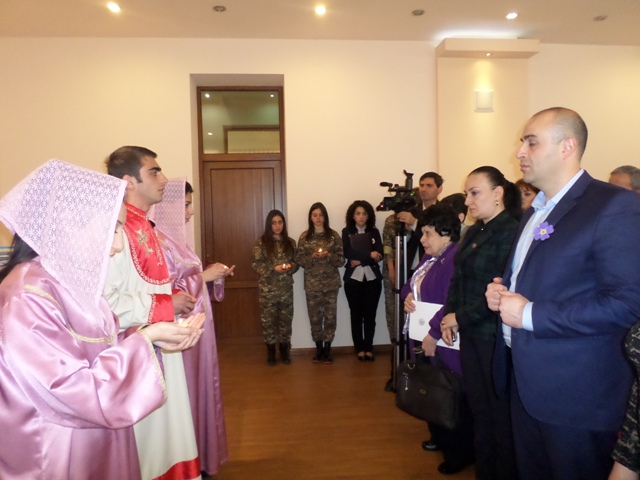
The professor also presented her research on the memoirs and excerpts of Armenian Genocide survivors, through their eye-witness testimonies, which she had collected with great difficulty. Verjine Svazlian said she went to great lengths to earn the trust and friendship of her subjects, in order to obtain the most genuine and comprehensive testimonies. She even feigned illness and agreed to be put to sleep for a surgery, making it into the hospital where he interviewed many survivors. She even visited nursing homes in Turkey to meet Genocide survivors and interview them. Those are real facts that will serve as a true source for next generations.
ASPU Vice-Rector for Educational and Scientific Affairs, Srbuhi Gevorgyan, thanked Verjine Svazlian for the exclusive lecture and for donating a collection of books to the ASPU library, stressing that the books will open new chapters on the threshold of the Armenian Genocide Centennial and are an important source to learn about the testimonies of Genocide survivors.
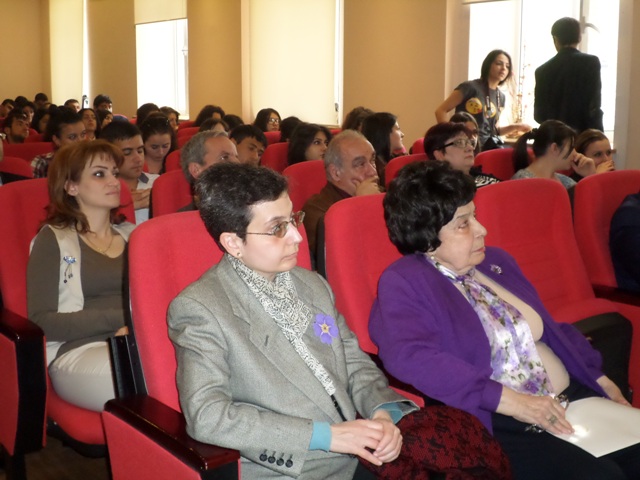
Srbuhi Gevorgyan added that the meeting was a good opportunity for students to face the history once again and present their approaches and demands.