- Հայ
- Рус
- Eng
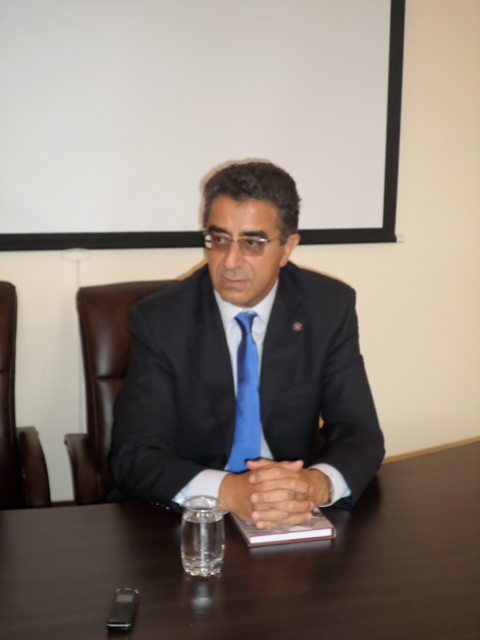
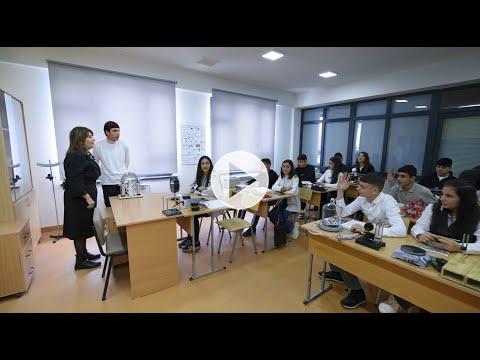
The Faculty of History and Law of Armenian State Pedagogical University hosted on Monday Armenian American writer, publicist, translator, public figure and Vice-President of the Armenian Writers Association of California Hovsep Nalbandian.
During the lecture on the theme “Modern Diaspora,” the guest referred to the problems of the Diaspora in the past 30-35 years, noting with regret that ‘it is getting more and more difficult to preserve the Armenian identity outside the country.’
“Mother tongue plays a key role in preserving national identity,” Mr Nalbandian said adding that more than 90 colleges have been closed in Armenian communities in recent years, the others continue to teach Armenian but an hour a day which causes significant changes in pupils’ thinking and conception.
Speaking about the Armenian communities in Iran, Iraq, Syria and Lebanon, the publicist said the number of Armenians living in these countries has decreased dramatically from 500 000 to 105 000, with most Armenians settling in the United States, Canada, Austria and other countries.
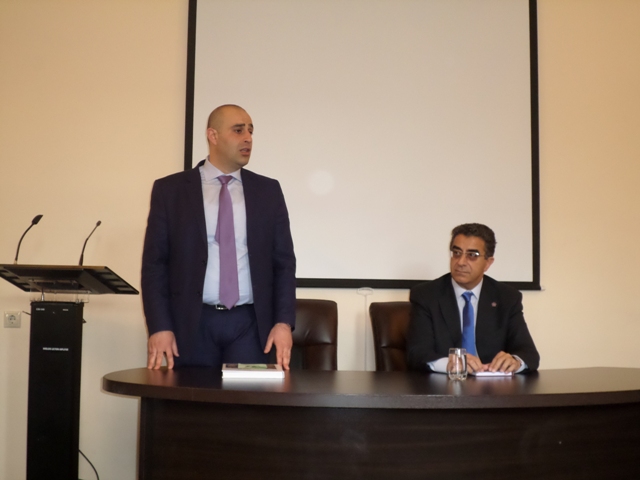
Hovsep Nalbandian, who lives in Los Angeles, California, said again that more Armenians have settled in LA in recent years and many of them are encountering serious social problems today: life is becoming expensive; 35 percent of them are unemployed; many are in prison.
“Most Armenians living outside Armenia do not consider themselves Armenians anymore. Nor do they speak Armenian. This is one of the biggest problems. Another biggest concern is that more Armenian schools are closing overseas because of lack of finances,” he stressed.
The guest focused on another major problem connected with the closure of eleven weekly newspapers and magazines in the last 15 years and blamed it on the lack of planned, serious and persistent work. “The "One Nation, One Culture" catchphrase is only a phrase which needs to be proven by actions. In fact, we lack unity which is the solution to the problem,” Hovsep Nalbandian said. He added that besides the Ministry of Diaspora, the universities in Armenia should also be involved in the mission of developing national consciousness and thinking. “Preservation of our roots is as important for me as the recognition of the Armenian Genocide,” he stressed.
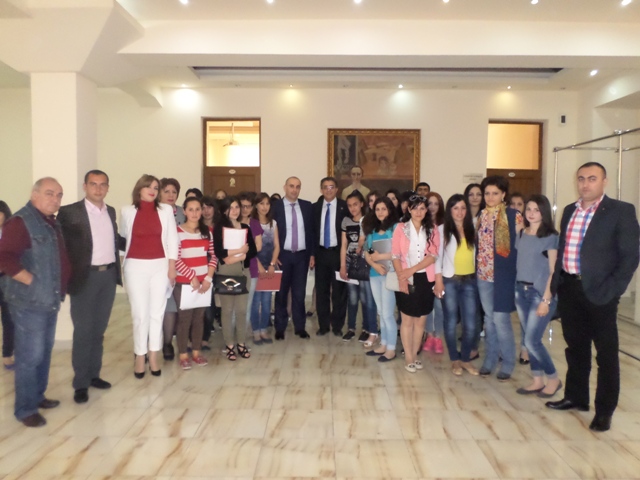
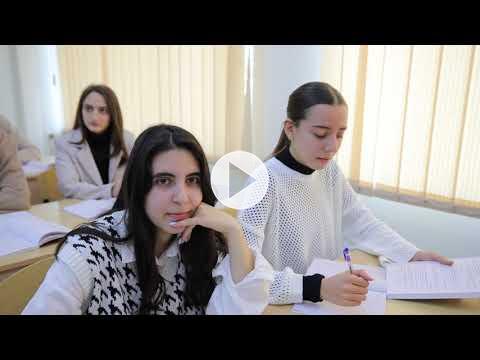
At the end of the meeting, students asked the quest their questions.
Edgar Hovhannisyan, Dean of the Faculty of History and Law, thanked Mr Nalbandian for the visit and lecture, stressing that people in Armenia do not have a clear notion of the everyday life and culture of Diaspora Armenians, while Armenia and Diaspora are the links of the same chain.