- Հայ
- Рус
- Eng
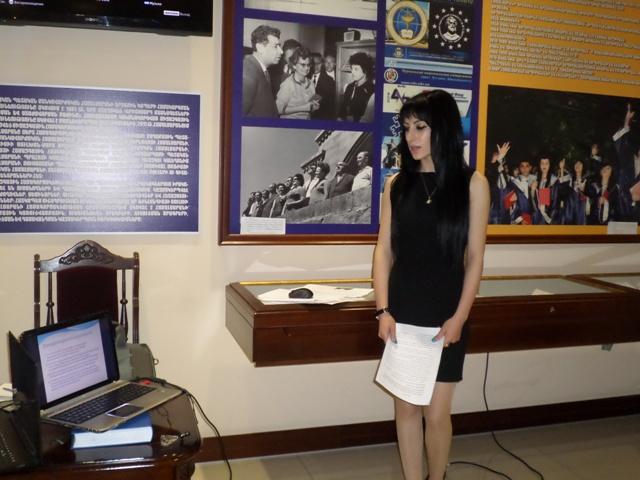
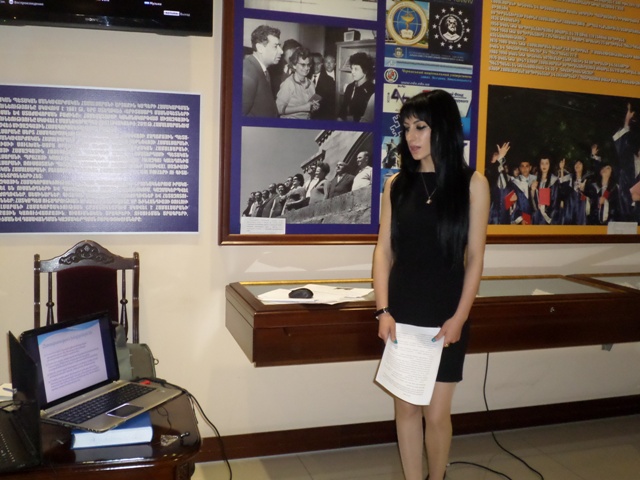
Final qualification examinations have started at the Pedagogical University; among a number of MA theses on diverse topics, two MA works from the Department of Methods of Teaching the Blind and the Department of Methods of Teaching the Deaf were of particular interest for the Committee members and field specialists.
The exceptionality of the MA thesis of the student of the Department of Methods of Teaching the Deaf Lilit Manukyan, headed “Accommodation of the ASPU Museum Materials for Hard-of- Hearing Visitors”, was in theory conditioned by justification of special means and skills aimed at perception of museum material by people with hearing disabilities, and in practice-methodological skills, experimental development of special means and their introduction.
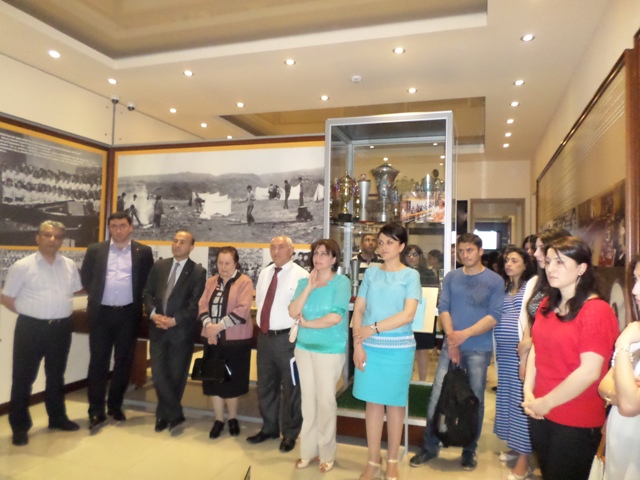
The experiment was carried out in a special educational center for children with hearing disabilities, during which 42 people were experimented
''Hearing disability is negatively reflecting on the development of children's speech, cognitive, communicative, mental and other processes. For us, as specialists of teaching the deaf, the most important objective is to elaborate on new, modern, effective methods and skills for children aimed at understanding and mastering texts'', the postgraduate student Lilit Manoukyan mentioned during the defense and added that the main provisions refer to the particular nature of understanding the museum material by persons with hearing disabilities, mainly to scarce vocabulary, the complications of the ASPU museum texts and their reproduction, as well as the special means and approaches for perception of the material by people with hearing disabilities which contribute to the complete understanding and mastering thereof.
During her interview to the old.aspu.am the Dean of the Faculty of Special Education Ms. Armenouhi Avagyan mentioned that still two years ago the approaches towards the postgraduate theses were reviewed. The idea of accommodating audio-guide and the exhibits at the newly established museum to the visitors with hearing and visual disabilities was born at that very time.
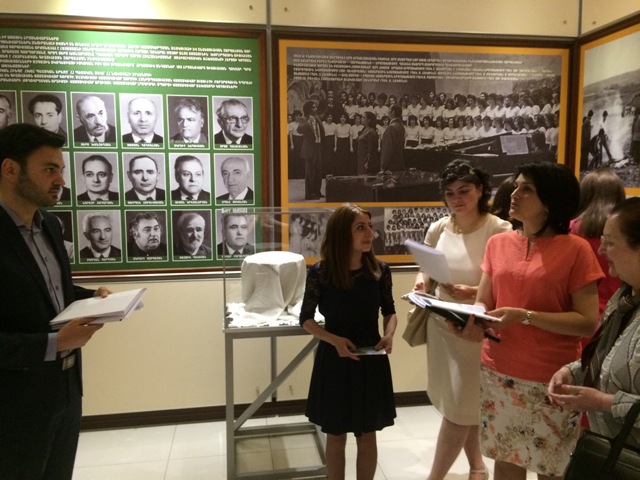
''Our society is moving towards inclusive education and it should have an expanded nature; it was assigned to the student of the Department of Methods of Teaching the Deaf to accommodate the material of the ASPU museum to the visitors with hearing disabilities, and to the student of the Department of Methods of Teaching the Blind to present the museum material in the Braille system'', she added.
Furthermore, the topic of the postgraduate thesis of the MA student the Faculty of Special Pedagogy and Psychology Mane Ohanyan was the ''Accommodation of the ASPU Museum Materials for Persons with Visual Disabilities''.
Speaking about the actuality of the research Mane Ohanyan noticed that today in many developed countries a great importance is paid to establishment of various museums. Having studied the level of development of this issue it should be mentioned that in analytical literature there are no studies dedicated to museums for persons with visual disabilities.
''For the effective understanding of materials available at museums the development of special means and methods as well as creation of special needs is essential and actual'', added Mane Ohanyan and presenting the museums in the Republic of Armenia she was sorry observed that they were almost not accommodated to people with special needs.
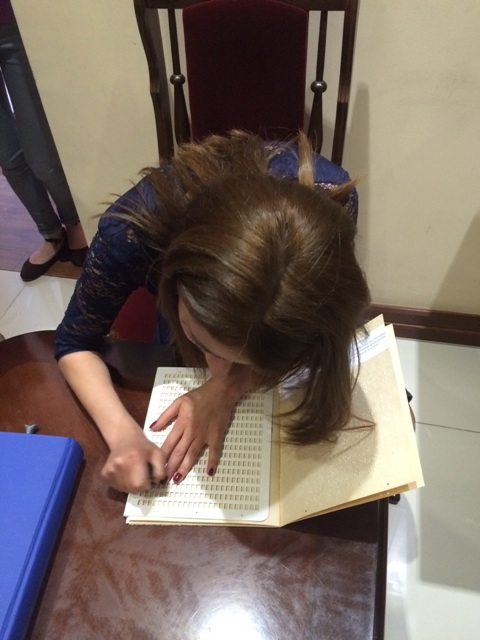
Last but not least, analyzing the professional literature and public opinion, Mane Ohanyan highlighted that accommodation of visually impaired people. Methods, means and special conditions for understanding the museum materials for these people will ensure effectiveness of understanding the material.
''During the research it became clear that the topic has been studied in many countries of the World but not in Armenia. Visiting museums is quite important for people with visual disabilities; it will raise their aesthetic education, and develop spiritual culture. However, the issue needs a comprehensive study; only after that we will be able to say that the process of accommodation of museums to visually impaired people will to some extent be solved'', she concluded.