- Հայ
- Рус
- Eng
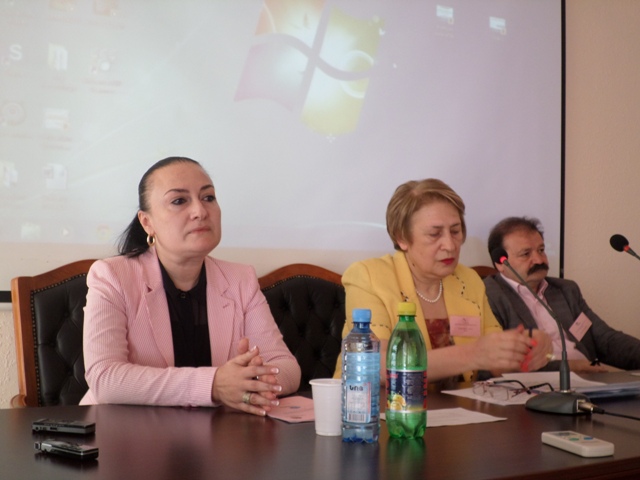
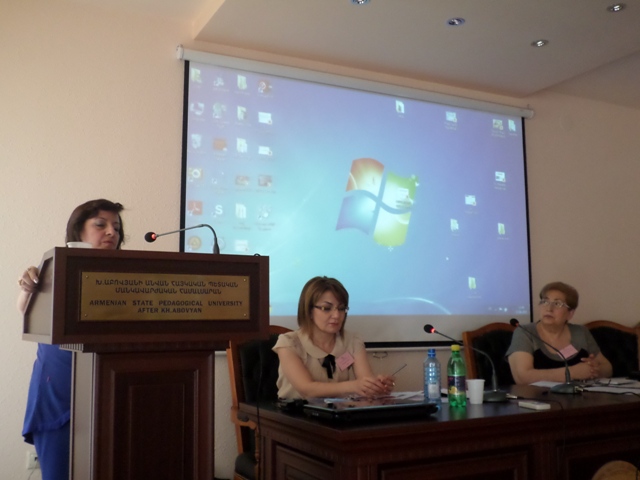
“Times have changed, learning goals and methods have changed, but the demand of harmonized physical and mental development of an individual has been more highlighted and emphasized. From that perspective contemporary pedagogy requires new quality and approaches, and today’s conference is dedicated to these issues”, the ASPU Vice-Rector Srbouhi Gevorgyan mentioned during the republican conference headed “Challenges and Solutions to Modern Pedagogical Issues”.
The latter also added that the reports of the conference are referring to absolutely actual and comprehensive issues which seem to be outlining the science of pedagogy for today and tomorrow.
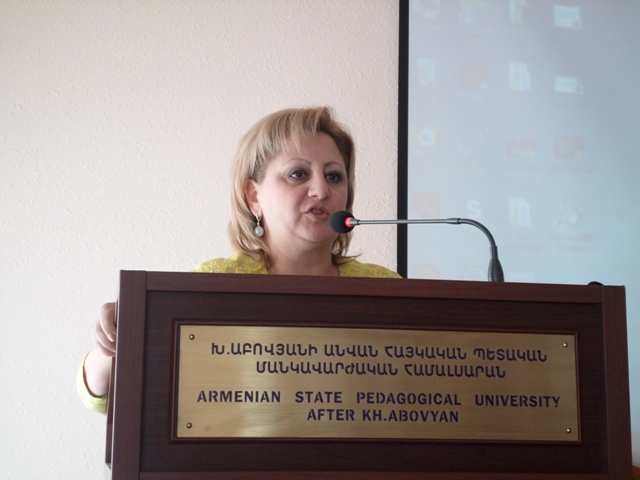
The RA NA Deputy, the member of the Committee for Science, Education, Culture, Youth Affairs and Sports, as well as the Member of the ASPU Board Rouzanna Mouradyan observed that pedagogy is the science that everybody is related to, considering themselves as education professionals.
“Science has a number of subtleties, and its challenges force to sum them up and to present the final outcome to the parents”.
Based on her own experience the Deputy noticed that the profession of a pedagogue was for the whole life, after which she suggested that the educational and pedagogical issues, discussed at the conference, needing legislative amendments, should be introduced at the NA for discussions.
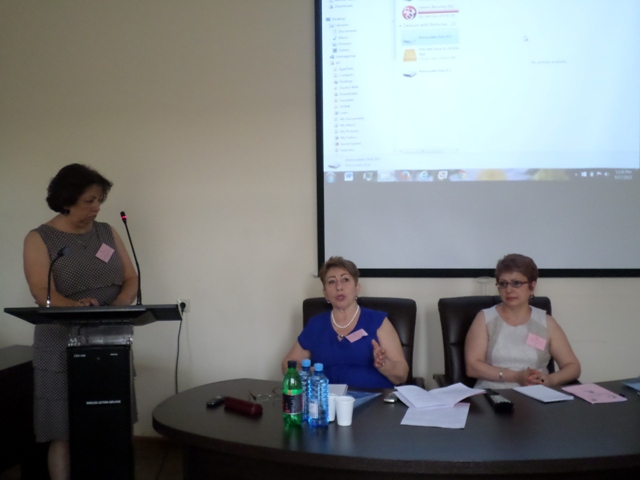
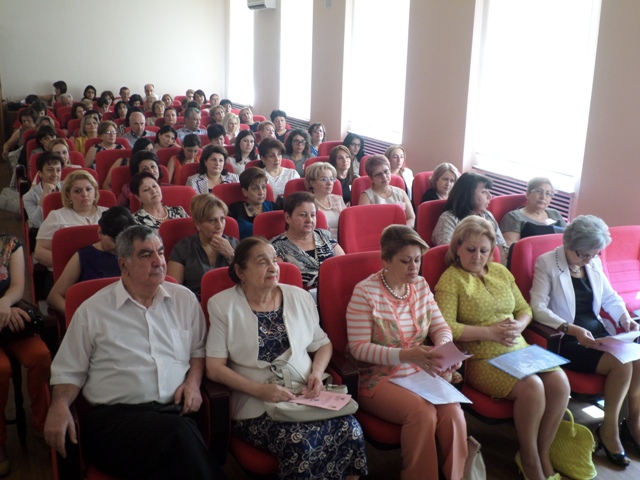
Among those present at the conference organized by the initiative of the Department for Professional Education and Applied Pedagogy were the RA Deputy Minister of ES Manuk Mkrtchyan, the Head of the Secondary Education Department of the Yerevan Municipality Gayanei Soghomonyan, the ASPU teaching professorial team, PhD students, Applicants, MA students, as well as other representatives of the secondary and higher education systems.
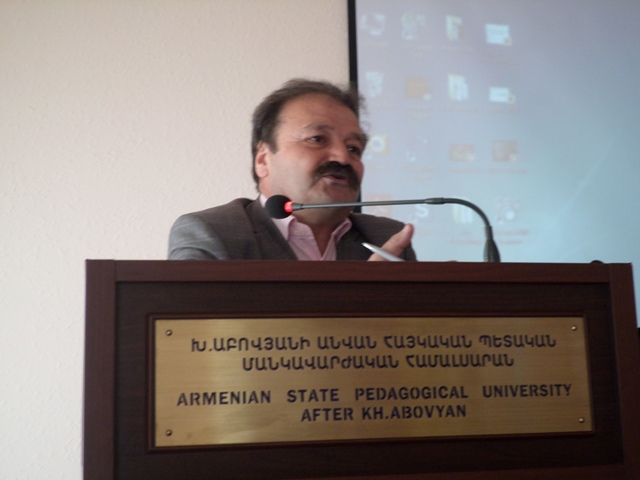
In the very beginning of his report on the topic of “Modern Issues of Development of Didactics”the Deputy Minister of ES, Doctor of Pedagogy, Professor Manuk Mkrtchyan noticed that the most difficult problem of development of the modern society is education, and no country in the world had found any remedy to overcome it.
First of all the Deputy Minister distinguished the terms “secondary education” and “education”, the separation, the importance of meanings and significance thereof for all levels of society, after which he turned to the understanding of didactics as a sphere of theory of organizing pedagogical education.
“Didactics is just starting to guide the practical part and acquires a scientific nature; it becomes a value only when it may refer to the future, when a question rises on the implementation; in the opposite case it loses its meaning.”
In addition, Manuk Mkrtchyan announced that the main directions and issues of didactics had already been outlined, after which he highlighted that it was critical that in our days the notion did not give an opportunity to hunt down all that is naturally performed in practice; in fact, for the solution thereof it is necessary not to re-define the previous one, but to create new notions which will in their turn become new activities.
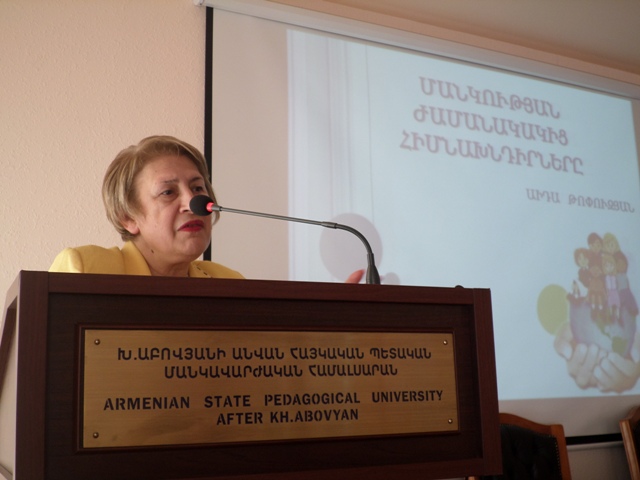
Next in turn, the Head of the Department of Professional Education and Applied Pedagogy, Doctor of Pedagogy, Professor Aida Topuzyan presented her report on “Problems of Childhood in Modern World”.
The latter mentioned that one of the peculiarities of today’s childhood is the attention and interest of the grown-ups towards children and this, according to numerous studies, was decreasing daily.
“The opinion a country is formed by the treatmentof children and the old; queries have shown that children’s belief towards the adultsis decreasing, they are sure that the grown-ups are indifferent and self-contained.
Decrease of responsibility can be noticed from the grown-ups towards children, loss of public control, loss of interest among the grown-ups to participate in solutions of children’s problems. Particular attention is worth to pay to the analyst position of the adults on different levels towards children; first of all comes the parent disposition regarding their children, the second is the attitude of the adult society towards children, and childhood in general”.
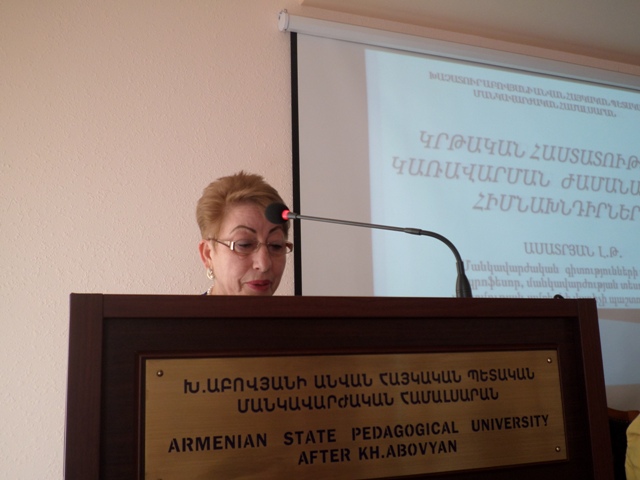
Further on the Head of the Department of Theory and History of Pedagogy, Doctor of Pedagogy,Professor Laura Asatryan introduced her report on the topic of “Modern Problems of Managing Educational Institutions”.
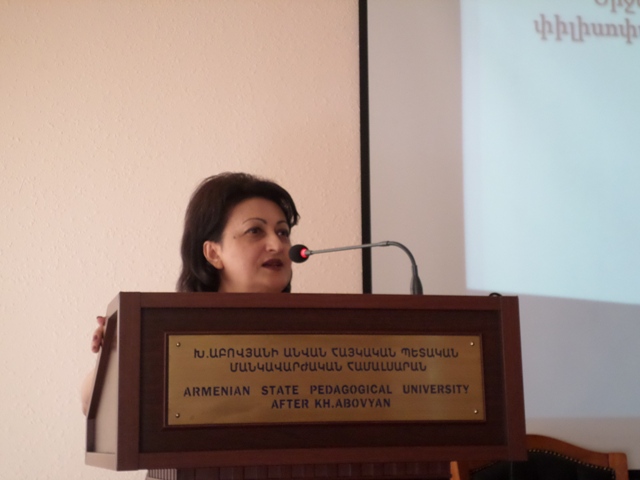
The latter mentioned in her speech that in the process of managing an educational institution contemporary approaches of modernization of education, the demand of the education market and beneficiaries are taken into account, after which she explained the pedagogical, situational, environmental factors of modernization of management of an educational institution and increasing its effectiveness, generalized approaches of managing educational process, contemporary approaches of management of the educational system, new management functions and changes of the acting structure of running an educational institution.
The Head of the YSU Department of Pedagogy, Doctor of Pedagogy, Professor Nazik Harutyun presented her report on the topic “Philosophical and Humanitarian Fundamentals of Pedagogy of Happiness”, where she observed that the substantial addition of the notion “happiness” is observed as a solution to a number of philosophical issues such as the aim and meaning of life, the role of a human being in this world, the realization of the essence of happiness which determines the orientation of an individual.
The speaker presented the skills and abilities affecting the feeling of happiness, objective and subjective grounds, after which she emphasized that in the upbringing system happiness is acting as a pedagogical condition for the activity of children and has the role of a pedagogical means for children’s development and personal growth.
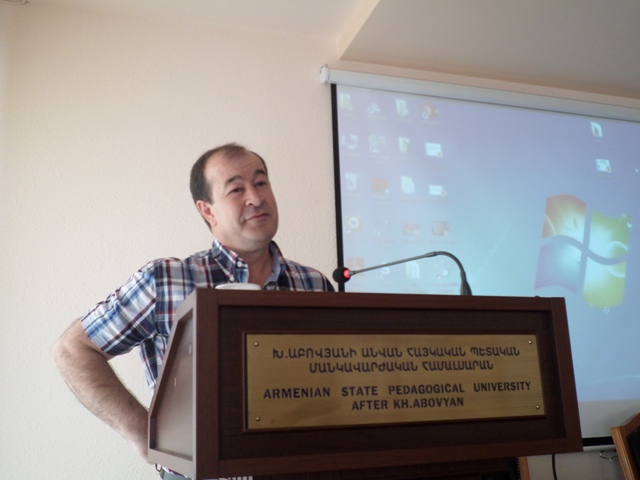
The plenary session was summarized with the report delivered by the Doctor of Pedagogy, Professor Igor Karapetyan on the topic “Jesus Christ as the First Pedagogue-Facilitator”.
The professor mentioned that the subject of his report was a novelty, then explained the concept of pedagogical facilitation.
“The analysis of the content and principles of the Pedagogical facilitation show that Jesus Christ is the forerunner of humanistic education. He preaches the words of the God with love, huge belief, prompting sincerity with his own sincerity, bringing belief with his own belief. One of the most important contributions of Jesus Christ as a teacher is that the success of any doctrine lies on the sincerity, frankness, mutual trust and openness between the teacher and students”, she added.
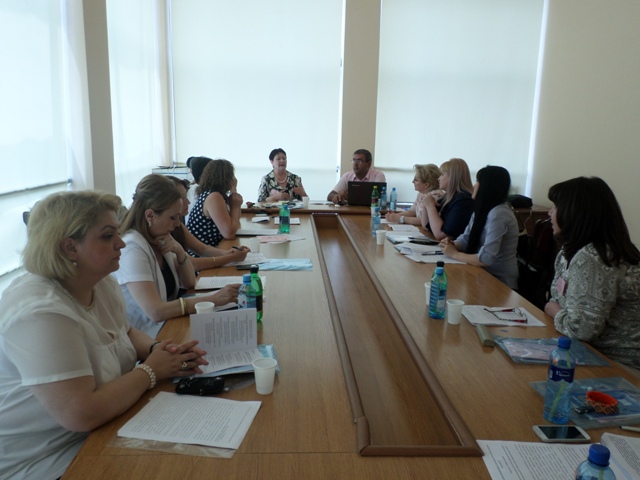
The activities of the republican conference on the topic of “Modern Issues of Pedagogy; Challenges and Solutions” continued under three headings- “Contemporary Child-Centered Approach and Upbringing Issues in Secondary Education System”, “School-Family Relations as a Precondition for Self-Orienting Education”, “Contemporary Challenges Facing Childhood and Perspective Solutions Aimed Thereon”.