The regular meeting of the Academic Council of Armenian State Pedagogical University (ASPU) began with a pleasant surprise: the Council members were the first to receive by
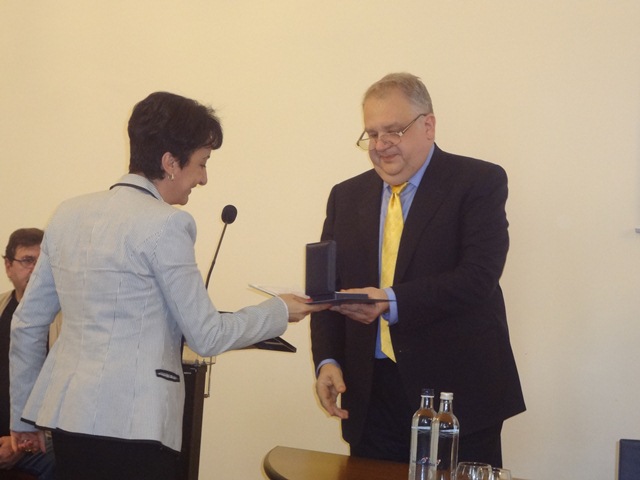
ASPU Rector Rouben Mirzakhanyan medals symbolizing the 90th anniversary of the University.
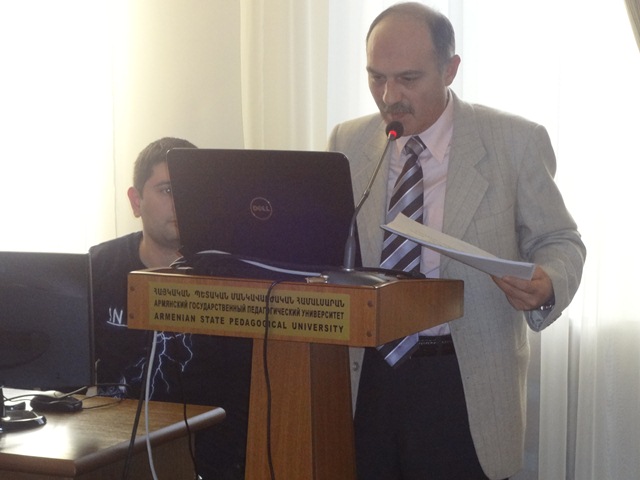
ASPU Vice-Rector for General Affairs, Armen Tamazyan, reported on the new Statutes of the University.
Speaking about the ongoing fundamental reforms, strategic issues and challenges of the University, Mr Tamazyan introduced to the Council members the new draft regulations in a fully elaborated version.
“The current Regulations of the University were approved ten years ago by a decision of the RA Government. The new draft document envisages amendments and addenda the existing regulations, besides, a number of provisions have been re-written. The rights and liabilities of the University staff and students have been completely separated,” said Armen Tamazyan.
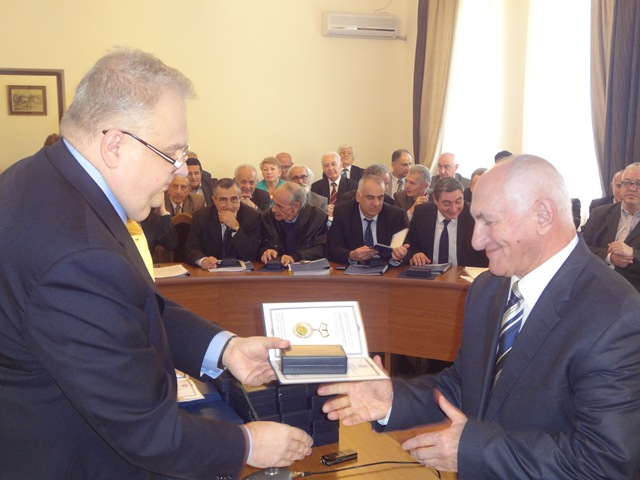
Ara Yeremyan, ASPU Vice-Rector for Scientific Affairs and Postgraduate Studies, presented the results of a study assessing the preparation of certification of degree seekers and postgraduate students.
He stressed that the study aimed to pave the way for introduction of credit system for degree seekers and for training reforms of the University’s academic and pedagogical staff.
“During the study we focused on the individual plan of research, educational and scientific activities, its execution, general and professional preparedness of degree seekers and postgraduate students and their certification.
The project on the order of approving dissertation topics and scientific supervisors will make the work with degree seekers and postgraduate students more reasonable and predictable, promoting their scientific activities,” added the vice-rector.
Next, the Academic Council discussed the organization and conduct of students’ practices.
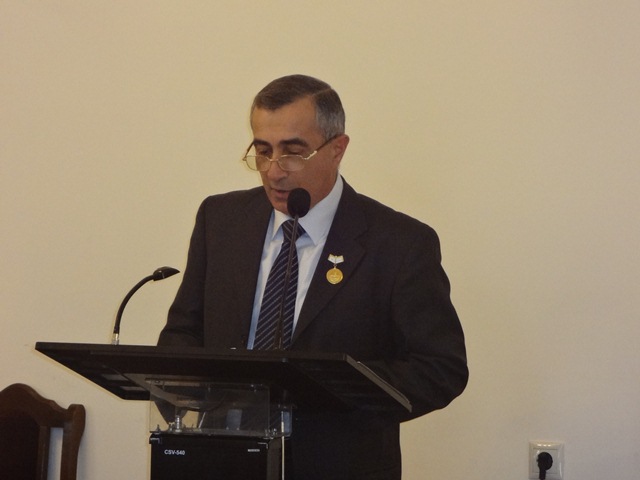
Heghine Khachatryan, Dean of the Faculty of Primary Education, presented the structure and application of the practice ‘portfolio,’ procedures, provisions, phases and principles of pedagogical practices.
She assured the presentees that the practice portfolio aims to promote students’ academic achievements and professional competence by developing and improving educational assessment.
Given the efficiency of its application during the current academic year, Heghine Khachatryan suggested subjecting the
procedure to periodic evaluation and review every year.
The Academic Council decided to form a commission involving representatives of faculties, chairs and relevant departments to elaborate and draft the practice package.
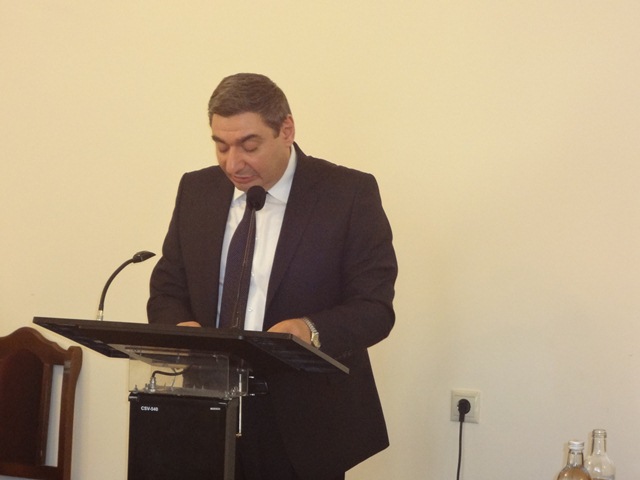
Mkrtich Avagyan, Head of the Department of Educational Development and Quality Assurance, reported on the next issue of the meeting agenda - the order of testing and assessing students' knowledge.
He underlined that assessment, on the one hand, allows ensuring students’ advancement and checking the level of their knowledge obtained during studies, on the other hand, allows checking its compliance with educational goals and objectives.
The specialist believes that assessment should be based on the principles of objectivity, availability, efficiency and transparency.
The process will be possible to check and control by regular and interim checkups and cumulative summaries. Also, Mkrtich Avagyan suggested fixing a maximum score of 100 points [instead of the former 20 points] to assess students’ knowledge.
All projects presented at the sitting of the Academic Council were approved by the meeting participants.
At the end of the meeting, acting heads of the Chairs of Special Pedagogy and Psychology, Philosophy and Logic, Logopedics and Rehabilitation Therapy were elected as heads of the aforesaid chairs in a secret ballot election.
.jpg)