- Հայ
- Рус
- Eng
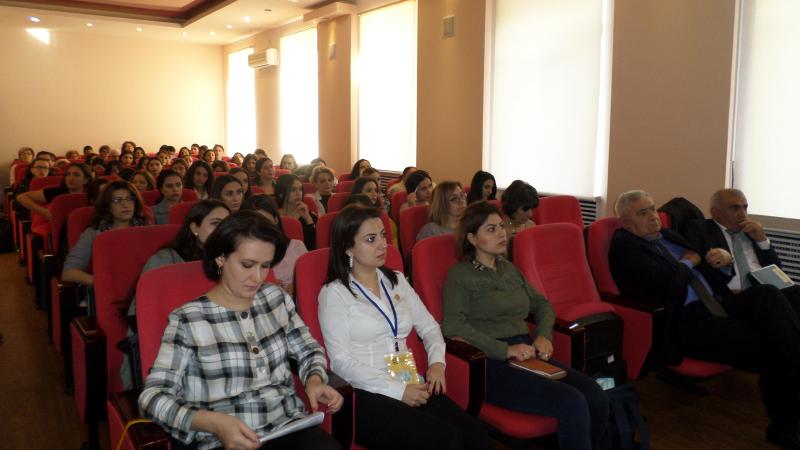
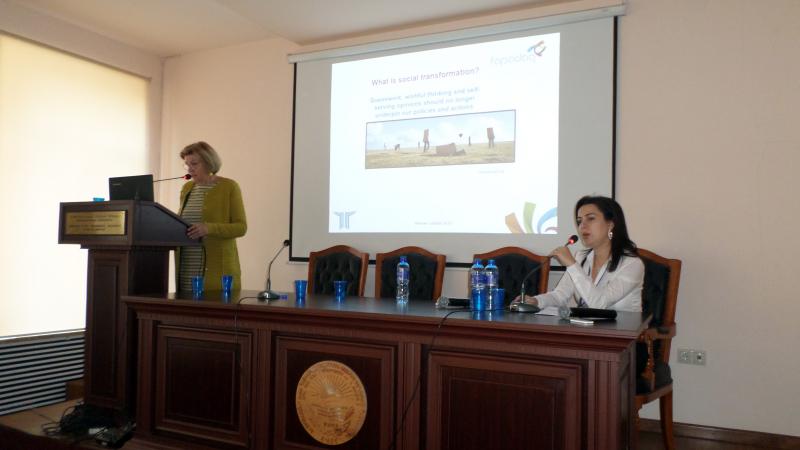
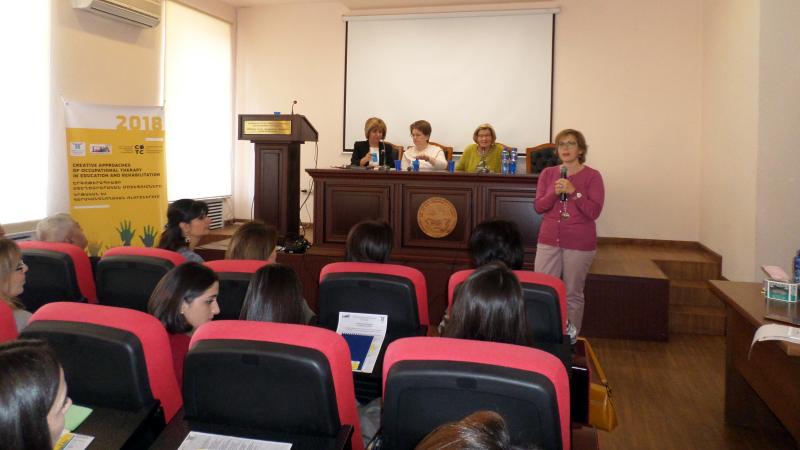
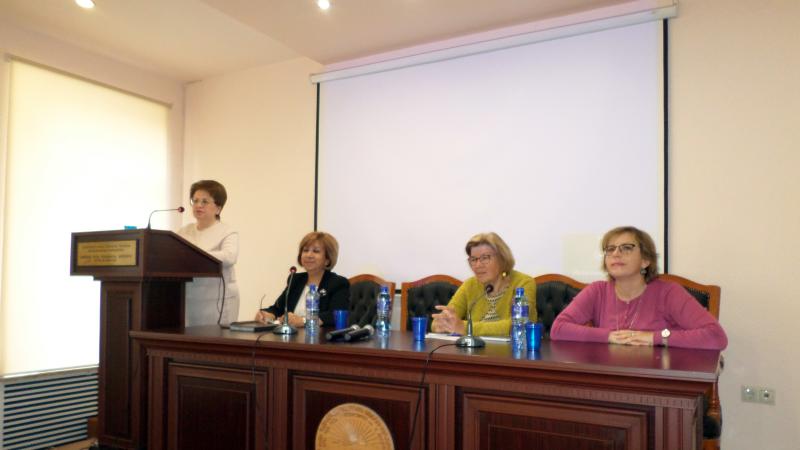
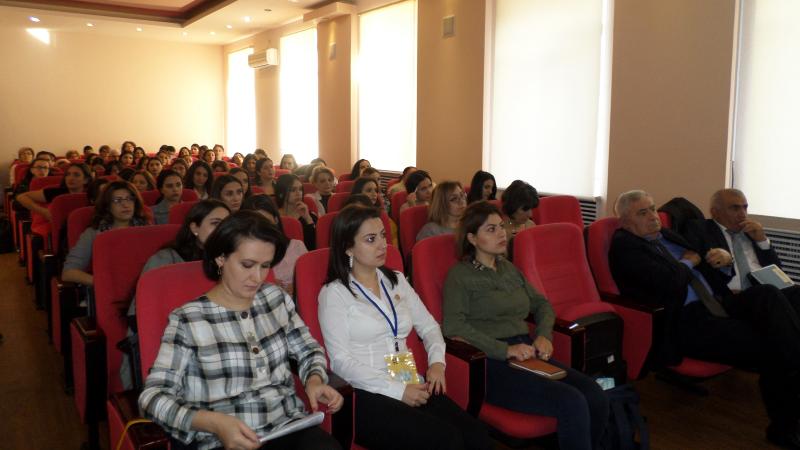
The fourth international Caucasian conference headed “Creative Approaches of Occupational Therapy in Educational and Rehabilitation Fileds” kicked off at the Pedagogical University.
On this occasion, representatives from the Netherlands, the USA and Georgia are participating in the two-day conference where the scope of occupational therapy in the Caucuses, its achievements and challenges will be discussed.
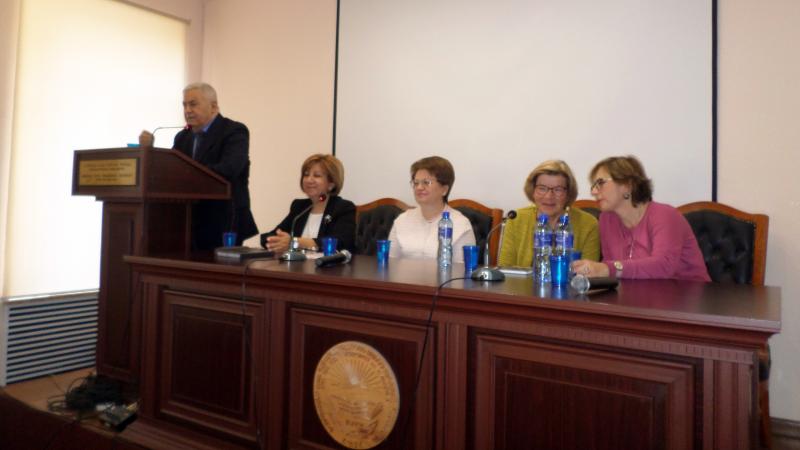
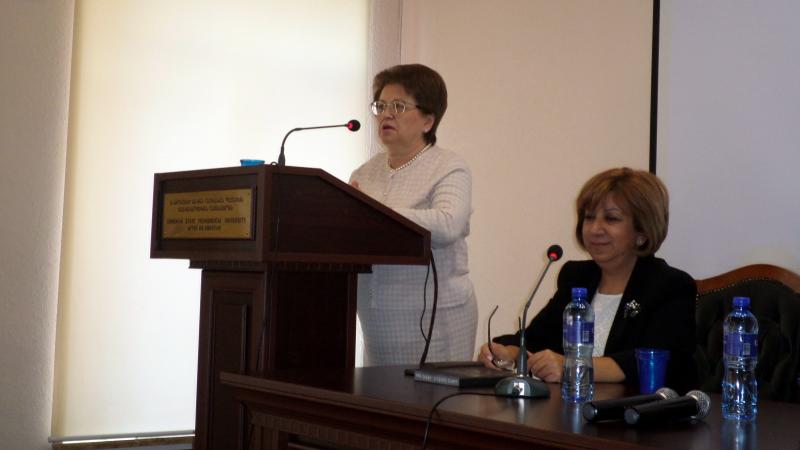
On behalf of the ASPU Management, the Vice –Rector for Academic Affairs Srbouhi Gevorgyan, welcomed the participants of the conference, wished them effective work, and presented the road that the occupational therapy passed within the framework of the TEMPUS in Armenia and Georgia in 2003; this aimed at fostering active engagement of persons with disabilities in daily life. The Vice-Rector is hopeful for the conference to contribute to the exchange of experience between specialists engaged in practical and theoretical fields of activities, students and lecturers, as well as establishment of a platform for discussions and professional communication.
According to the Dean of the Faculty of Special and Inclusive Education Siranush Karapetyan, occupational therapy is first of all a humanitarian profession, which is based on the concept of improving human life by ways of solving social, health and a number of other issues.
“This specialization has its stable and significant role in the spheres of education and psychology; this is an established fact, and the requirement for occupational therapy by a number of organizations serves as a proof thereof”, mentioned Siranush Karapetyan and added that it is one of the priorities for the Pedagogical University to align its various directions of special education with international standards.
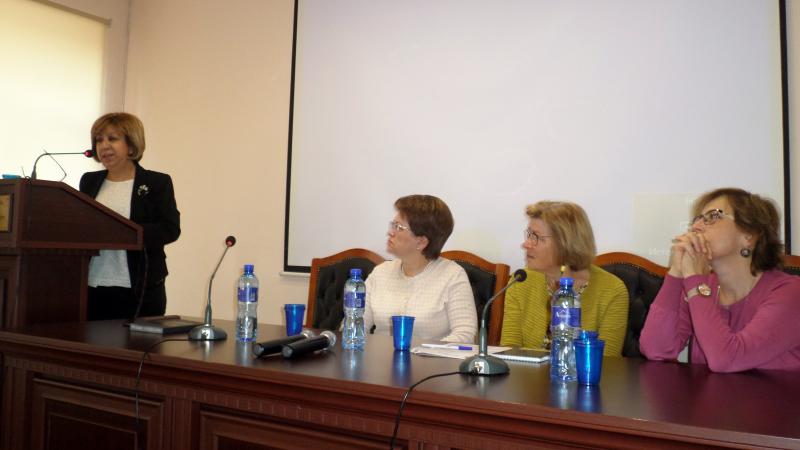
The Director of the ArBES Health Centre Manoushak Yeritsyan was sorry to notice that the specialization in occupational therapy ends at Bachelor’s Degree, but she also noticed that the first graduates in this area were actually actively engaged in work. Organizing conferences and other similar initiatives will contribute to outlining the significance of this profession in Armenia too, as occupational therapy is a much needed activity for rehabilitation teams.
The Coordinator of the Erasmus+ Armenian Office Lana Karlova spoke about the entry of educational programmes in this specialization to our county and introduced the people who made their contribution in this task. Speaking about the difficulties, she first of all highlighted the knowledge of foreign languages as the project is implemented in accordance with the European standards. Likewise, speaking about the restoration of this profession at the undergraduate level, Lana Karlova assured that the most important was realizing the significance, necessity and seriousness of the profession.
“Only five out of the 12 students admitted to this course were able to overcome the difficulties and to graduate the university as the first graduates of occupational therapy. The first steps were not easy but they were important as this profession is in high demand among all age groups”, mentioned the Associate Professor of the Chair of Logopedics and Rehabilitation Spartak Palikyan who participated and supported the introduction of this profession at the University.
Referring to the participants of the conference, the special pedagogues and particularly the occupational therapists, Spartak Palikyan advised to fight for the restoration of this profession with mutual efforts.
Still 14 years ago, the Project Leader of the OT Tuning, the Honorary member of the Association of Occupational Therapy of the Netherlands Hannekke Van Bryuggen participated in the introduction and adoption of educational programmes in this profession in Armenia. In the greeting speech Hannekke expressed acknowledgements to all those who helped in this task and added that it was very important for specialists of such a small profession as occupational therapy to constantly cooperate.
The conference proceeded to presenting various reports in which reference was made to the directions of occupational therapy, its development strategy and potentials, interference models at inclusive schools, etc.