- Հայ
- Рус
- Eng
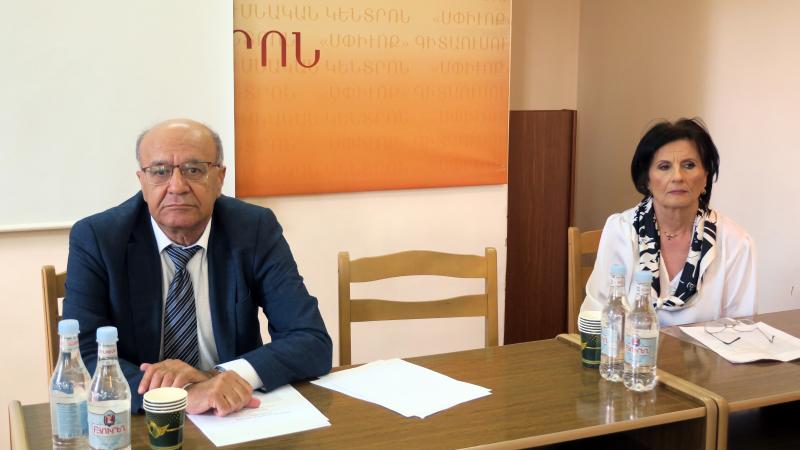
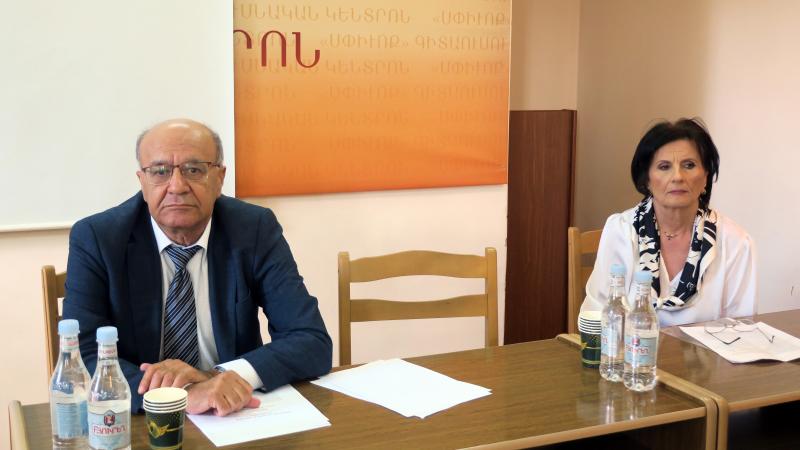
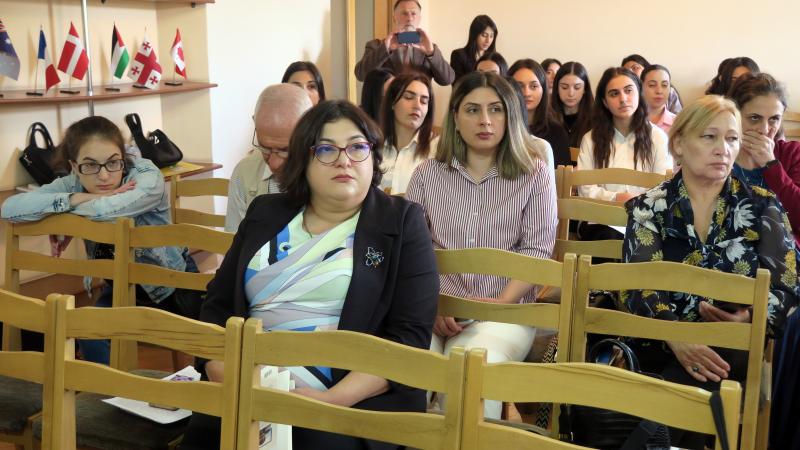
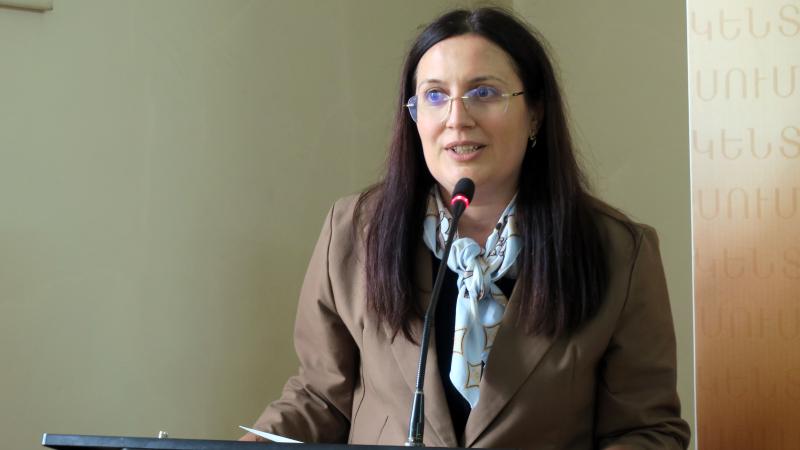
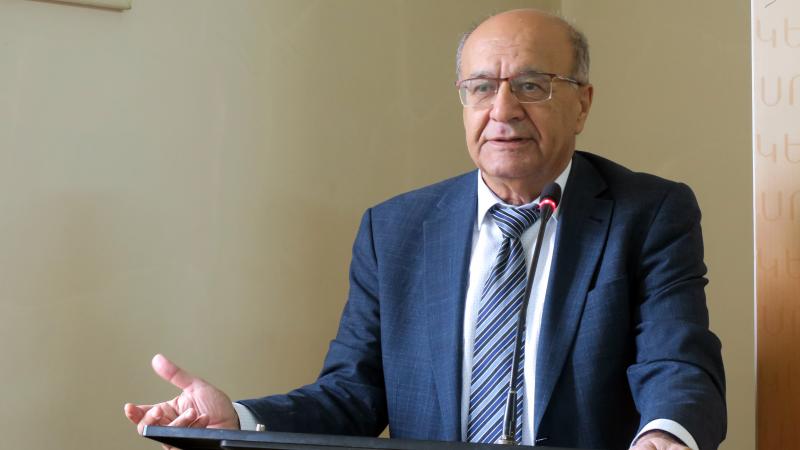
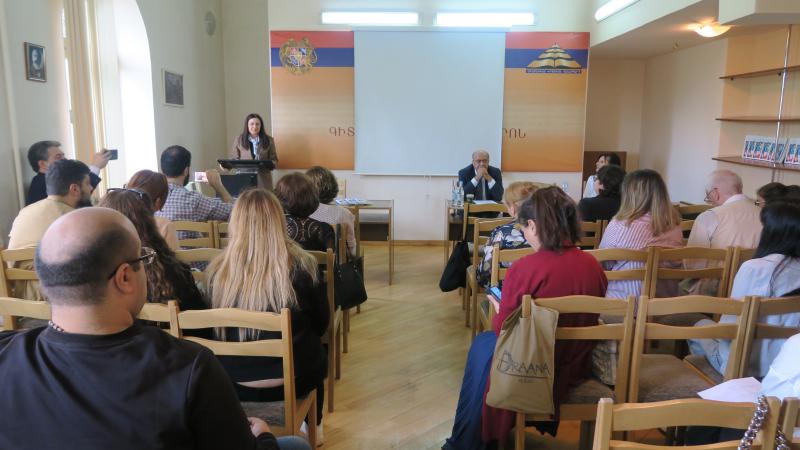
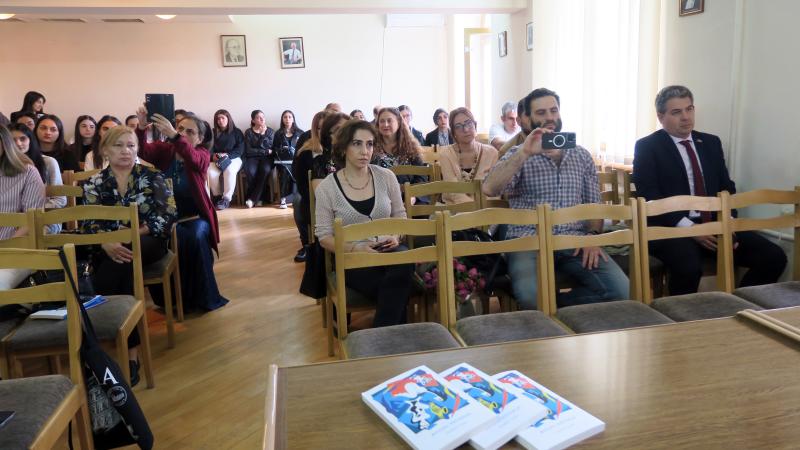
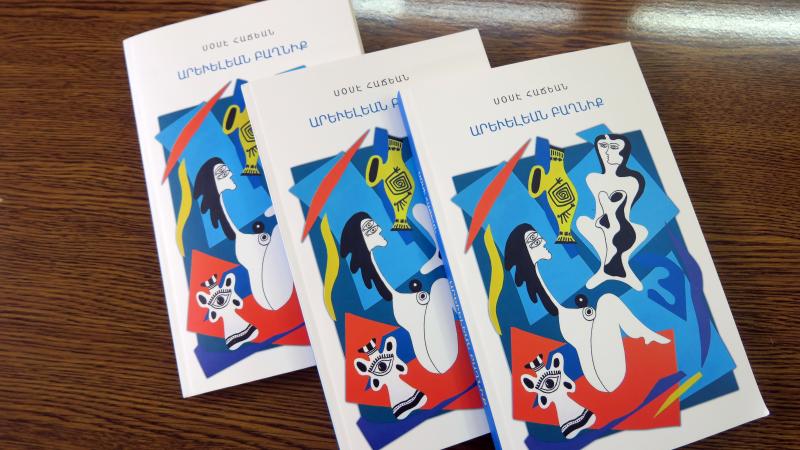
“Oriental Bathhouse:" this is the title of short stories written by Armenian Language and Literature teacher Sose Hachian over the last decade. The presentation of the book took place at the “Spyurk” (Diaspora) Scientific-Educational Center of Armenian State Pedagogical University (ASPU) on October 1. The event was attended by the author, representatives of the literary field, readers and students.
The stories in the book reflect the anguish of the fragmented life of the Diaspora and the constant struggle of Armenians for the preservation of Armenian identity, disunions, hopes and disappointments of Armenians living far from their Homeland. The first stories were published at the end of 2013 in the Istanbul-based daily newspaper "Marmara", when the author wrote down the impressions from her visits to various regions of Western Armenia, particularly Tigranakert.
Suren Danielyan, Director of the “Spyurk” (Diaspora) Scientific-Educational Center, Acting Head of the Chair of New and Modern Armenian Literature and its Teaching Methods after Vache Partizuni, who is also the author of the foreword of the book, says the Hachian spouses, who settled in Argentina in the 1970s, formed a "literary family" council there.
The professor says Sose Hachian, continued the traditions of her husband, and the breath of her devotion is perceived in the valuable collection; her feelings and emotions take us to the East. Mr. Danielyan notes that the heroes are ordinary people who live like other Armenians. The author’s aim and message is to reconcile Armenian type (Armenianness) and the ‘national’ way of thinking. Today, readers are offered a literary chronicle full of memories of the past the basis of which is the odyssey of life of an intellectual woman, which has become the author's constant struggle for the continuation of the interrupted dream. The title of the book implies the endless desire to return home, to Armenianness. "Armenian [language] unites us…” In the foreword, I tried to see that tradition and the potential of return. If your pen compels you, you should return to Armenianness, look at Western Armenians and their silent suffering,” Mr. Danielyan said adding that today we need to understand something: where is the Diaspora heading- looking for today? Or seeking an Eastern bathhouse and the Armenian council?
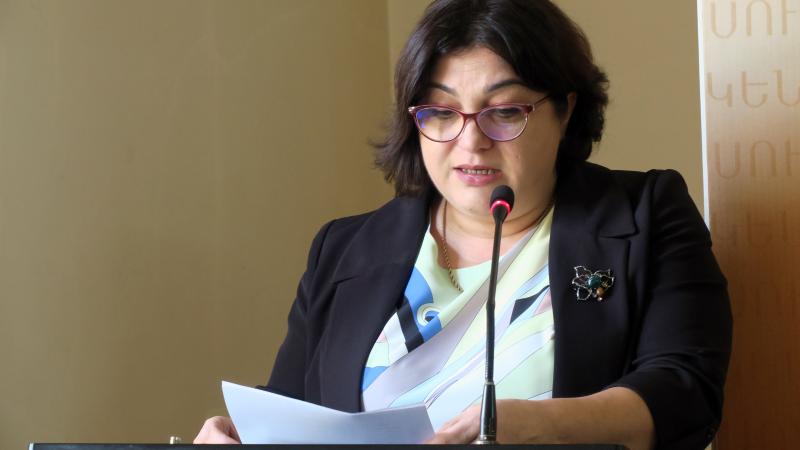
Knarik Abrahamyan, Associate Professor at the Chair of New and Modern Armenian Literature and its Teaching Methods after Vache Partizuni, says a few years ago, Sose Hachian was a model student at the University, who taught how to learn throughout life. Today, she has returned as an author of a book and again teaches how to study at the Faculty of Philology and become a writer.
Knarik Abrahamyan says the driving force that made Sose Hachian to pick up a pen and create literature did not come out of nowhere. On the one hand, there is the family tradition; the author's husband Petros Hachian is one of the best writers of the Diaspora, on the other hand, the writer has endless love and passion for the Armenian language.
Knarik Abrahamyan says Sose Hachian’s book is a story of adding her own stories about the contrasts between Eastern and Western cultures, and the title comes to confirm Sose Hachian’s choice. A person, who left the East, Syria, decades ago, continues to keep the East deep in her soul.
Sose Hachian confesses that it was her sons who forced her to turn those stories into a book; she has chosen only 39 out of 141 short stories. When choosing a title for the book she was inspired by her childhood memories; going to the bathhouse was a ritual; she still remembers their colour and shape.
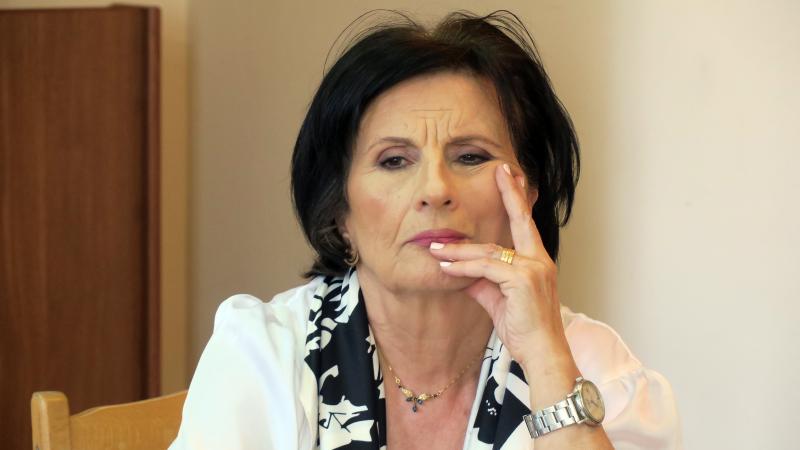
“Some events in life pave the way for others. When I went to Istanbul, I also visited the office of "Marmara" newspaper, where my husband used to work. The editor came up to me and offered to write about the impressions of my visit to Istanbul. I agreed. Before writing this collection, I used to write articles, but they all remained in notebooks. We are crazy about Istanbul - a mixture of the West and the East, a beautiful city: many cultures have crossed here and left their mark. Istanbul is ‘the birthplace’ of Western Armenian. Everything impressed me there. The Armenian community also impressed me, which despite all difficulties, preserves its Armenian identity. I just wrote a letter about all that," Sose Hachian said and added that she does not consider herself a writer as she has written just one book.
During the presentation of the book, Nona Davtyan, Associate Professor at the Chair of New and Modern Armenian Literature and its Teaching Methods after Vache Partizuni, spoke about the development of Armenian literature in Argentina, particularly focusing on the literary activity of Petros Hachian.