- Հայ
- Рус
- Eng
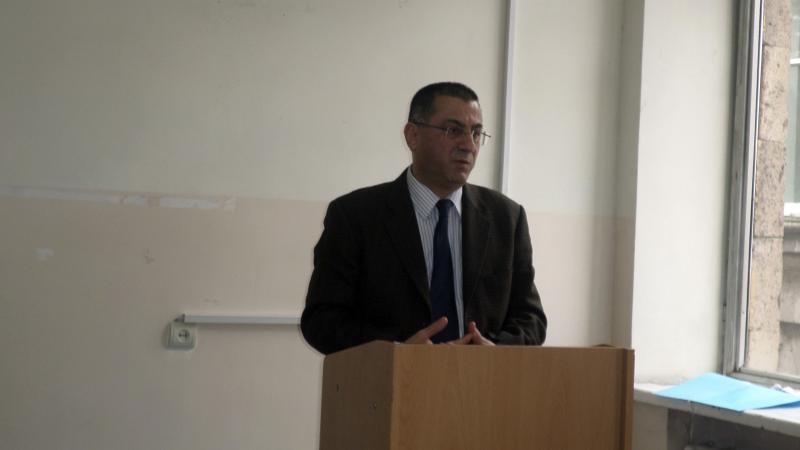
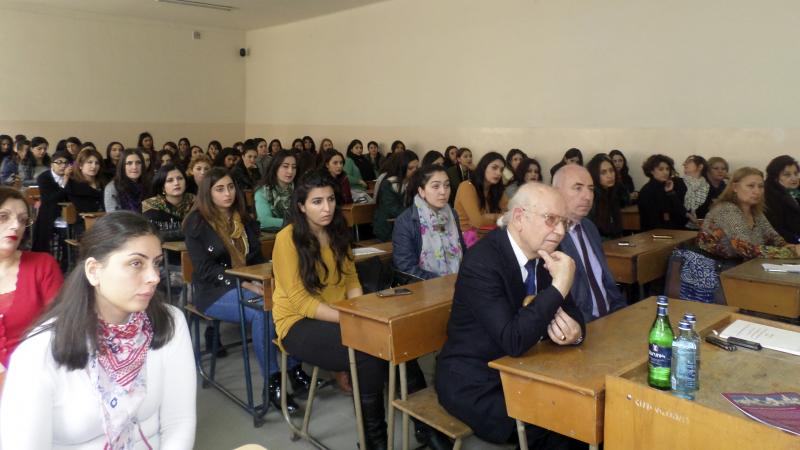
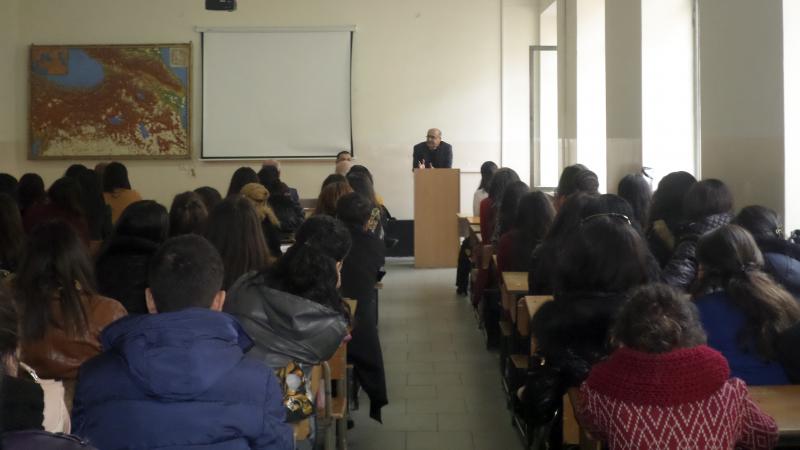
Upon the initiative of the “Spyurk (Diaspora) Scientific-Educational Centre of Armenian State Pedagogical University and the Chair of Ancient and Medieval Armenian Literature and its Teaching Methods, the Faculty of Philology hosted Hratch Tchilingirian, Professor at the University of Oxford.
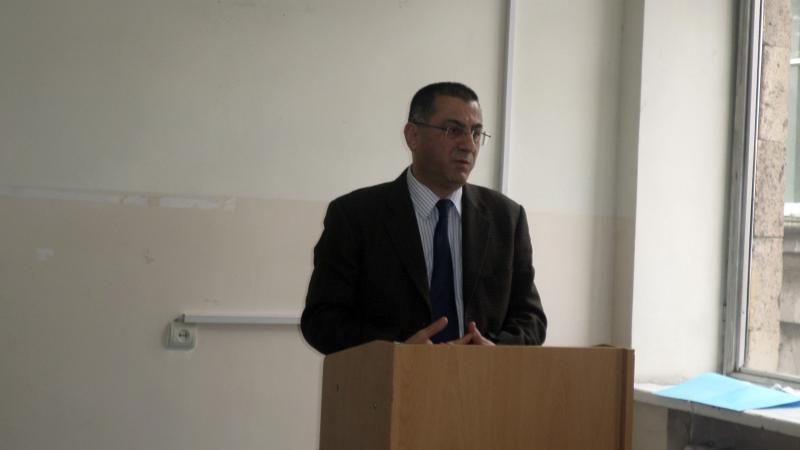
During the lecture entitled “Western Armenian in the 21st Century,” the guest spoke about the fate of the language and expressed his hope that the meeting would turn into an interesting discussion, with the participants offering ways to preserve Western Armenian.
Hratch Tchilingirian then briefed the attendees on the results of an Oxford-hosted working conference dedicated to the preservation of Western Armenian. He stressed that the participants of the conference, including writers, publishers and media representatives, made their proposals on the subject matter.
“If a language is destined to survive, then it is necessary to think, first of all, about people who write and create in that language as the vitality of a language supposes creative work,” the speaker said, underlining the important role of young people in particular. At present, the language and culture of Western Armenian should be served through information technology, as well.
The lecturer at Oriental Studies Department at the University of Oxford stresses that it is not important to speak about the preservation of the language and culture; rather, it is necessary to take measures to keep the language alive. “We need to seed the idea of preserving Western Armenian from an early age and in the family, whereas the entire burden is left on the shoulders of intellectuals, who cannot bear that burden alone,” he stressed. The Professor added that we need to think about the upcoming decades already today.
The guest is also concerned about the situation of Western Armenian in the higher education system. One cannot find Armenian-language universities in the Diaspora. Another issue of concern is that the language is placed on a high pedestal. People often avoid using Western Armenian for fear that they might make mistakes. The Professor recommends speaking the language, making mistakes and improving one’s skills by correcting the mistakes.
During the meeting, the visiting guest also answered the questions of ASPU students, spoke about Armenian studies pursued at Oxford since the nineteenth century, stressing their ‘deep roots.’
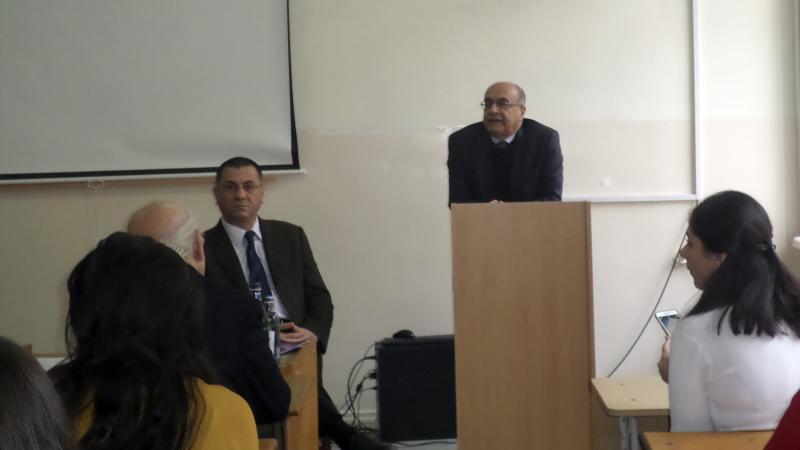
Professor Suren Danielyan, Head of the Chair of Ancient and Medieval Armenian Literature and its Teaching Methods, thanked the guest for accepting the invitation and commended his initiative to hold a conference dedicated to Western Armenian at Oxford University.
“We always wonder how our Diaspora scientists can fit foreign languages to the Armenian mentality. Our guest is also a scientist, who has expanded the range of his interests and stopped on the study of Western Armenian in the 21st century,” Suren Danielyan said, expressing his concerns about the fate and preservation of Western Armenian in Armenia. He also expressed his regret that the issue has not been made a priority yet and is not included in the state programmes.