- Հայ
- Рус
- Eng
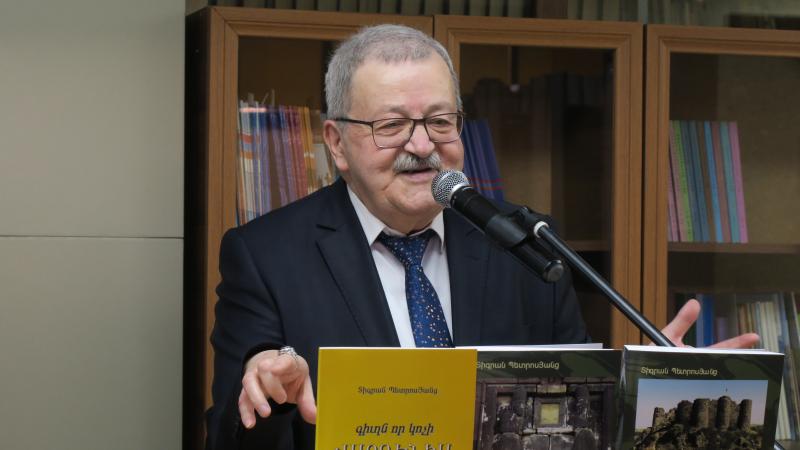
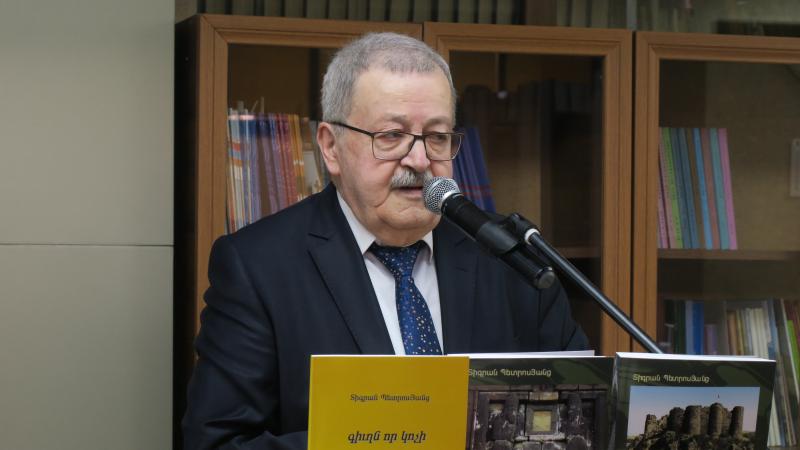
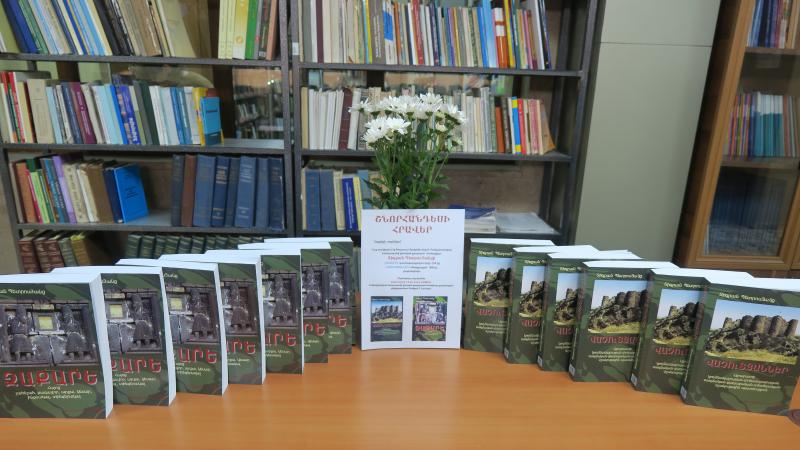
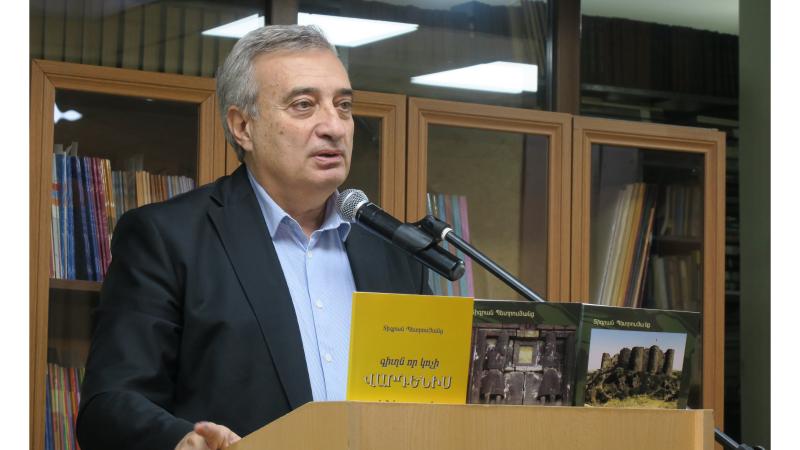
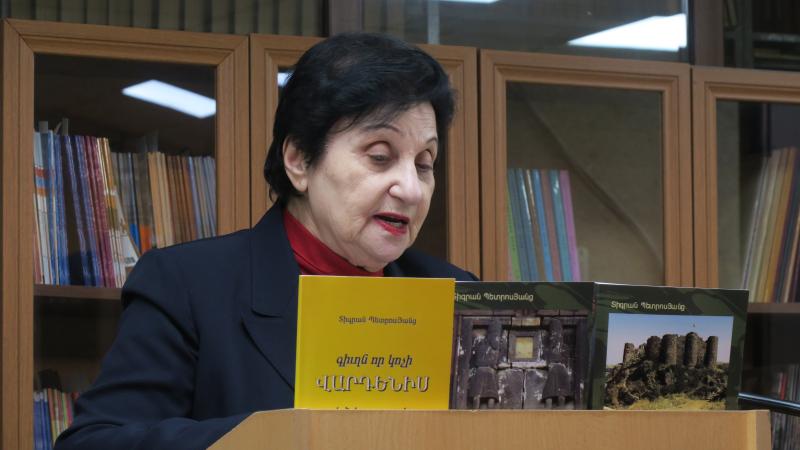
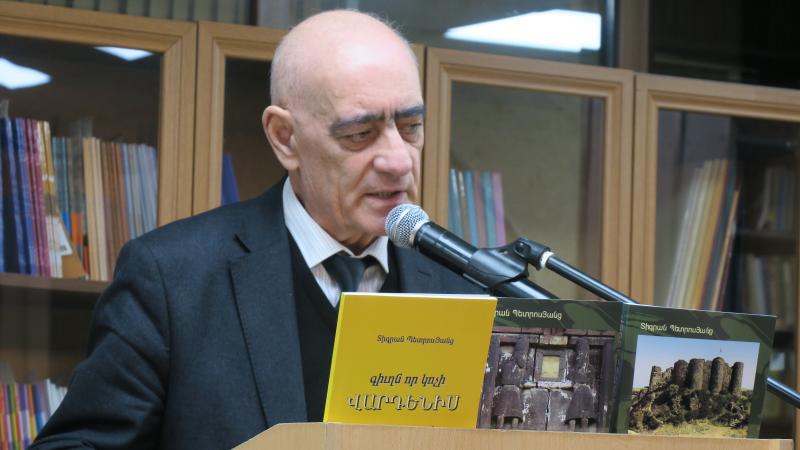
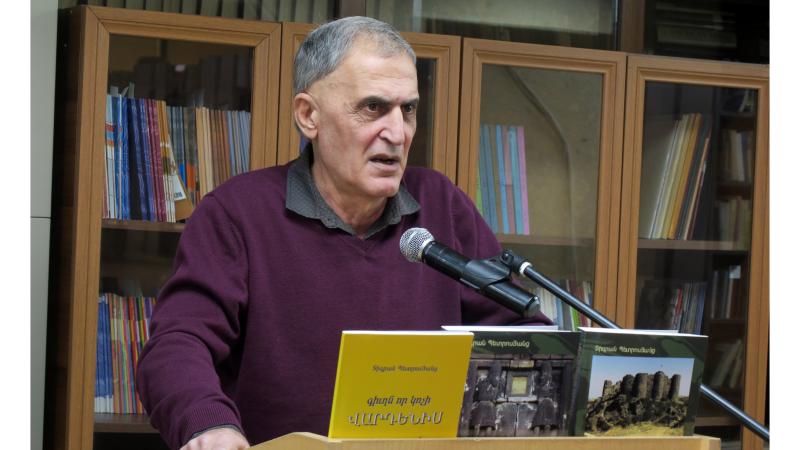
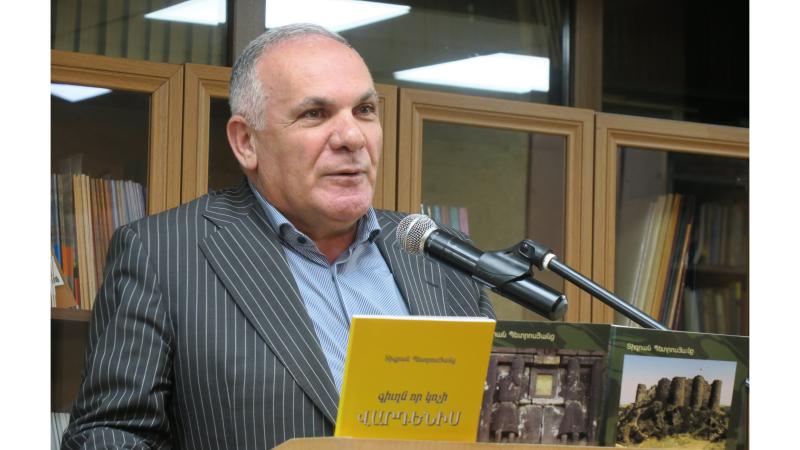
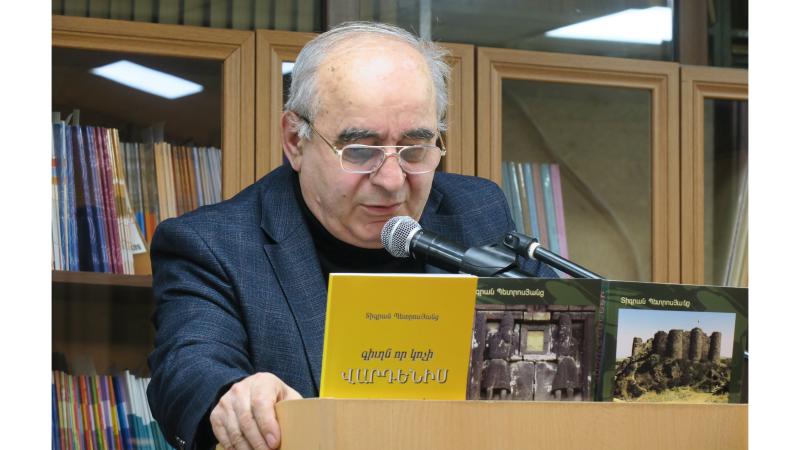
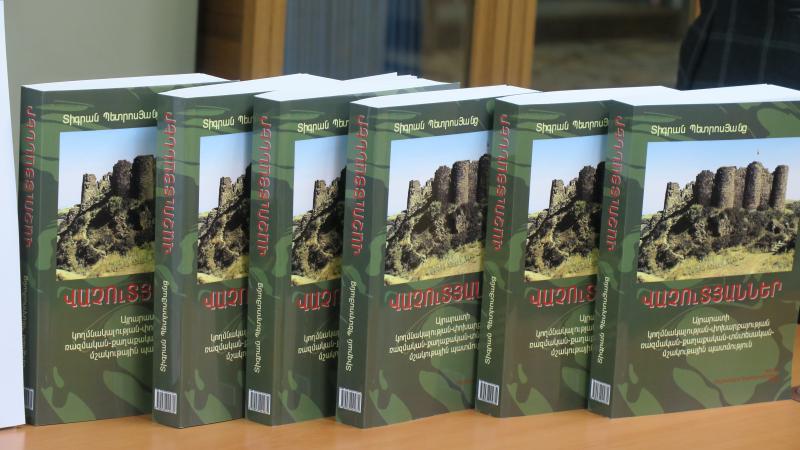
The Armenian State Pedagogical University (ASPU) hosted a presentation of the books “Zakare” and “Vachutyans” written by Director of the Academic Library, historian, writer, journalist, bibliographer and culturologist Tigran Petrosyants.
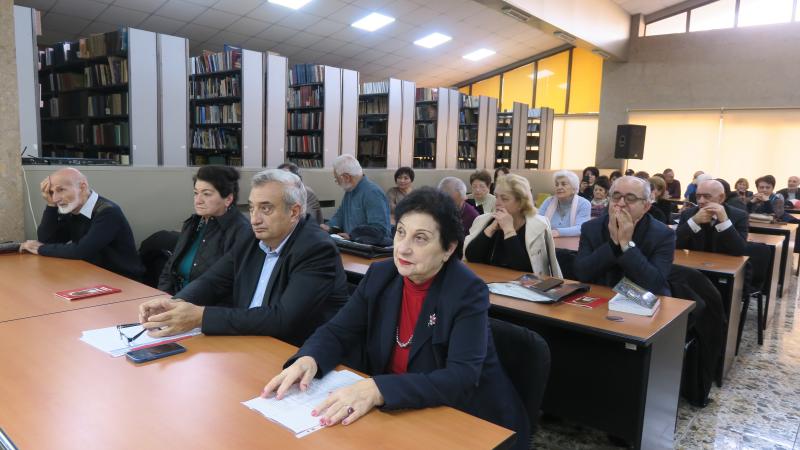
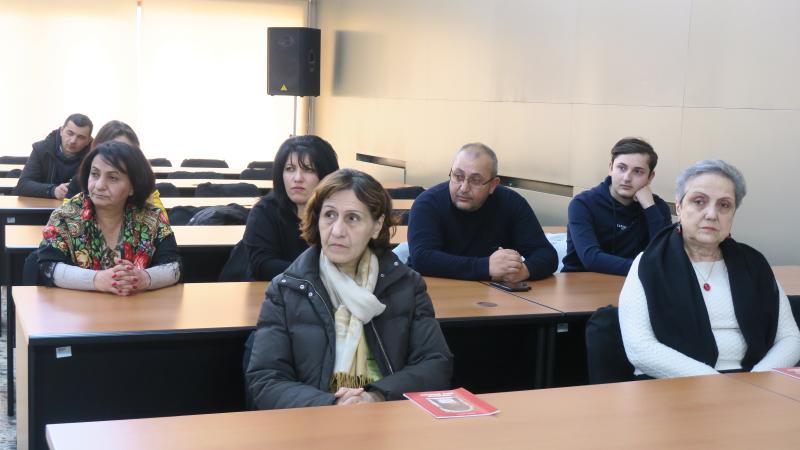
Among those attending the presentation were historians, literary critics, linguists, intellectuals and students.
The initial version of the historical-political novel “Zakare: The Shahenshah, the king, the lord, the Caesar, the autocrat and the ruler of Armenians” was written back in 1967, and later, the author thoroughly explored the Zakaryans (the Zakaryans shaped Armenian history in the 12th-14th centuries), their period, the history of the independence that they established and composed the final version of the historical novel.
As stated in the preface, the courage to draw the final conclusion is missing in the historical works related to Hayk-Armenia — the independent statehood established by the Zakaryans. In the historical novel, the author comes to this political conclusion according to which Zakare Shahenshah shaped an absolutely independent state.
The book “Vachutyans” (military, political, economic cultural history of the partiality-viceroyalty of Ararat) is the reformed version of the monograph published in 2001. Printed between 2013 and 2023, the selected articles thoroughly present the story of the Zakaryans who shaped Armenian history in the 12th-14th centuries, the independent statehood that they established and the history of the Vachutyan dynasty, which was the most powerful state and military role-player in the statehood at the time.
Academician of the National Academy of Sciences of Armenia, Professor Ashot Melkonyan, who was attending the presentation, believes there are modest people at the ASPU who are devoted to science and are genuine citizens of the Republic of Armenia who make them acknowledge, and Tigran Petrosyants is one of those people, evidence of which is his life and career.
Melkonyan views the historical-political novel “Zakare: The Shahenshah, the king, the lord, the Caesar, the autocrat and the ruler of Armenians” as the history of Armenian statehood which, unfortunately, was circumvented, and, by repeating the mistake for years, we Armenians have not had statehood starting from the fall of the Arshakunyants Kingdom and leading up to the Bagratunis.
The historian corrects by saying that we Armenians had statehood and did not have a kingdom in certain periods, but, as the author of the day shows, we Armenians also had a kingdom. “The novel easily engrosses, especially when you are a historian, and the author knows the historical material wonderfully. It is not by chance that today Tigran Petrosyants serves as the major source of information about the Zakaryans in different literary sources and in different publications.”
Melkonyan touched upon the relations of the Georgian royalty and Armenian statehood and the relations between Ivane and Zakara Zakaryan brothers and Queen Tamar which are featured in the book, emphasizing that if certain historians believe facts have been exaggerated or circumvented, this is just the fruit of the leap of artistic thought of the author.
According to Professor Melkonyan, the academic continuation of the historical novel is the “Vachutyans” monograph by Tigran Petrosyants which features the ancestry and time period of the statehood that was still alive. “Through the publications of the two weighty compositions, we also need to radically review a number of historical realities that have become ‘textbook truths’. One of the tragedies of us Armenians is that it seems as though there is no devotion to or worship and respect for statehood, but the intellectuals of the nation breaks this mindset, and one of those intellectuals is Tigran Petrosyants.”
The author of the books notes that the book “Vachutyans” serves as an academic objective — that which is impossible to claim in the petrified reality must be said in another way, including artistically, and it was possible to do this through the books “Zakare” and “Vardenis”. “The two historical novels are part of the problem of Armenian statehood that we have had for 50 years. We Armenians have to respect, love and present our statehoods.”
Head of the Chair of Armenian Ancient and Medieval Literature and its Teaching Methods, Professor Aelita Dolukhanyan, citing the thought in the autobiography of world-famous historical novelist Walter Scott that every Scot has a family tree that is his or her achievement is as inseparable as is his or her pride and poverty, adds that it is daringly safe to say that this can also characterize the historical works of Tigran Petrosyants, particularly for the historical novel “Zakare”.
Professor Dolukhanyan notes that every writer’s reflection on history serves as a message for his or her future — the historical novel contains important scientific-historical references, presents the spiritual and cultural ties of Cilician Armenia and Great Hayk, the image of the national leader and the relations with various layers of society, and the novel also contains many characters of diligent, beautiful and gifted Armenian women. “Historical novels are not written just like that; a reflection on history is very current and is oriented towards the future. “Zakare” is a current lesson in history, and it is addressed to all Armenians,” she stated.
Head of the ASPU Linguistic Research Laboratory, Professor Lalik Khachatryan considers “Zakare” a historical-philological work that is based on the idea of independence and the re-establishment of Armenian statehood.
Professor Khachatryan notes that the several historical axes in the book affirm that the author understands statehood on the basis of power, dedication and patriotism, and in the unique descriptions of the battles we see both the historian and the philologist, who speaks about dexterity, historical knowledge and being philological giftedness, due to which the novel becomes perceivable, legible and acceptable.
Head of the Scientific Research Center Kamo Vardanyan says the publication of the voluminous books is a major event, noting that he was hoping for the presentation of the books to be a part of the events dedicated to the 100th anniversary of the ASPU last year. However, as the Professor also noted, time itself tells when a particular activity shall be carried out.
As for Head of the Chair of Armenian History Edik Grigoryan, he noted that the Armenian medieval era has always been of major significance for historical sciences and that we still have a lot to learn from the folds that have been identified and have yet to be identified. According to him, the book “Vachutyans” by Tigran Petrosyants is also a book that can serve as a source.
Editor of the book “Vachutyans”, Professor of the ASPU Vanik Virabyan added that Petrosyants pays homage to the idea of Armenian statehood in his books and that there is a foundation of the nation that is extremely important in our days.
“Novel, historical essay, historiography…various literary genres are combined in the books of Tigran Petrosyants, and what is didactic is what we Armenians have had and what we have to do to re-establish the kingdom of the Zakaryans, which was a worthy seed in Armenian soil, but not preserved,” prose writer Vrezh Sarukhanyan stated in his speech and added that Tigran Petrosyants has succeeded in placing the historical truth in the chain of history and restore it — something that is a necessity nowadays. Sarukhanyan considers the book a political admonition for all Armenians, noting that it is necessary to read and understand what Zakare did that we are not doing and the opposite.
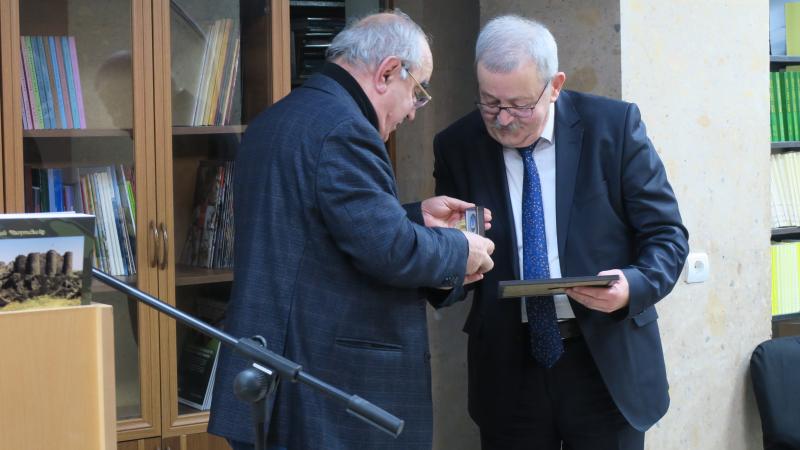
On behalf of the “Vahagn” Military-Patriotic Society, Vrezh Sarukhanyan granted a medal to Tigran Petrosyants.