- Հայ
- Рус
- Eng
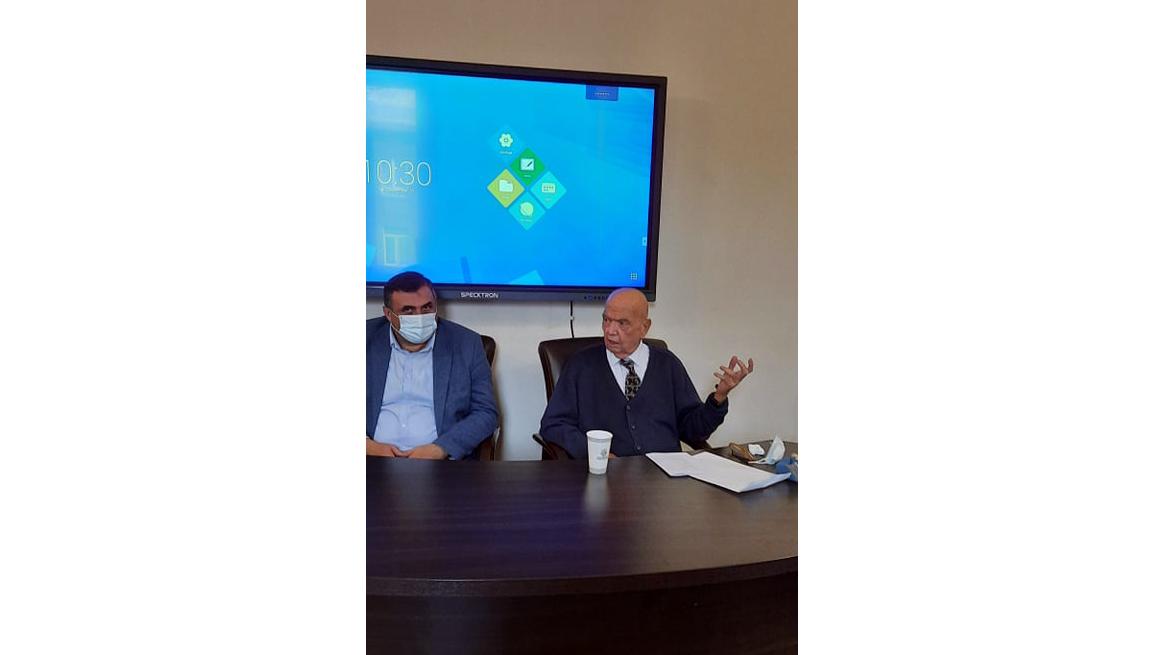
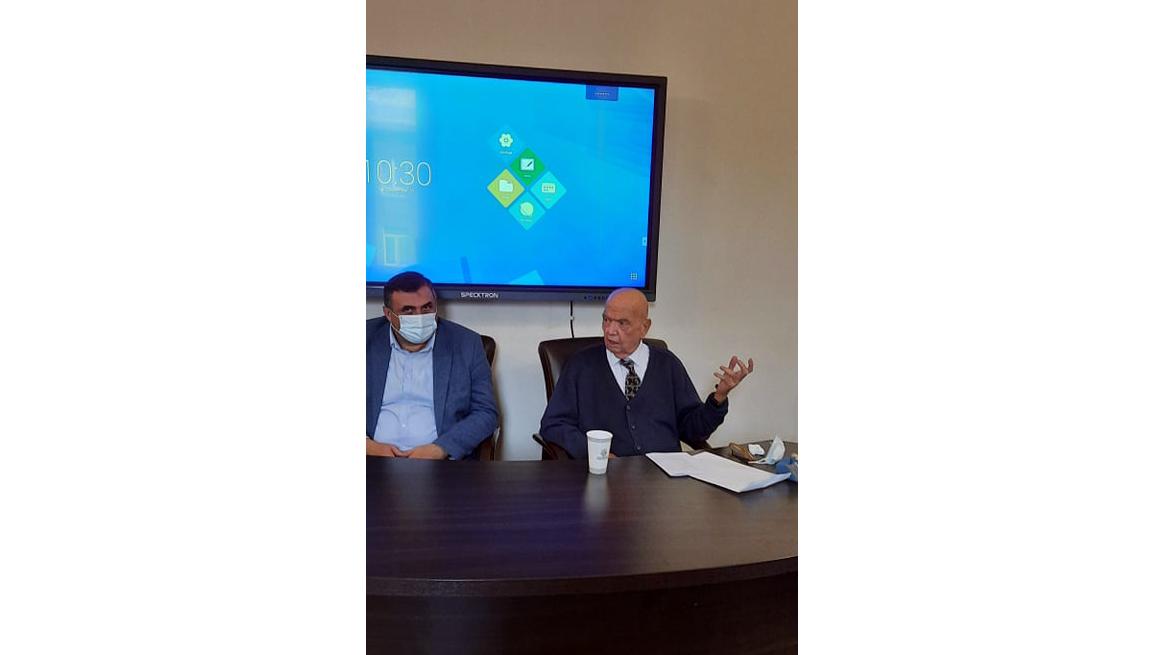
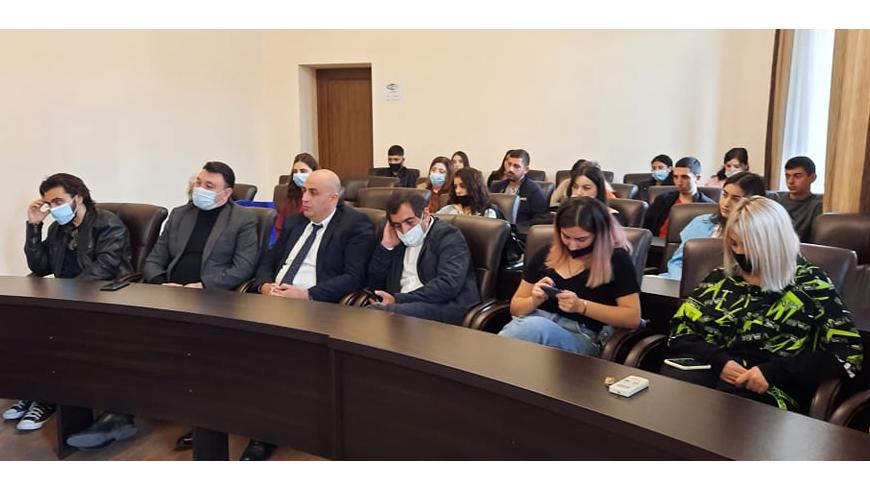
The series of public lectures by prominent Armenian Professors continue at the Pedagogical University; within this framework the University of California, Los Angeles (UCLA) Professor Richard Hovhannisyan presented his lecture headed “Contemplations about the First Republic of Armenia”.
To begin with, world famous Professor Richard Hovhannisyan talked about his efforts to learn Armenian language, as well as spoke about his goals and their fulfillment.
“When I graduated from the California State University there was no University that had a Chair of Armenian Studies or where they’d teach Armenian studies. So, upon receiving my title of Teacher and before starting to work, I decided to learn Armenian first. I took a ship to Beirut, where there were a lot of Armenians, where I targeted on my first visit to college and met Simon Vratsyan”, the Professor mentioned in his frank conversation with lecturers and students.
Further on, referring to the lecture, the speaker talked about the National Armenian Council established in Tbilisi and on how the Armenians, for whom Tbilisi had become Armenian capital city, returned to Yerevan, which was at that time a small dusty city, and proclaimed that small area the capital city. Besides, Richard Kirakosyan noticed that it was a heroic generation that left their safe life in Tbilisi and started creating something out of nothing in Yerevan.
“In extremely difficult conditions, with hundreds of thousands of migrants, the Prime Minister Hovhannes Qajaznouni was trying to establish a republic in Yerevan, by negotiating with the tsarist and Armenian officials.”
According to the historian, if the West had fulfilled their promise, United Armenia would have been established with the unification of Western and Eastern Armenia.
Furthermore, Richard Hovhannisyan thoroughly spoke about the created situation, the reasons, and consequences, as well as about the implemented policy. Drawing comparative parallels with Armenia of 1990s, when we had culture, science, academy, institutions, he noticed that in 1918 there was nothing.
“I cannot say what exactly was our fault. But unfortunately, the only hope of my country to have a united national state depended on the West, which seemed well-disposed towards us on words and with sending us support, but not when implementing policies. Thereby, the promises remained unfulfilled for various reasons”, the speaker added.
The meeting ended with a Q&A session on a few disputable matters of our history.