- Հայ
- Рус
- Eng

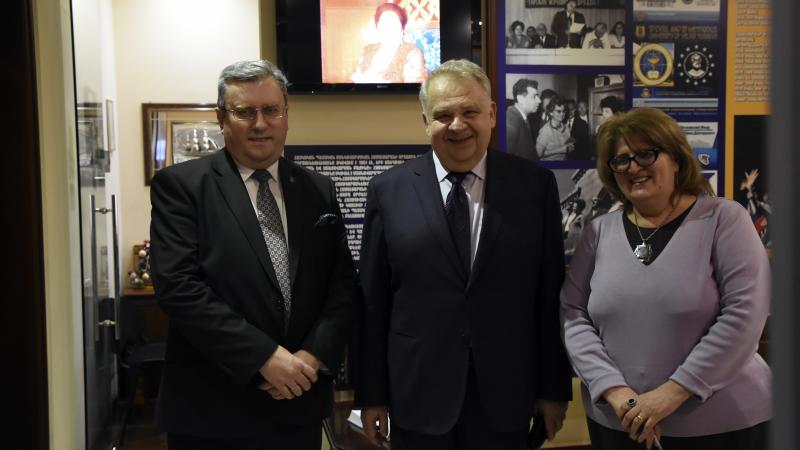
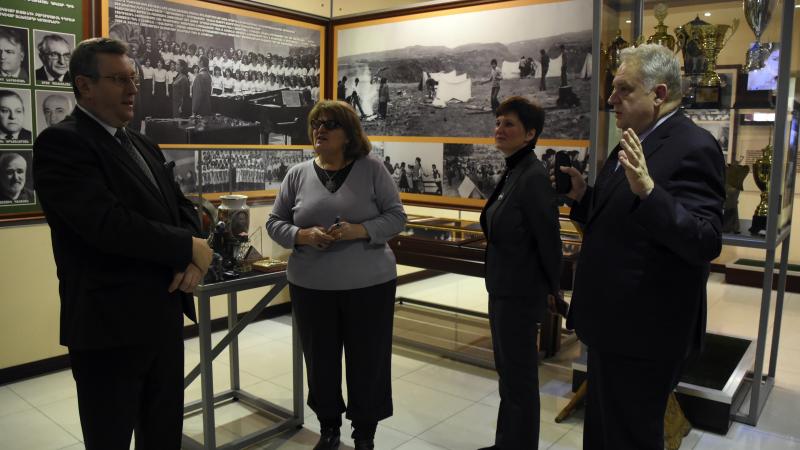
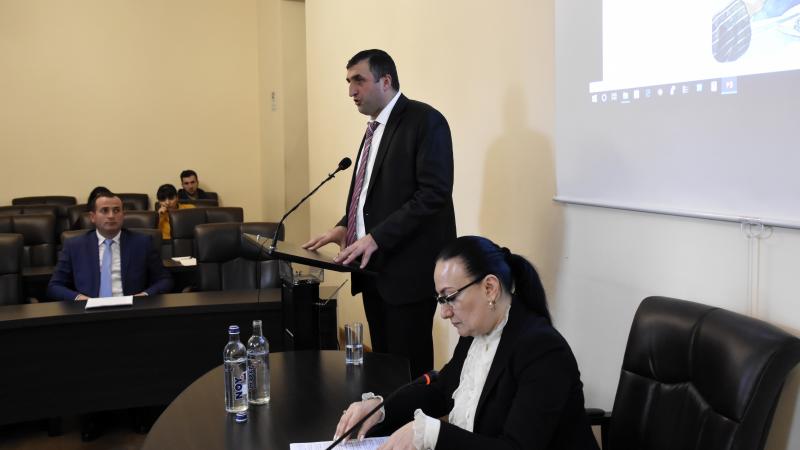
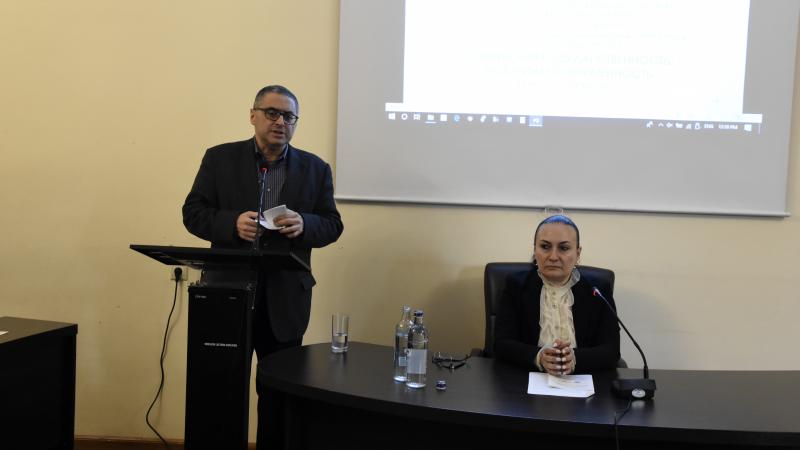
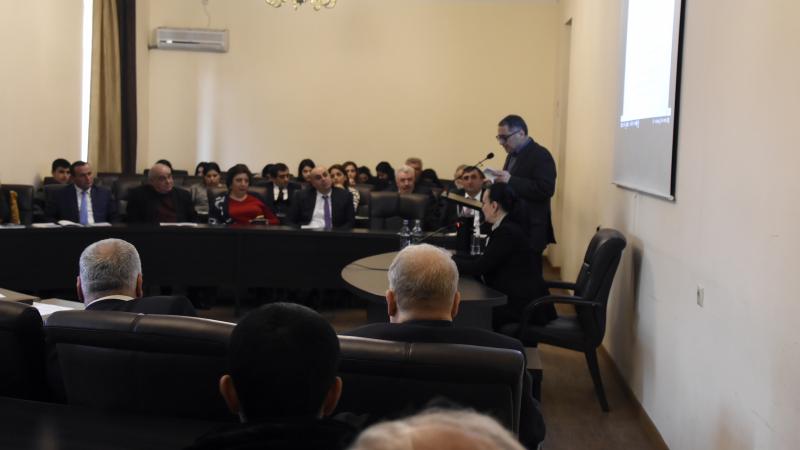
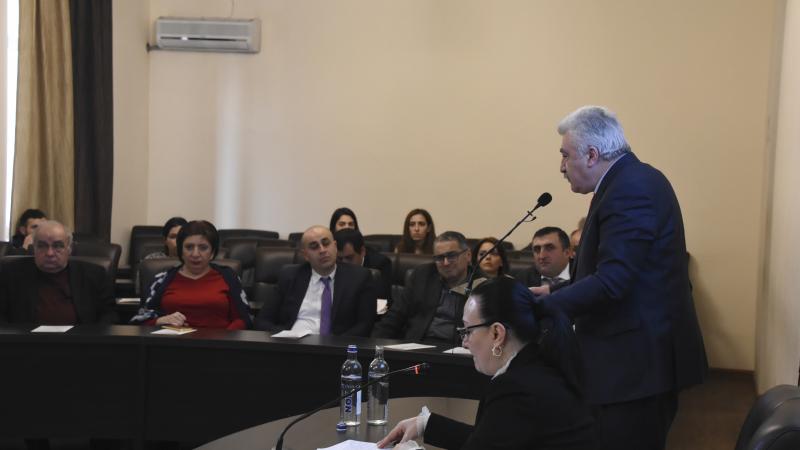
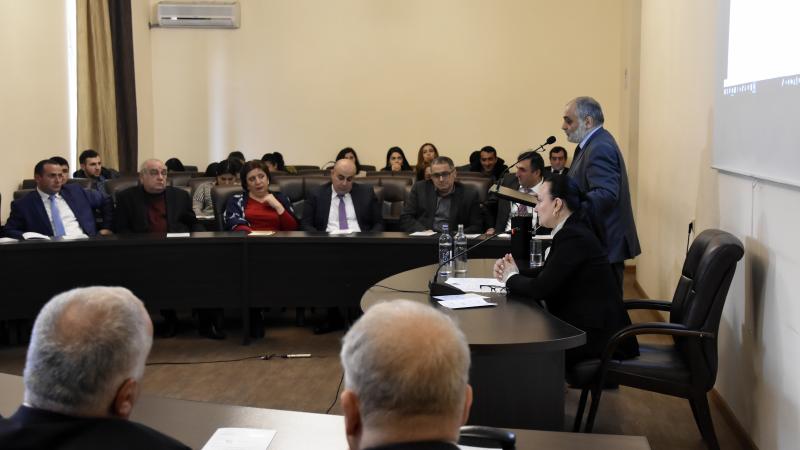
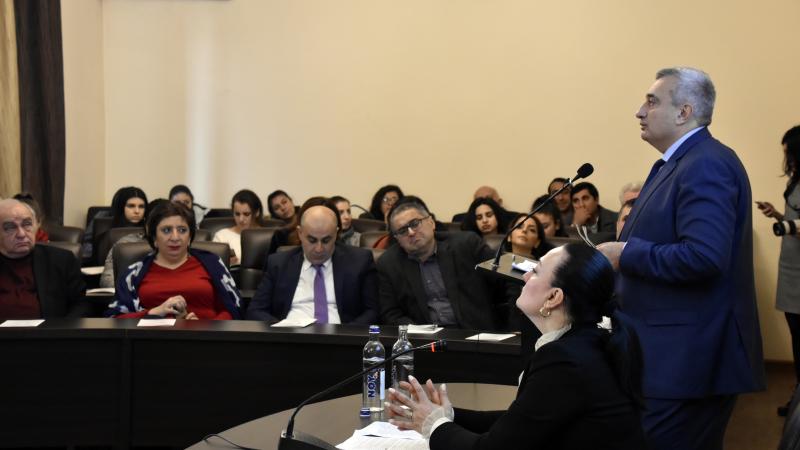
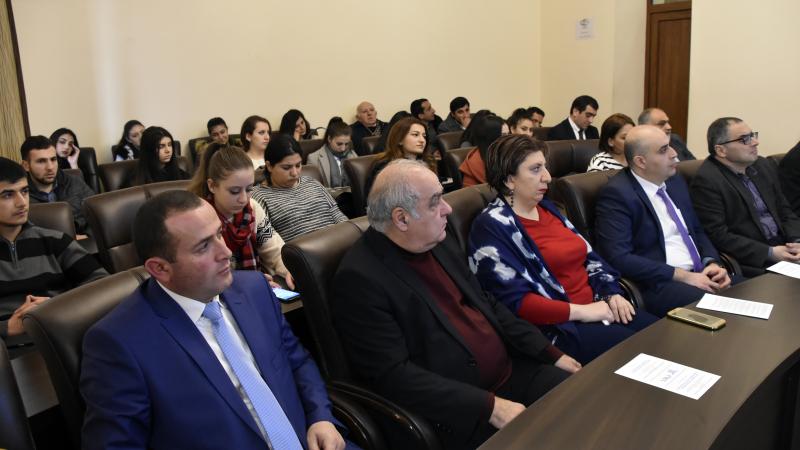
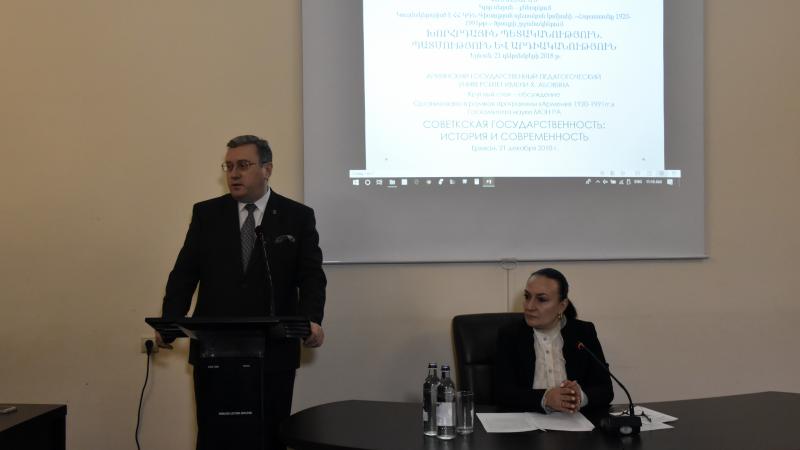
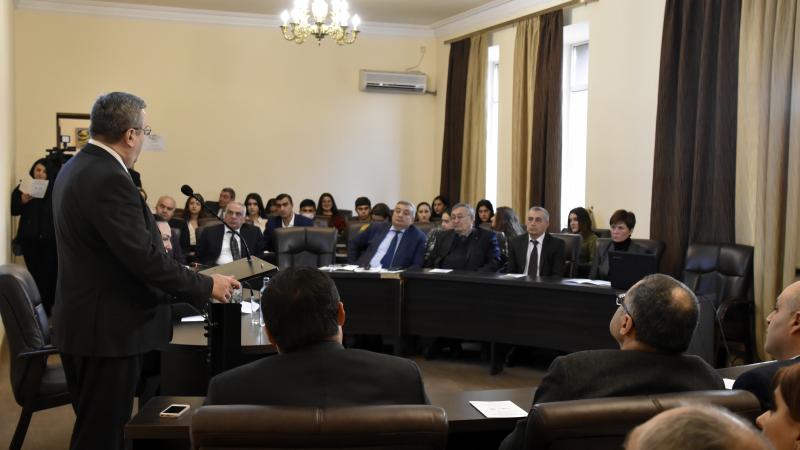
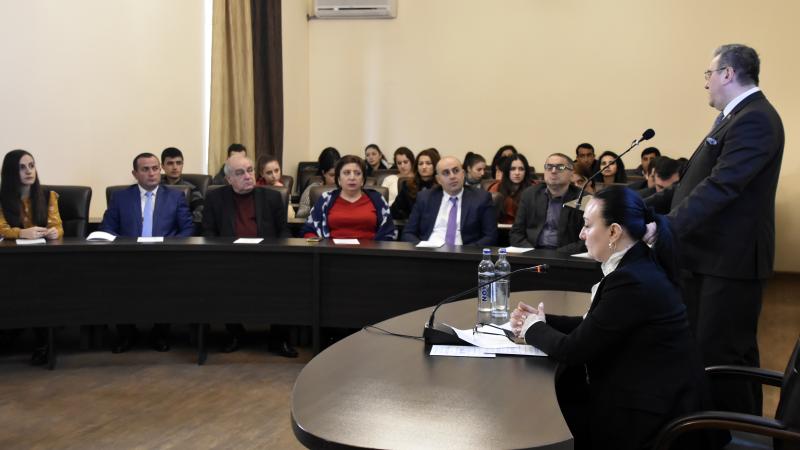
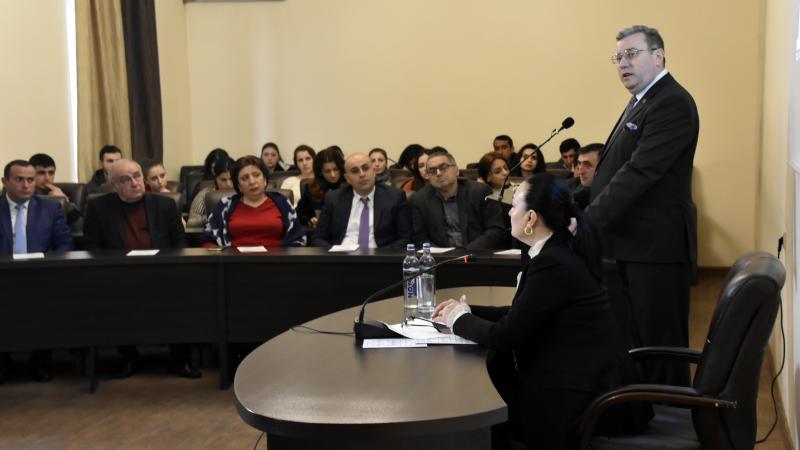
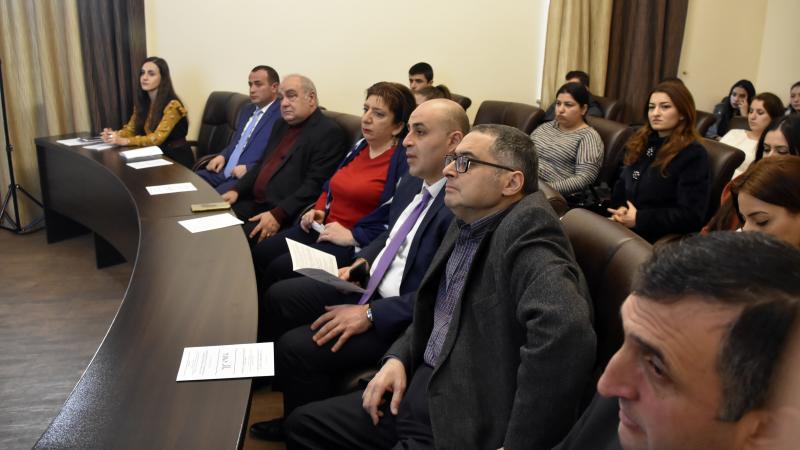
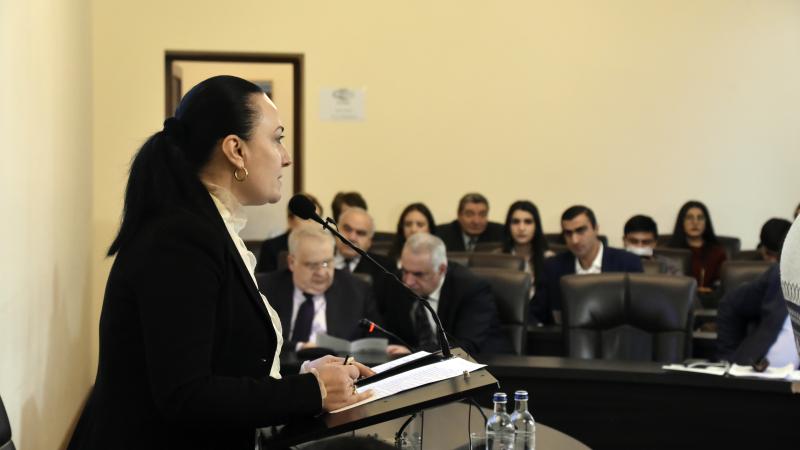
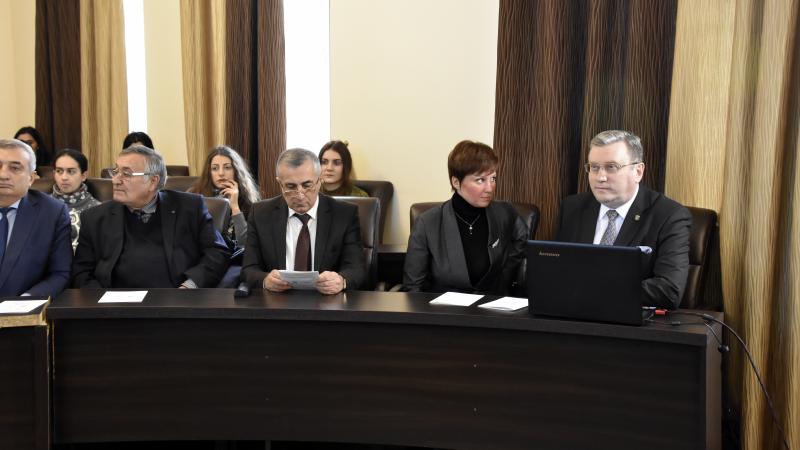
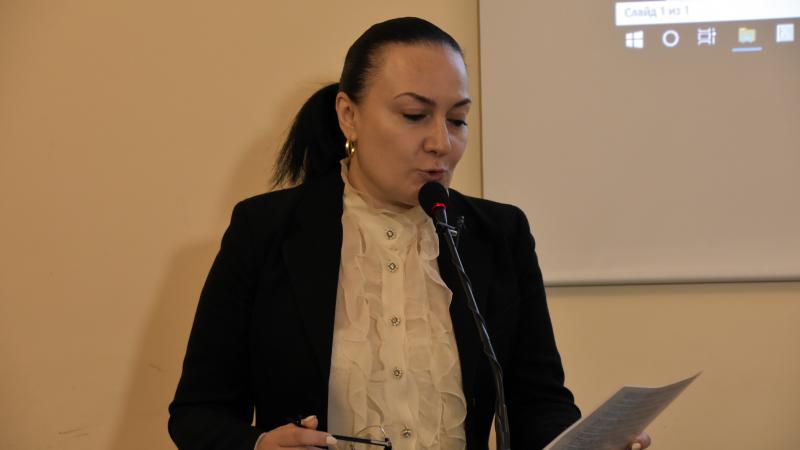
A roundtable discussion entitled “Soviet Statehood: History and Modernity” was held at Armenian State Pedagogical University (ASPU) on December 21.
Welcoming the guests, Srbuhi Gevorgyan, ASPU Vice-Rector for Educational and Scientific Affairs, wished productive and efficient work to the participants of the roundtable.
In his presentation, Alexey Lubkov, Rector of the Moscow State Pedagogical University (MGPU), touched upon the 21st-century teachers and challenges and noted with pleasure that he was participating in the discussion with a new status – as Honorary Doctor of the University.
The Russian partner thanked the organizers of the roundtable and said it would enable the participants to develop further cooperation over issues encountered in pedagogical education both in Russia and Armenia.
“The main thing we should do today in the context of educational challenges and widespread informatization and digitalization, is to preserve human qualities in human beings,” he said. Alexey Lubkov added that the problem was not solved in the 20th century either.
Citing Russian writer Dostoevsky, who renounced through his characters the world in which at least one child suffered, saying ‘it is not worth one little tear of even one tormented child,’ Alexey Lubkov said. “In the 21st century, we see not only tears of a single child, but an entire ocean. Today we should reveal and study every single issue related to children.”
“Both the Armenian and Russian people have survived many tragic pages, which suggests that the tragedy of human history in the 20th century did not promote development of humanity,” said the MGPU Rector.
Ashot Melkonyan, Professor at the Chair of Armenian History at ASPU, Director of the Institute of History and an academician of the National Academy of Sciences, presented the Republic of Armenia in the context of the new world order in 1918-1920.
The professor assured the attendees that many post-Soviet countries consider that they did not have statehood during the Soviet times. "We, Armenians, have always had a different approach," Mr. Melkonyan said.
Ruben Safrastyan, Head of the Chair of World History and Its Teaching Methods, Director of the Institute of Oriental Studies and an academician of the National Academy of Sciences, spoke about the collapse of the Soviet Union and its dual importance for Turkey, as well as Armenian-Turkish relations.
Tigran Liloyan, Advisor to the RA President, spoke about Hamazasp Harutyunyan, Askanaz Mravyan, Suren Tovmasyan, Sergey Shahverdyan and other figures. He also remembered the Armenians who had a significant contribution to the Soviet and Russian diplomatic corps in different years.
Amatuni Virabyan, Head of the Chair of Chair of Museum Studies, Library Studies and Bibliography, spoke about the peculiarities of the Soviet statehood development in the postwar years. The Doctor of History spoke about the changes in agriculture, industry and other spheres, underlining that the Soviet Union would not collapse if a successful economic model was created.
In their presentations the historians presented socio-political situation in different decades of the 20th century, the nature and reasons for dissidence, fight against illiteracy and other issues. It is due to mention that students and post-graduate students also participated in the discussion. They presented their approaches and studies on some historical facts in separate reports.