- Հայ
- Рус
- Eng
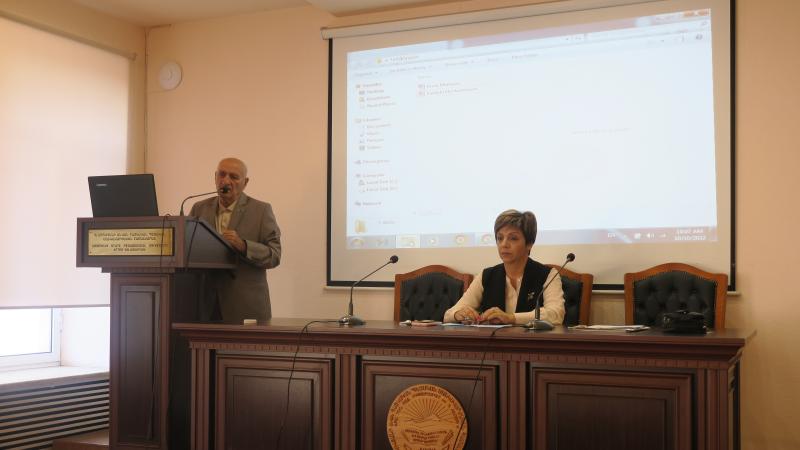
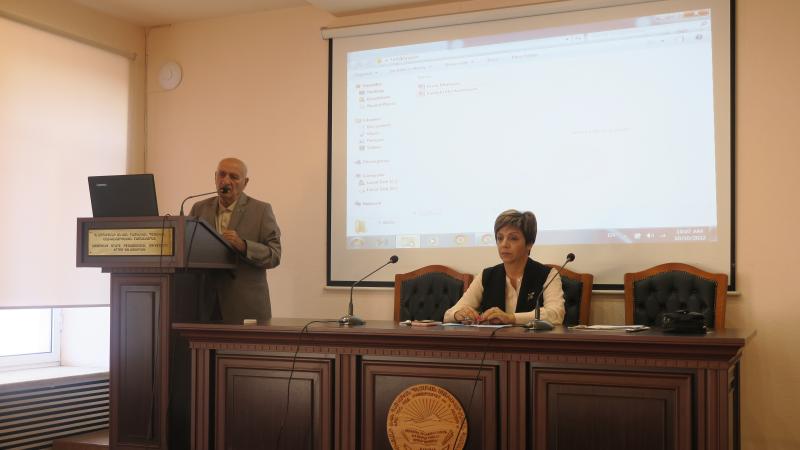
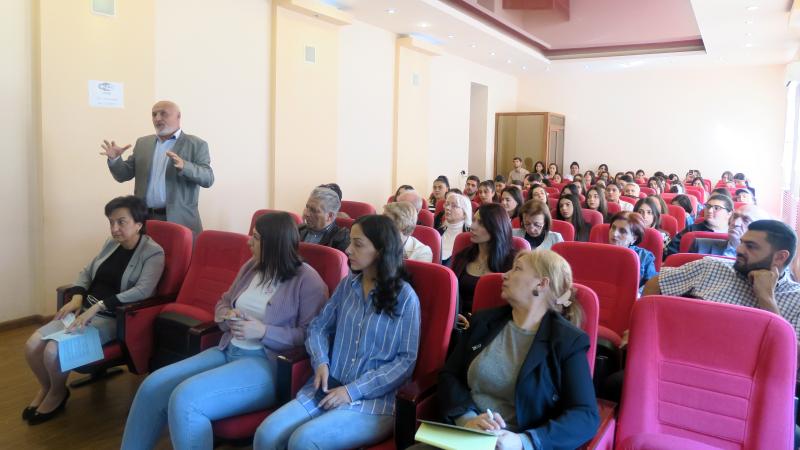
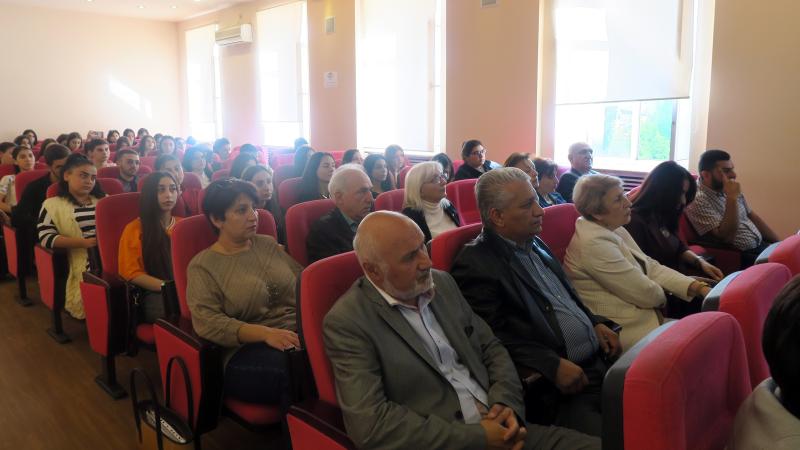
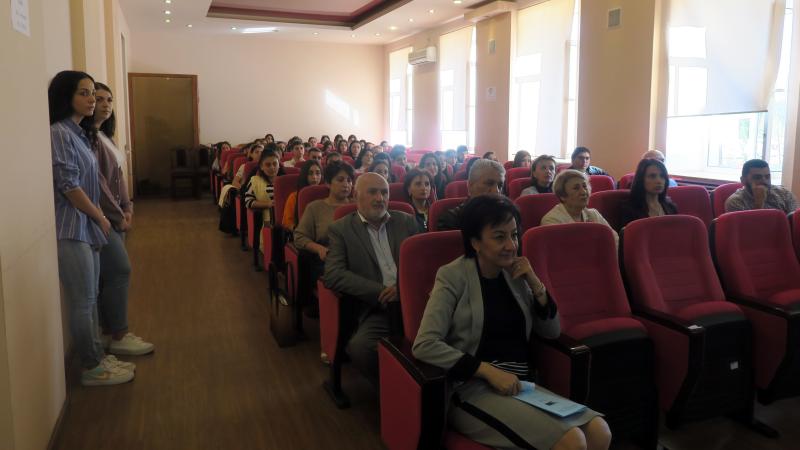
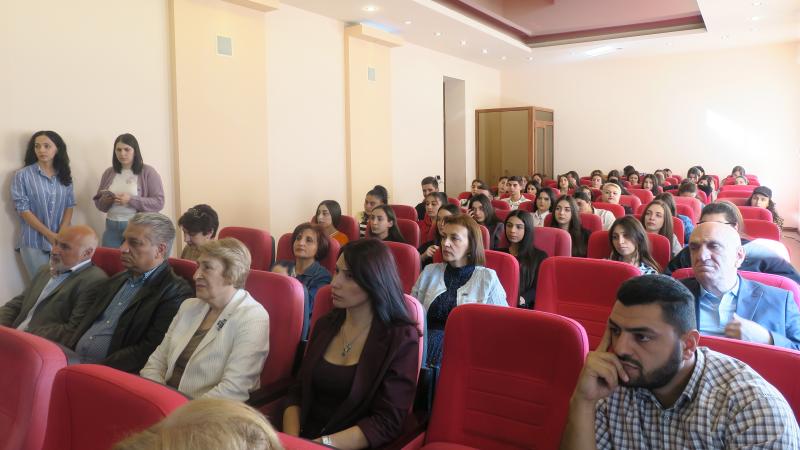
On the initiative of the Faculty of Biology, Chemistry and Geography, a republican scientific-practical conference was held on October 10.
Representatives of various universities and scientific organizations participated in the conference entitled "Constructive Physics and Requirements for Socio-Economic and Geographical Research and Pragmatic Significance of Findings.”
Ruzanna Sadoyan, Dean of the Faculty of Biology, Chemistry and Geography, welcomed the attendees and underscored the relevance of the topics, wishing everyone productive work.
The scientific-practical conference addressed issues in various fields of geography - from cartography to tourism.
Doctor of Geographical Sciences, Professor Gevorg Karapetyan dwelt on a number of issues in tourism and tourism development, presenting cartographic principles and their significance. Professor Karapetyan also spoke about the need of mapping of tourism assets, importance and characteristics of mapping, the need to use international signs and symbols, as well as permissible and non-permissible mistakes.
The new atlas authored by Gevorg Karapetyan will be presented to the public in the near future. It consists of 80-82 maps and presents recreational-tourism resources in the regions of Armenia.
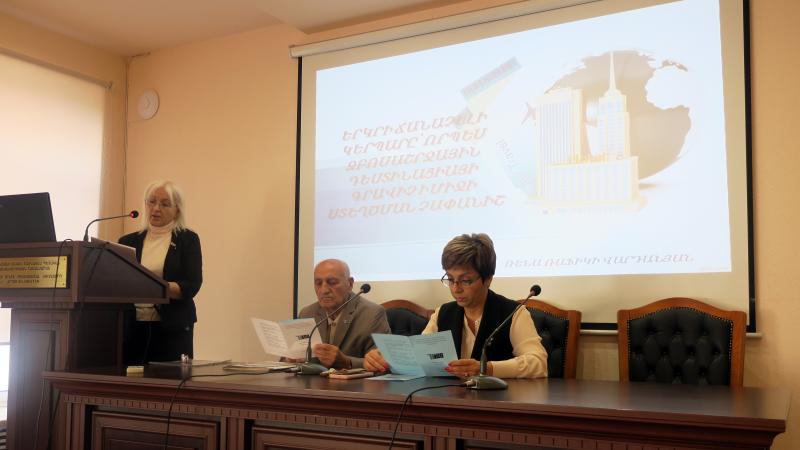
In her report, Rena Vardanyan, a lecturer at Yerevan State University, referred to the recognized image of the country (state) as a criterion for creating an attractive image of a tourist destination.
The latter spoke about the different recognized symbols that are typical of various countries and stressed that in the case of Armenia, the existing symbols should be branded and the country’s image should be shaped by using all resources.
Varduhi Hovhannisyan, an assistant professor of the Chair of Geography and its Teaching Methods, spoke about stages of landscape architecture and said that the role of landscape knowledge is invaluable in geography education.
Her speech was followed by reports on important geographical issues; through discussions and Q&A sessions the attendees considered the topics in the context of Armenia’s resources.