- Հայ
- Рус
- Eng
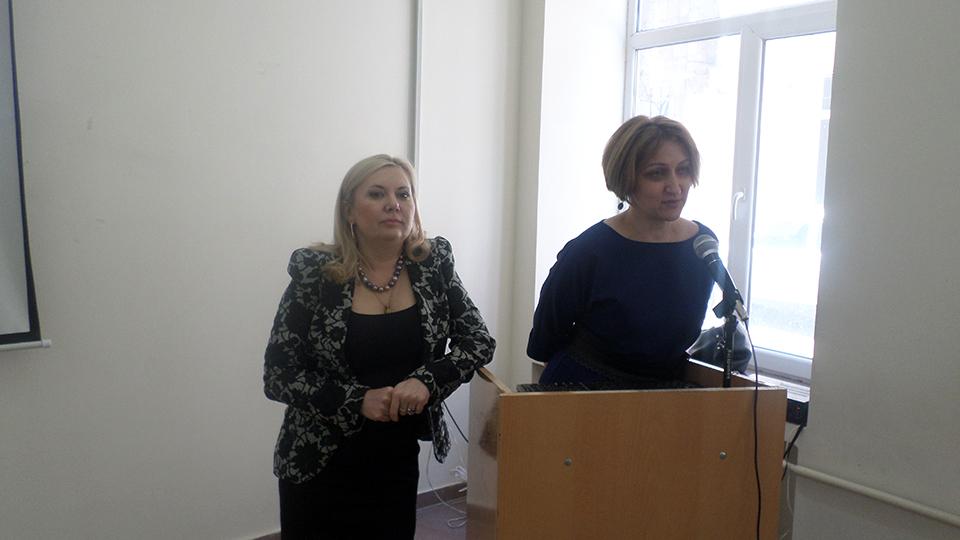
The delegation from the Pushkin State Russian Language Institute is on a two-day trip at the Pedagogical University.
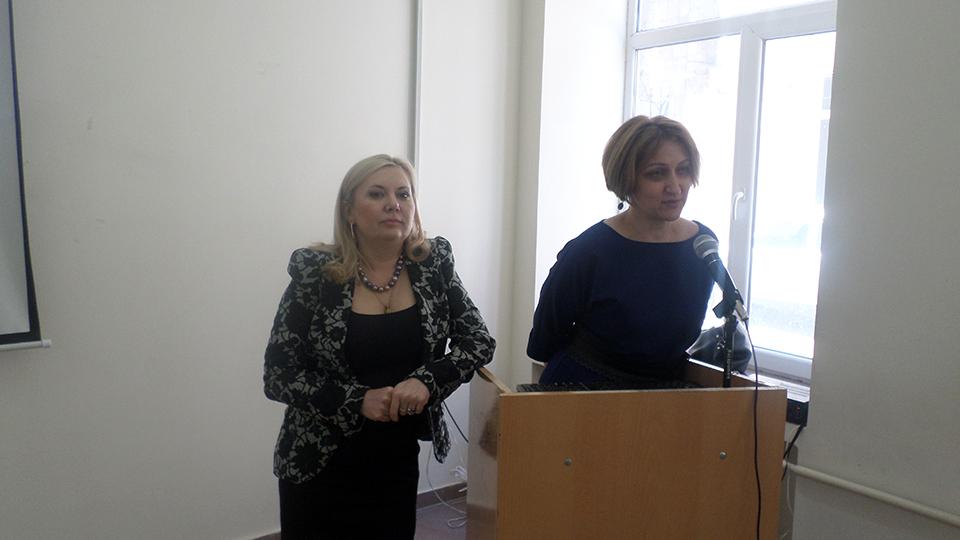
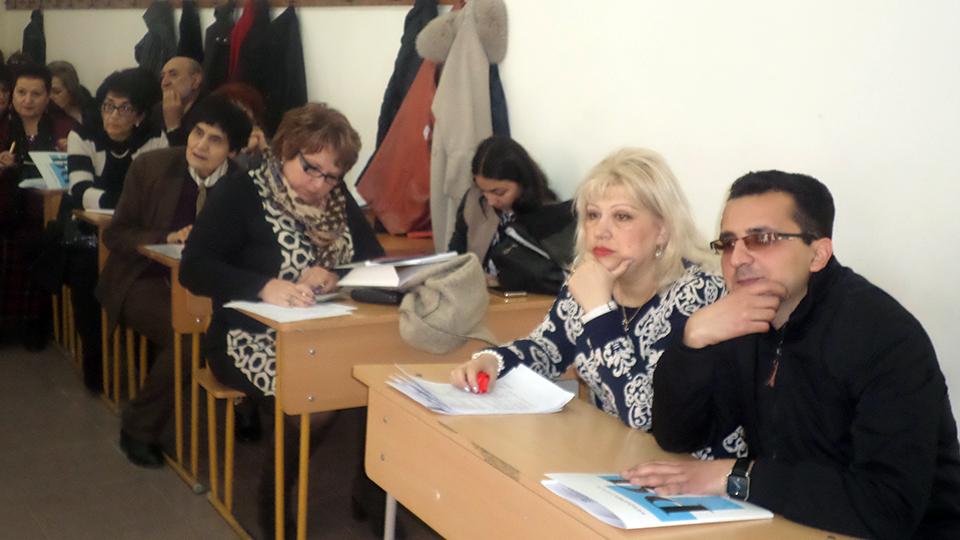
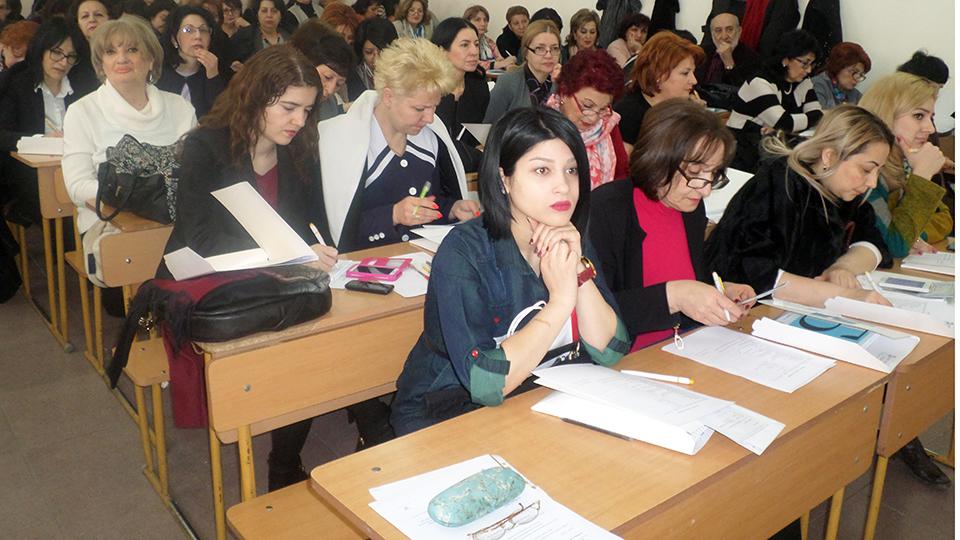
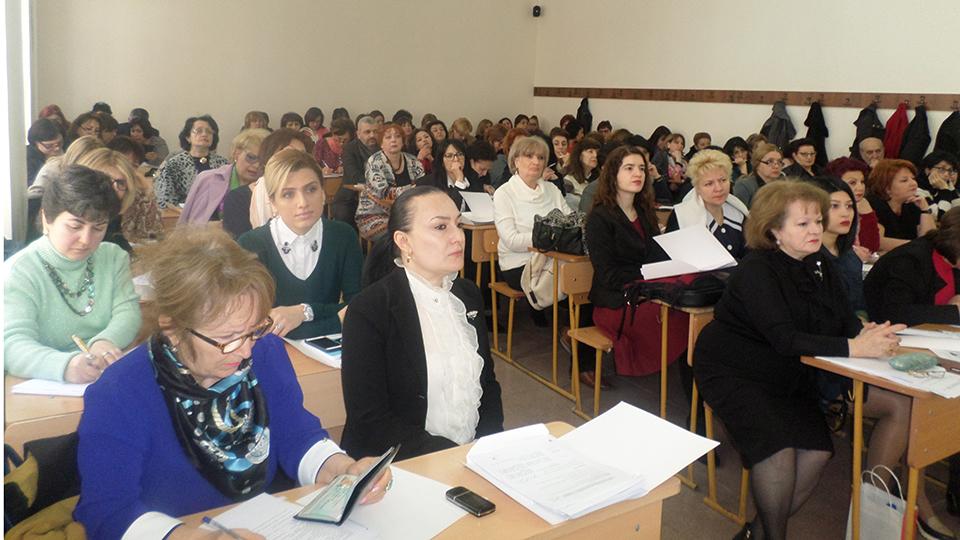
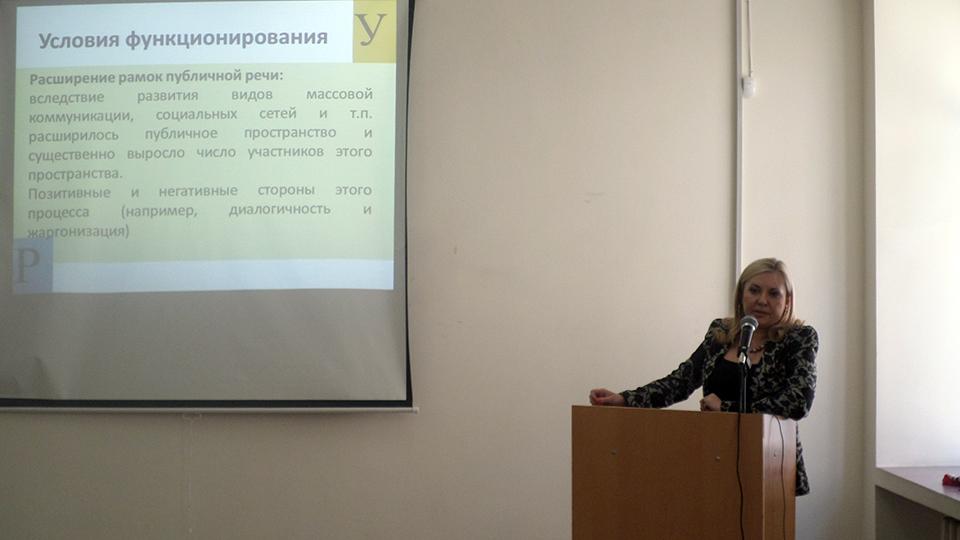
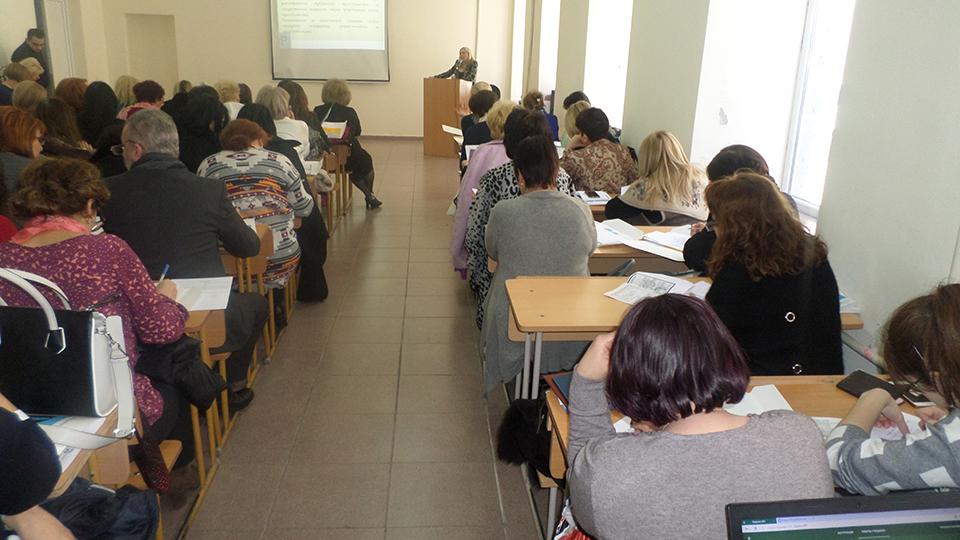
On the first day of the visit, the professor of the Institute’s Chair of General and Russian Linguistics, Doctor of Philology, Professor Natalia Bozhenkova and the Dean of the Preparatory Faculty Natalia Tatarinova delivered lectures for Russian language teachers at the APSU and in other institutions.
During this initiative aimed at increasing the qualification of specialists Natalia Bozhenkova presented her reports on the “Active Processes of Contemporary Russian Language” and “Integration of poly-ethnic audience within the framework of Russian language course; modern linguistic- didactic technologies”.
She referred to the significant issues of modern language awareness and Russian language studies, functionality conditions, vocabulary, grammar, active processes of word-formation and standards.
During the meeting the Dean of the Preparatory Faculty of the Pushkin State Russian Language Institute Natalia Tatarinova introduced her report on the subject of “Application of the Resources of “Education in Russian” Portal within the Scope of Russian Language Courses and Development Classes”.
The latter thoroughly explained to the teachers about the resources, the target group, innovative projects and interactive courses, discussed the details of using the portal and the relevant opportunities, as well as developing courses on the portal, organizing on-line Olympiads, and peculiarities of teaching Russian language.
Summarizing her speech, Natalia Tatarinova once again emphasized that the portal was for all those, who were interested in studying Russian language, after which she assured that it was a necessity for those, who would like to occur in a Russian speaking virtual environment.
“Armenia has always been known for its well established schools of Russian studies. And today too, in Armenia, particularly in Yerevan, there are well trained professionals, who are dedicated to their work. Despite geopolitical situation, knowledge of Russian language in Armenia is on a high level”, mentioned Natalia Bozhenkova.
Last but not least, the Russian colleagues added that during such meetings they first of all tried to understand the issues that the teachers come across in the given country within the scope of the course; after which they present the peculiarities realizing that theoretical knowledge is useless without the direct interference of the teachers.