- Հայ
- Рус
- Eng
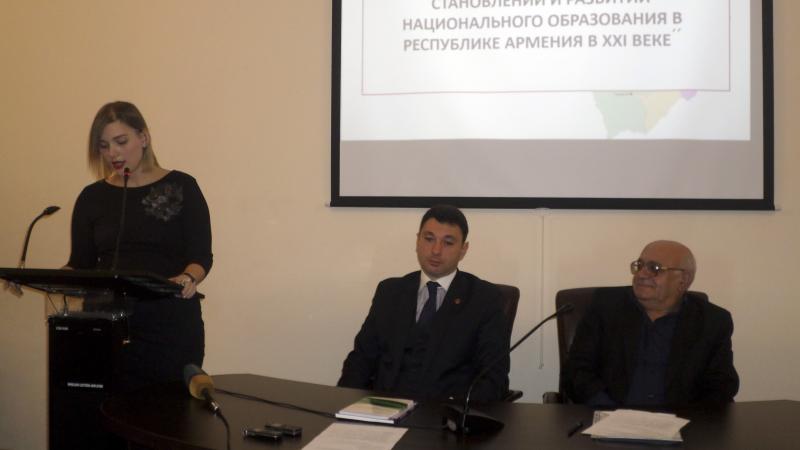
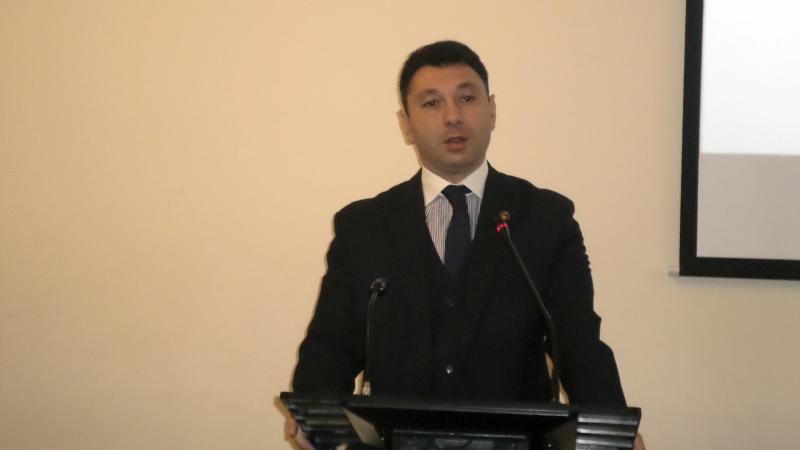
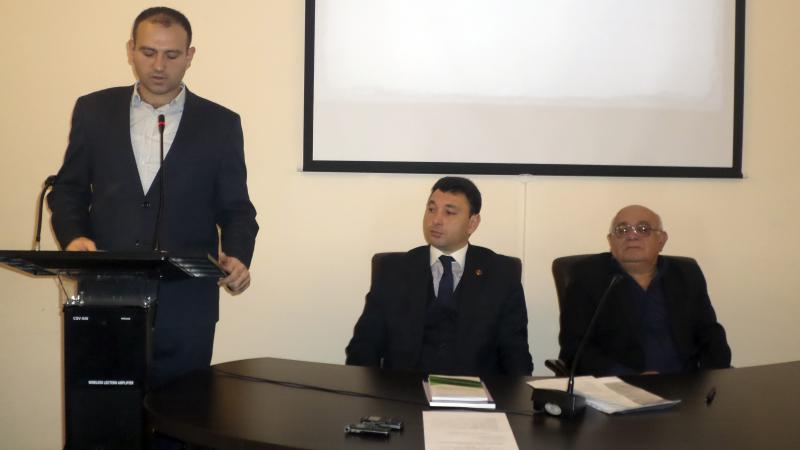
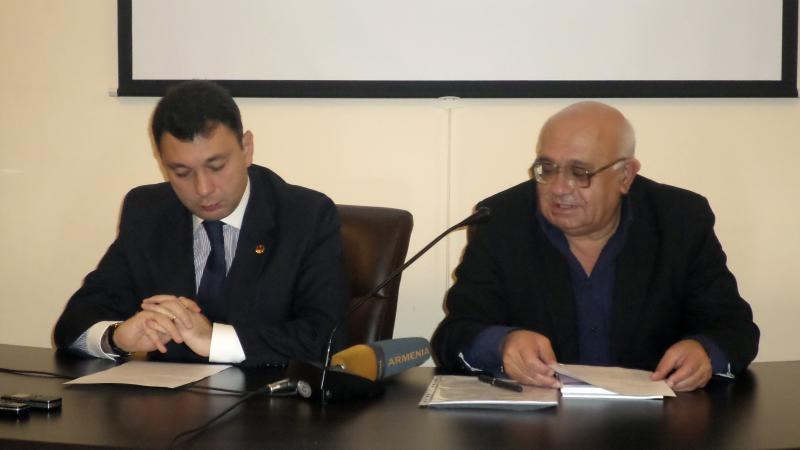
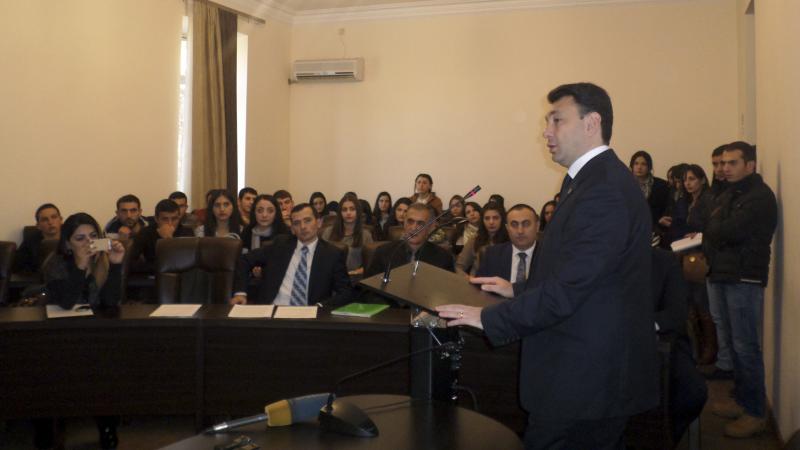
"The ideas of state and statehood, as well as the desire to live in a free and independent homeland are very important for the Armenian people. The history of this nation is nothing more than a struggle for independence and freedom," Eduard Sharmazanov, Vice-Speaker of the Armenian National Assembly (NA), a lecturer at Armenian State Pedagogical University (ASPU), a member of the ASPU Council, said during the opening of an international conference entitled "Nation, State, Homeland: Idea of Statehood."
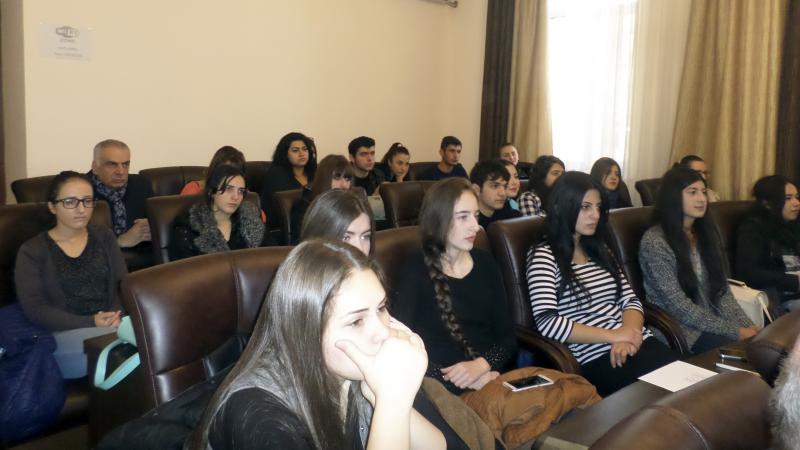
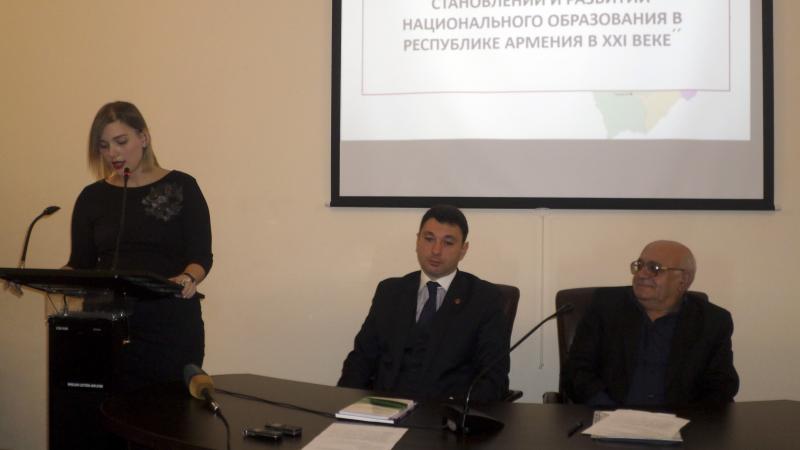
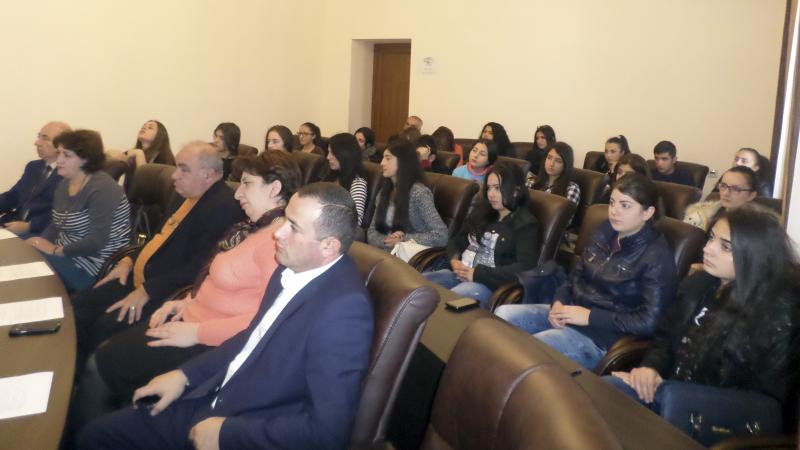
The event dated to the 25th anniversary of the Faculty of History and Law brought together representatives and students of educational institutions from Spain, Russia, Hungary and the Nagorno Karabakh Republic.
The aim of the conference was to once again stress the importance of the three key ideas that lie at the core of statehood - homeland, nation and state ideology.
With the help of historical facts, Eduard Sharmazanov assured the participants that it was the desire of living in their own, free and independent country that pushed Armenian fighters forward on the battlefield starting from 2492 BC, when our forefather Hayk defeated Bel, to our days, the four-day war in Karabakh in April.
"We already have the independence generation, who proved that they do not yield in anything to the first heroes of the Artsakh liberation war and even surpass them. Their feats prevent us from making more mistakes as thanks to their desire each new generation gives lessons to the previous one. We did not have statehood for centuries but we are a state-building nation," the NA official said. He reminded that Armenians did not lose the desire to have a free and independent country even in 1915 when the government of Young Turks masterminded and perpetrated the genocide of Christian nations and when Tumanyan spoke about the need for a new Armenia.
Eduard Sharmazanov added that the best way to serve the ideas of Homeland, freedom and statehood is to be engaged in one's own business and try to be guided by the content rather than format. "We should not think what Armenia can give us, rather, we should think what we can give our Homeland. Only in that case can we have a powerful and united Armenia. We should understand eventually that the fate of Armenians is determined in Artsakh: the Artsakh conflict is a manifestation of the Armenian issue, and the war is not over yet."
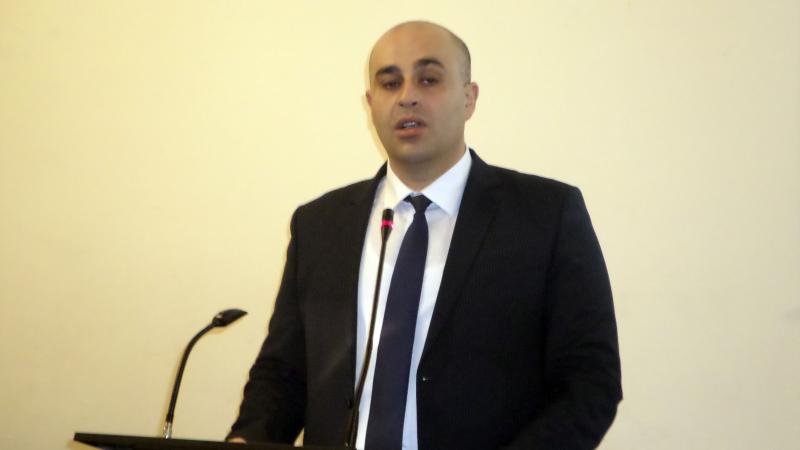
Speaking about the aim of the conference, Edgar Hovhanisyan, Dean of the Faculty of History and Law, said when a nation, independence and state pass a long path, a necessity arises for the scientific community to summarize what the country has gained, assess the achievements, present the drawbacks and address the shortcomings in the social, cultural and political life.
The greatest value and achievement of independence was the independence generation: they cannot imagine their homeland without independence and fully realizes that they should shoulder the achievements of the previous generations and boost the development of the country," Mr. Hovhannisyan said. He expressed hope that conferences on the theme would become traditional.
Professor Levon Shirinyan recalled how they gathered in the same auditoriums 25 years ago to discuss issues related to the national liberation struggle. He said progress is noticeable: today's generation is discussing issues related to state-building, Homeland and protection of state borders.
Ekaterina Roeva, a researcher at the Lomonosov Moscow State University, spoke about the role of the Diaspora in the development of national education of an independent country. She stressed that in the past 25 years Armenia has overcome numerous difficulties but like other post-Soviet states it also has ample opportunity to develop and go forward with big steps.
The Russian colleague assured everyone that as representatives of academic circles they also focus on the existing issues and problems, trying to find answers to them. In the three subsections of the conference, the speakers touched upon issues related to history, law, international relations, politics and psychology. Also, some foreign participants presented their reports online.
The materials of the conference will be published in the "History and Social Sciences" - a scientific yearbook published by the Faculty of History and Law.